
Why Did Humans Conquer The Globe?
Mar 23, 2026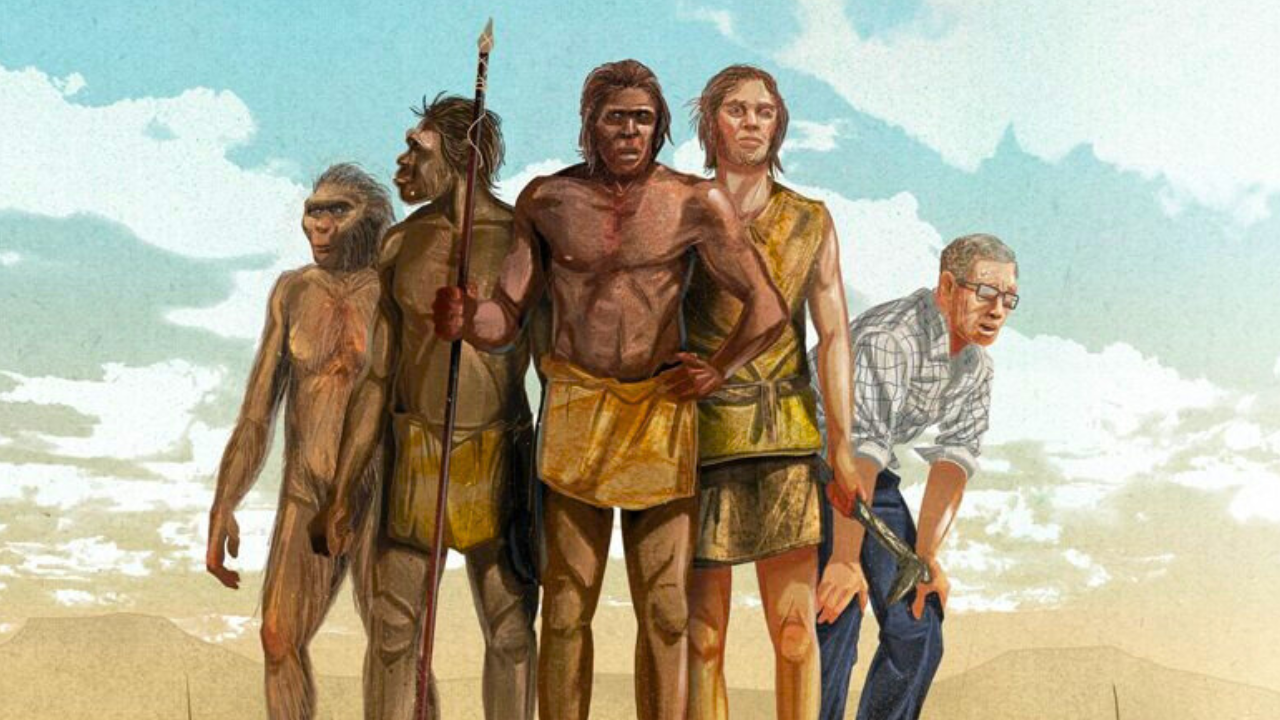
By: Greg Schmalzel
Lions dominate Africa. Polar bears dominate the Arctic. But humans dominate everywhere. Why? We don’t have claws, fur, or any kind of natural armor. We’re actually a pretty fragile species. Drop a single human in the Sahara, and we die without water. Drop us in the Arctic, and we freeze to death. Leave us in a venomous jungle and we will almost certainly be poisoned. And yet somehow… we ended up in all of those places.
By 70,000 years ago, our species had already begun spreading across Africa and into Eurasia. Within a geological blink, we reached Australia. Then the Arctic. Then the Americas. And before us, other human species were on a similar track. No other large mammal has ever done this besides the human lineage.
So what made us different? Could it have been our fragile bodies? That seems unlikely. Maybe it was our big brains and technology. Now we’re getting somewhere. The thinking is, humans didn’t conquer the globe by accident. We did it step by step, and trait by trait, over millions of years. And the real answer can’t be pinned down to one thing. It’s a stack of evolutionary advantages that, together, made us unstoppable.
For the full YouTube video, click HERE.
Biological Advantages
Carl Bento
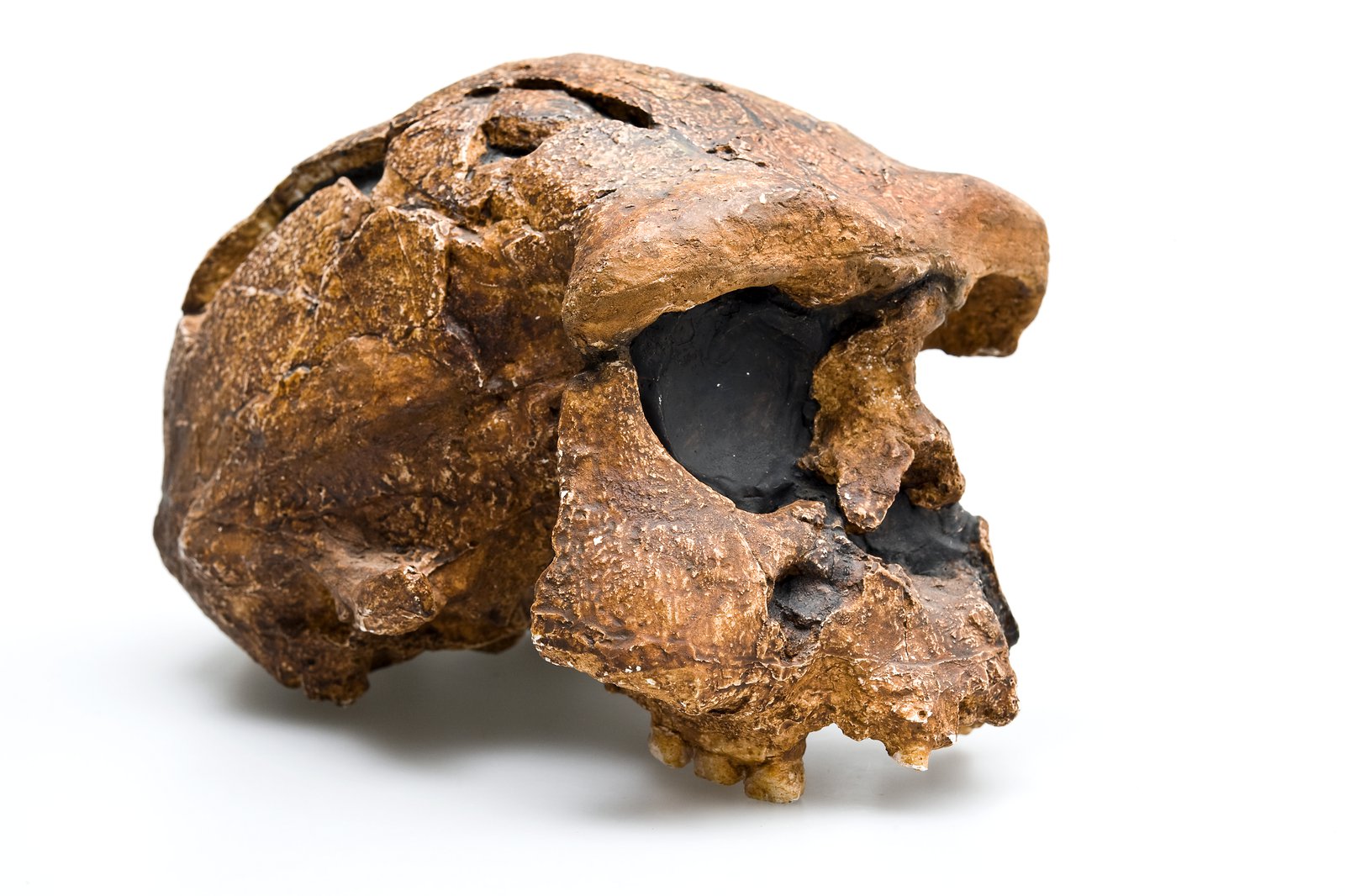
One of the earliest traits that set humans on the path toward conquering the globe was bipedalism—the ability to walk upright on two legs. This shift changed the energy economics of the body and made long-distance travel possible.
Around 6–7 million years ago, early human ancestors such as Sahelanthropus tchadensis and Orrorin tugenensis lived in an Africa that was becoming drier. Dense forests were breaking apart into a mix of woodlands, lakes, and open grasslands. Moving between these scattered habitats likely favored animals that could travel efficiently on the ground.
Fossils support this transition. The skull of Sahelanthropus shows a forward-positioned foramen magnum, the hole where the spine connects to the skull, indicating a more upright posture. Its femur also shows features linked to bipedal walking. Similar evidence appears in Orrorin, whose thigh bone has structural traits associated with upright movement.
Later hominins continued this trend. By 3.7 million years ago, the species Australopithecus afarensis—famous for the skeleton known as Lucy—was clearly walking on two feet. Footprints preserved in volcanic ash at Laetoli in Tanzania show a human-like walking gait.
However, Lucy’s species was not yet built for long-distance running. Their bodies still had relatively short legs, long arms, and limited endurance.
A major change came with the emergence of Homo erectus around 2 million years ago. This species had longer legs, shorter arms, and more modern body proportions. Spring-like tendons, stronger glute muscles, and improved heat regulation made long-distance walking and running far more efficient.
These adaptations allowed early humans to travel across vast landscapes. In fact, Homo erectus fossils have been found as far away as Indonesia, showing that this species was the first of our ancestors to expand far beyond Africa.
In many ways, the human story begins with a simple change: standing up and walking.
Technological Advantages
NPS / Claire Norton

Technology was one of the most powerful forces behind humanity’s spread across the planet. The earliest evidence comes from stone tools dating to about 3 million years ago, when ancient hominins began striking stones together to create sharp edges. These simple tools allowed them to break open animal bones and access nutrient-rich marrow, an important source of calories.
Over time, stone tool technology became more sophisticated. Early industries eventually gave way to the Acheulean tradition, where hominins such as Homo erectus shaped large, symmetrical handaxes. Producing these tools required planning and skill—the maker had to imagine the final shape before striking the stone. Later innovations such as the Levallois technique involved carefully preparing a stone core to produce a single, precisely shaped flake.
By about 50,000 years ago, technology diversified rapidly during the Upper Paleolithic. Humans began producing specialized blades, projectile points, and composite tools. Weapons like spears, and later bows and arrows, allowed people to hunt dangerous animals from a distance, giving humans an advantage even over powerful predators.
Another transformative technology was fire. Evidence from sites such as Baishiya Karst Cave suggests that Denisovans used fire for cooking and processing animals between about 48,000 and 32,000 years ago. Controlled fire provided warmth, protection, and a way to cook food—making nutrients easier to digest and expanding the range of edible resources. Archaeological evidence also shows that early Homo sapiens built sophisticated hearths that retained heat with heated stones, allowing them to live in cold Ice Age climates.
Clothing was another crucial innovation. Although garments rarely survive archaeologically, stone tools used for hide working appear in Neanderthal sites, and bone sewing needles appear by about 45,000 years ago, showing that tailored clothing was likely in use.
Finally, humans developed watercraft, allowing them to cross oceans. The colonization of Australia around 65,000 years ago required open-water journeys across island chains in Wallacea—clear evidence that humans were capable of intentional sea travel. Later innovations such as canoes and, eventually, sailing vessels dramatically expanded human mobility.
Together, these technologies allowed humans to engineer their way through new environments, spreading into ecosystems that would have otherwise been impossible to survive.
Sociality: Cooperation and Competition
Sociality: The Power of Human Cooperation
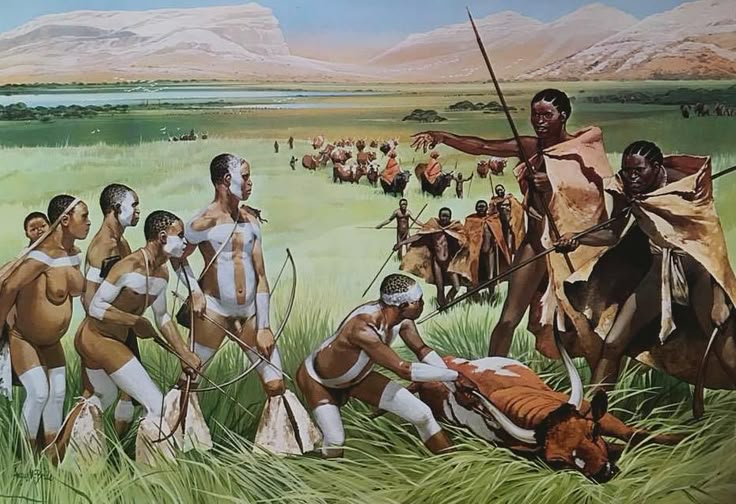
Human success is not just the result of individual intelligence or physical ability—it is the result of working together. Unlike many other primates, humans live in large, cooperative groups made up of multiple males and females. This structure resembles the social systems of chimpanzees and baboons, but humans take cooperation to a much higher level.
Many of the technologies that allowed humans to spread across the globe depend on shared knowledge. Complex skills—such as making stone tools, building watercraft, or sewing clothing—cannot easily be reinvented by a single individual. Instead, they are taught and passed down through generations, creating a growing library of cultural knowledge.
Research suggests that humans evolved a special ability for social learning. In a well-known study from 2007, scientists compared the abilities of 2.5-year-old children with adult chimpanzees and orangutans. When solving physical problems—like retrieving food or judging quantities—the children and apes performed similarly. But in tasks involving communication, imitation, and understanding others’ intentions, the children greatly outperformed the apes. Humans appear uniquely adapted to learn from one another.
Another important feature of human societies is alloparenting, or cooperative childcare. In many cultures, relatives and community members help raise children alongside the parents. This shared caregiving spreads the energetic cost of raising large-brained, slow-developing offspring across a group. As a result, human populations can raise more children while also passing down more knowledge about food, tools, and survival.
Language and symbolic culture strengthened these social networks even further. Shared stories, traditions, and art helped unify groups and coordinate behavior. Some of the oldest known cave art—such as hand stencils in Indonesia dating back over 67,000 years—suggests that early humans were already communicating shared meanings and identities.
Together, cooperation, cultural learning, and shared beliefs created powerful social networks. These networks allowed humans to pool knowledge, reduce risk, and survive in environments far beyond the limits of any single individual.
Sources:
[1] Le Fur, S., et al. 2009. “The mammal assemblage of the hominid site TM266 (Late Miocene, Chad Basin): ecological structure and paleoenvironmental implications.” Naturwissenschaften 96(5):565-74.
[2] Williams, S., et al. 2026. “Earliest evidence of hominin bipedalism in Sahelanthropus tchadensis.” Sci. Adv.12, eadv0130.
[3] Pickford, M., et al. 2002. “Bipedalism in Orrorin tugenensis revealed by its femora.” Comptes rendus - Palevol 1(4):191-203.
[4] Pickford, M. 2001. “The geological and faunal context of Late Miocene hominid remains from Lukeino, Kenya.” Comptes Rendus De L Academie Des Sciences Serie Ii Fascicule A-Sciences De La Terre Et Des Planetes.
[5] Hatala, K., et al. 2016. “Laetoli footprints reveal bipedal gait biomechanics different from those of modern humans and chimpanzees.” Proc Biol Sci 283 (1836):20160235.
[6] Bates, K., et al. 2025. “Running performance in Australopithecus afarensis.” Curr Biol. 35(1):224-230.e4.
[7] Bramble, D., and Lieberman, D. 2004. “Endurance running and the evolution of Homo.” Nature 432, 345–352.
[8] Clemente-Suárez, V., et al. 2025. “Human Digestive Physiology and Evolutionary Diet: A Metabolomic Perspective on Carnivorous and Scavenger Adaptations.” Metabolites 15(7):453.
[9] Fannin, L., et al. 2025. “Behavior drives morphological change during human evolution.” Science 389,488-493.
[10] Ferraro, J., et al. 2013. “Earliest Archaeological Evidence of Persistent Hominin Carnivory.” PLOS ONE 8(4):e62174.
[11] Gomez-Robles, A. and Sherwood, C. 2017. “HUMAN BRAIN EVOLUTION HOW THE INCREASE OF BRAIN PLASTICITY MADE US A CULTURAL SPECIES.” Mètode Revista de difusió de la investigació
[12] Hrvoj-Mihic, B., et al. 2013. “Evolution, development, and plasticity of the human brain: from molecules to bones.” Front. Hum. Neurosci. 7:707.
[13] Xia, H., Zhang, D., Wang, J. et al. 2024. “Middle and Late Pleistocene Denisovan subsistence at Baishiya Karst Cave.” Nature 632, 108-113.
[14] Braadbaart, F. et al. 2020. “Heating histories and taphonomy of ancient fireplaces: A multi-proxy case study from the Upper Palaeolithic sequence of Abri Pataud (Les Eyzies-de-Tayac, France).” Journal of Archaeological Science: Reports 33, 102468.
[15] Jiang, S., et al. 2025. “Onset of extensive human fire use 50,000 y ago.” Proc. Natl. Acad. Sci. U.S.A. 122 (27) e2500042122.
[16] Doronicheva, E.V., et al. 2022. “Functional characterization of Mousterian tools from the Caucasus using comprehensive use-wear and residue analysis.” Sci Rep 12, 17421.
[17] Gilligan, I., et al. 2024. “Paleolithic eyed needles and the evolution of dress.” Sci Adv. 10(26):eadp2887.
[18] Toups, M., et al. 2011. “Origin of clothing lice indicates early clothing use by anatomically modern humans in Africa.” Mol Biol Evol. 28(1):29-32.
[19] Gandini, F., et al. 2025. “Genomic evidence supports the “long chronology” for the peopling of Sahul.” Sci. Adv. 11, eady9493.
[20] Modern Humans Reached Australia Around 60,000 Years Ago via Two Routes, Genetic Analysis Suggests
[21] Herrmann, E., et al. 2007. “Humans have evolved specialized skills of social cognition: the cultural intelligence hypothesis.” Science 317(5843):1360-6.
[22] Burkart, J., et al. 2014. “The evolutionary origin of human hyper-cooperation.” Nat Commun 5, 4747.
[23] Chaudhary, N., et al. 2024. “Sensitive responsiveness and multiple caregiving networks among Mbendjele BaYaka hunter-gatherers: Potential implications for psychological development and well-being.” Dev Psychol. 60(3):422-440.
[24] Oktaviana, A., et al. “Rock art from at least 67,800 years ago in Sulawesi.” Nature 650, 652–656.
[25] Handley, C., and Mathew, S. 2020. “Human large-scale cooperation as a product of competition between cultural groups.” Nat Commun 11, 702.
Founder