
When Natural Disasters Broke Civilization
Feb 09, 2026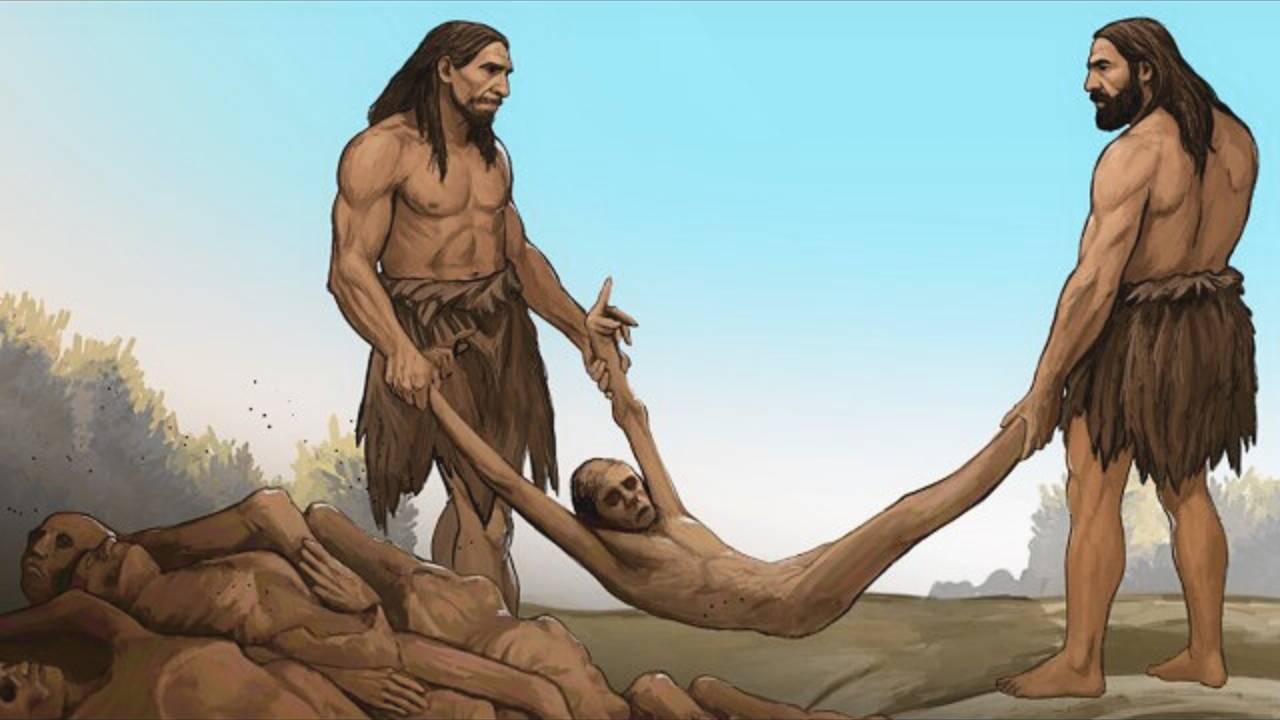
By: Greg Schmalzel
Throughout all of human history, civilizations have come and gone. Around the globe, human societies have come terrifyingly close to disappearing entirely. Imagine cities going silent, fields left unplanted, and knowledge disappearing faster than it could be passed on. Even today, in a world that feels controlled and predictable, we are far more vulnerable to collapse than we like to believe.
But throughout the past ten thousand years, a handful of natural disasters have pushed societies to the brink of extinction. Some, more successful than others. Droughts that lasted generations. Volcanic eruptions that cooled the planet. Epidemics that erased communities before anyone understood what was happening. In some cases, these events didn’t just end lives — they shattered the systems that support civilization in the first place.
If history and archaeology teach us anything, it’s this: no civilization is permanent. No matter how hard we try, nature always has the final say. And it reminds us of this fact over and over again.
These are the natural disasters that broke human societies.
For the full YouTube video, click HERE.
Ancient Megadrought
Those of us living in the 21st century—especially in wealthier nations—have rarely experienced true hunger. In fact, we face the opposite problem. But for most of human history, hunger was familiar. And at times, it became so widespread that it threatened the survival of entire societies.
One of the earliest and most severe examples occurred around 4,200 years ago. Known to archaeologists as the 4.2 kiloyear climate event, this was a major global disruption. Across the eastern Mediterranean and West Asia, rainfall declined sharply. Seasonal precipitation weakened. The Mediterranean westerlies shifted, and the Indian monsoon may have faltered. For regions dependent on rain-fed agriculture, this was catastrophic.
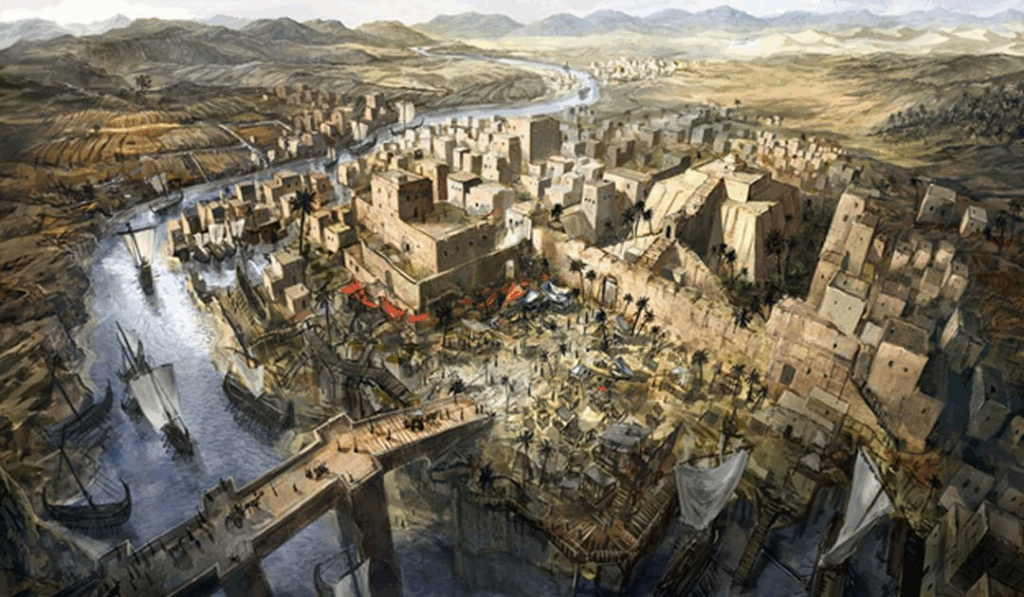
The effects were dramatic in Mesopotamia. Drought and dust storms devastated the Habur Plains. Archaeological surveys show that about 73% of settlements were abandoned, and occupied land declined by more than 90%. Cities tied to the Akkadian Empire collapsed or shrank rapidly. This was not a minor state. Founded around 2334 BCE by Sargon of Akkad, it was one of the world’s first territorial empires, stretching from the Persian Gulf to the eastern Mediterranean.
The empire depended on agricultural surplus. Grain from northern Mesopotamia supported cities, armies, and administration. Sites like Tell Leilan, built to produce surplus grain, were abruptly abandoned. There is no evidence of warfare—only unfinished buildings, collapsed occupation layers, and thick deposits of windblown dust marking extreme aridity. Later texts describe famine, chaos, and political breakdown. Even the imperial capital was abandoned.
Similar patterns appear across the Levant and the Indus Valley. Cities disappeared. Populations contracted. When rainfall eventually returned, societies were rebuilt—but reorganized, transformed, and changed forever. The 4.2 kiloyear event revealed a hard truth: early civilizations were only as stable as the climate that sustained them.
The Minoan Civilization
The Minoan civilization was Europe’s first complex society. It emerged on Crete around 3000 BCE and built its power through trade and seafaring rather than conquest. Minoan life centered on large palace complexes such as Knossos, Phaistos, and Malia. These were open administrative and economic hubs, not heavily fortified citadels.
Skilled sailors connected Crete to mainland Greece, Anatolia, Egypt, and the Levant. Through these networks, the Minoans traded pottery, textiles, metals, and luxury goods. This maritime economy allowed Minoan influence to spread widely without direct political control. Their culture placed strong emphasis on art. Minoan frescoes are colorful and dynamic, showing rituals, bull-leaping, sailing, and marine life. Violence and warfare are notably rare, reflecting a society closely tied to nature and the sea.
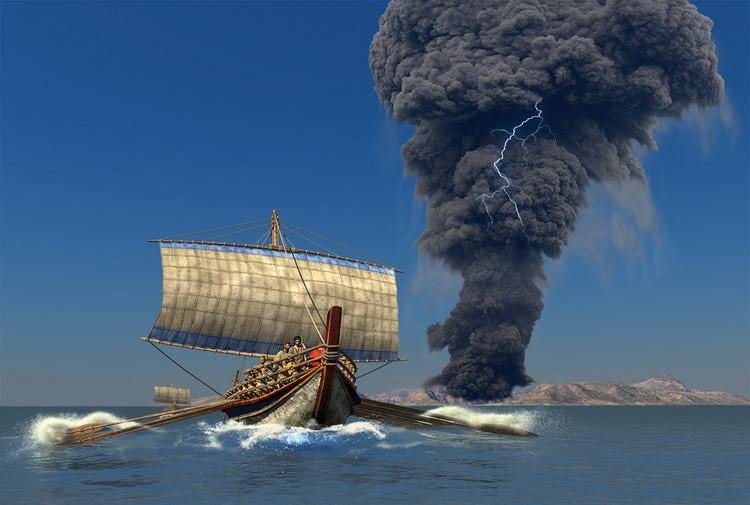
Around 1600 BCE, the massive eruption of Thera—modern Santorini—buried the island of Akrotiri in ash and likely caused tsunamis across the Aegean. Despite its scale, Minoan society did not collapse immediately. Palaces continued functioning, trade remained active, and material wealth peaked for decades afterward.
Archaeology suggests the eruption’s most damaging effects were indirect. Akrotiri was a key hub in Minoan trade networks. Its loss made trade routes longer, costlier, and more centralized. The system adapted, but became fragile. When later stresses mounted—political unrest, earthquakes, or Mycenaean pressure—the network failed. The eruption did not destroy the Minoans overnight, but it quietly undermined the foundations of their prosperity.
The Tamboran Culture
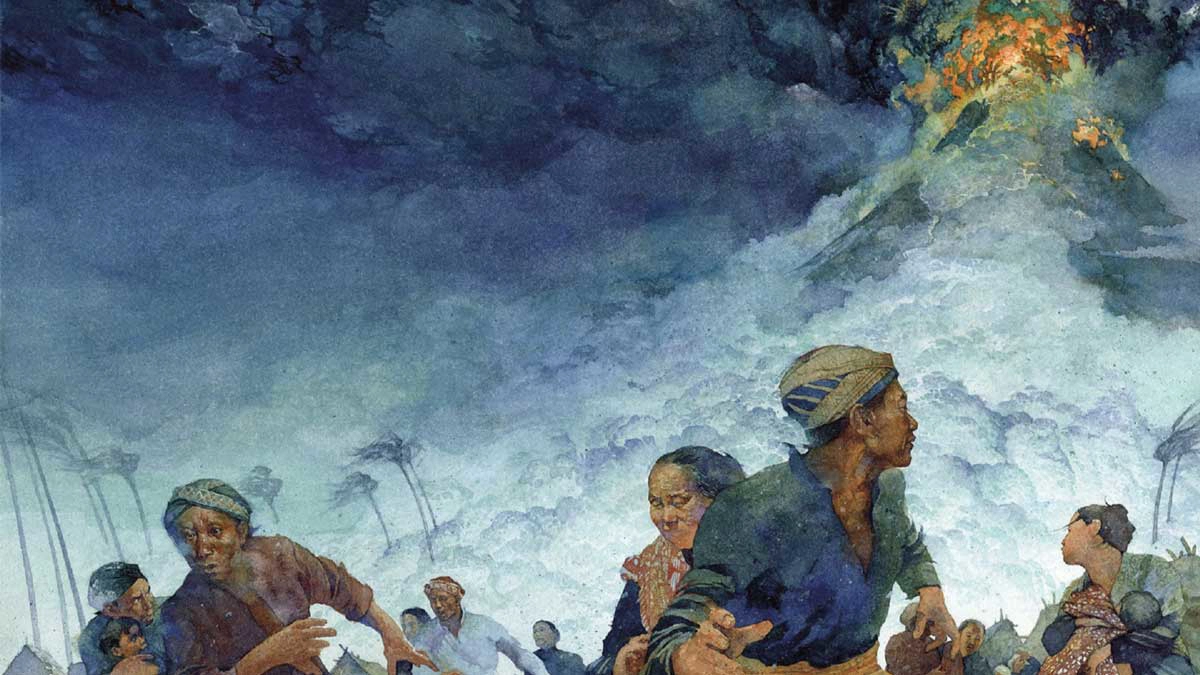
Greg Harlin
Founder