What Happened to America When Pangea Tore Apart?

Jun 01, 2026
By: Greg Schmalzel

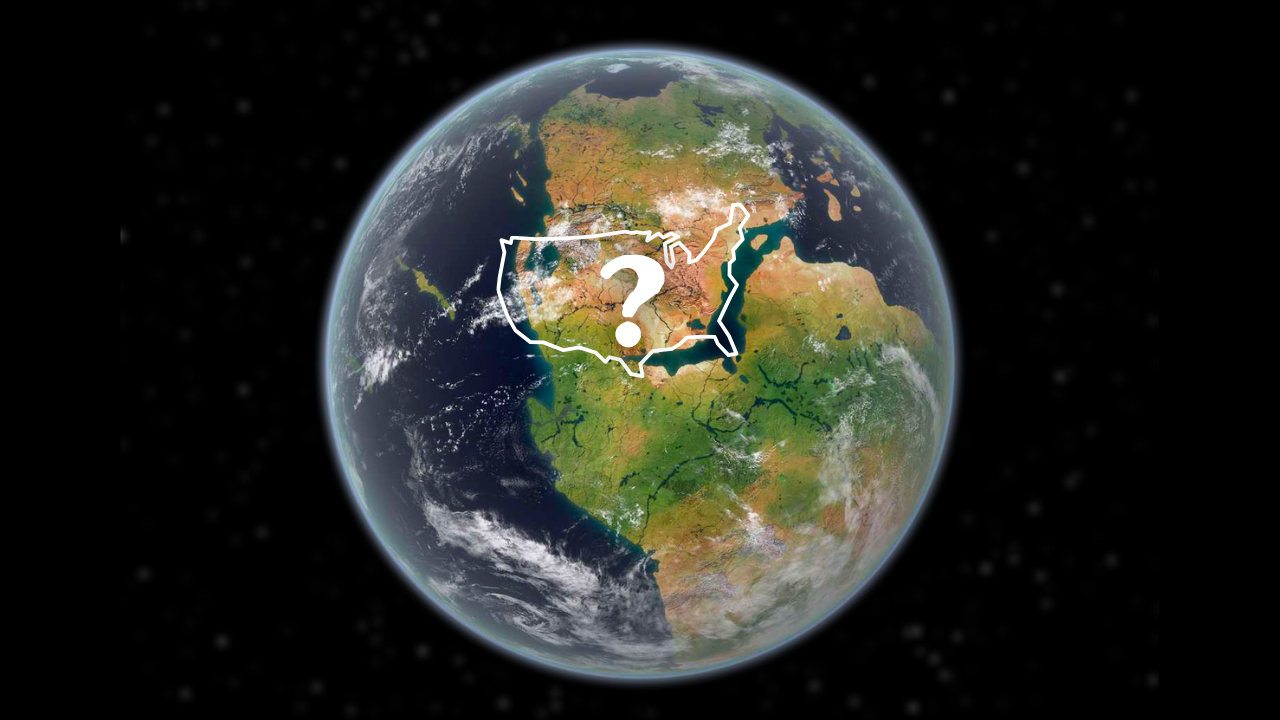
250 million years ago, there was no Atlantic Ocean. If you were standing in New Jersey… you could walk right to Northwestern Africa, probably Morocco. There were no waves or coastline in between. Just a continuous landscape stretching across what are now two independent continents. But beneath your feet, something was beginning to change. The ground was thinning and cracking. It was being pulled apart by forces deep within the Earth. What may have started as some subtle fractures would become one of the most violent geological events in our planet’s history. The land you were standing on was called Pangea, and it was about to change dramatically.

The continents as we know them today split from this ancestral landmass, and in this video we’ll be exploring what happened to America specifically. We’re going to investigate what Pangea was and how it formed, why it split apart, the magma basins and oceans that grew out of the event, and the surprising downstream effects it eventually had on people living in America.

To watch the full YouTube video, Cclick HERE.

What was Pangea?
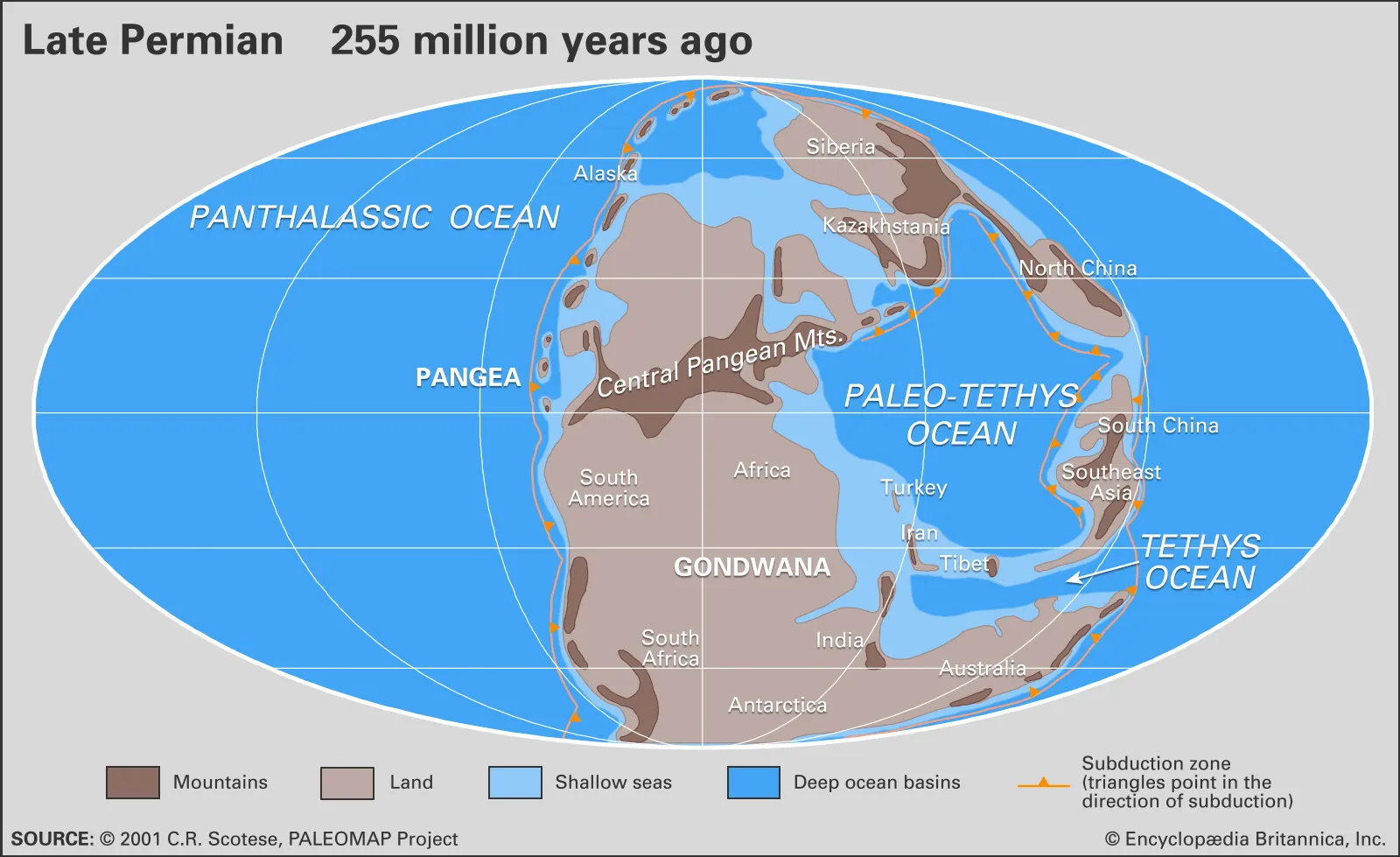
Pangea was the most recent supercontinent in Earth’s 4.5-billion-year history—a time when all landmasses were joined together as one. In the early 1900s, German geologist Alfred Wegener proposed this radical idea after noticing how the east coast of the Americas and the west coasts of Europe and Africa fit together like puzzle pieces, suggesting continents had once been connected and later drifted apart. Though controversial at first, his theory became the foundation of modern plate tectonics, and scientists have since identified even older supercontinents. Pangea itself began forming around 300 million years ago during the late Carboniferous, when the northern landmass Laurasia collided with the southern Gondwana, creating a C-shaped continent that wrapped around the ancient Tethys Ocean.

The Evidence for Pangea

Beyond the puzzle-like fit of coastlines, multiple lines of evidence show that Pangea once existed. When Laurasia and Gondwana collided, they formed the Central Pangean Mountains—an equatorial range comparable to the Himalayas—whose remnants today appear in the Appalachians, Atlas Mountains, and Scottish Highlands, revealing a shared geological history across now-distant lands. Fossils provide equally compelling proof: the pig-sized reptile Lystrosaurus is found in Africa, India, and Antarctica, while the freshwater Mesosaurus appears only in Brazil and West Africa despite being unable to cross oceans, and plant fossils like Glossopteris are scattered across southern continents. Together, these patterns only make sense if these regions were once connected, since the alternative—that identical species evolved separately or somehow crossed vast oceans—is far less plausible.

The End of Pangea

Pangea lasted roughly 100 million years—from the Carboniferous through the Triassic—before beginning to break apart in the early Jurassic around 200 million years ago, just as dinosaurs were rising to dominance. Rather than continuing to compress, the supercontinent was pulled apart from below by slow-moving convection currents in the mantle, which behave like a vast heat-driven conveyor belt. With all continents fused together, Pangea acted like a thermal blanket, trapping heat beneath the crust until pressure built to a breaking point. This led to massive upwellings of superheated rock, called mantle plumes, rising from below like continent-sized lava lamps. These plumes weakened and thinned the crust, creating domes, fractures, and intense volcanic activity that ultimately split the land apart—marking the beginning of Pangea’s breakup, including the early separation of North America from the rest of the supercontinent. 

The Newark Supergroup

Schoch and Sues, 2013
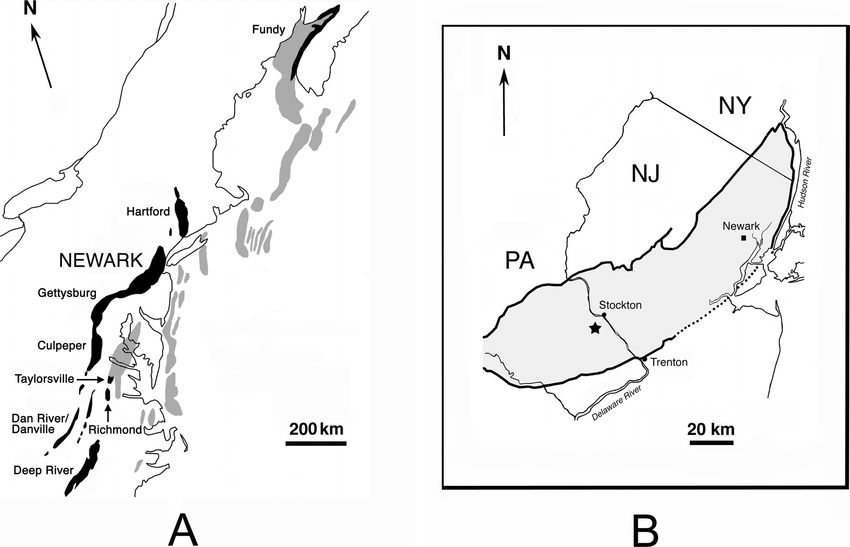
The Newark Supergroup is one of the clearest geological scars left behind by the breakup of Pangea, stretching over 1,300 miles from the Carolinas to Nova Scotia and covering more than 33,000 square miles. Formed around 230 million years ago as North America began pulling away from Africa, these basins are essentially “stretch marks” in the crust—long, narrow depressions created by extensional forces. Many are classified as aborted rifts, meaning they began to split but never developed into full ocean basins. Structurally, they are mostly half-grabens, where movement along a single major fault caused the land to tilt as it dropped, creating a steep faulted side (typically to the northwest) and a gentler slope to the southeast where sediments accumulated over time. These basins didn’t form uniformly; instead, they’re divided into southern, central, and northern segments, each with its own history. In the south, rifting was intense but short-lived, ending by the late Triassic, while farther north, rifting continued into the Jurassic, deepening the basins enough for seawater from the Tethys Ocean to flood in, leaving behind marine deposits like salt and limestone.

The Newark Basin in New Jersey offers a detailed window into this process, preserving nearly 20,000 feet of sedimentary and igneous rock that record the evolution of the landscape. The lowest layer, the Stockton Formation, reflects an early, high-energy environment dominated by braided rivers depositing coarse sandstones and conglomerates, evidence of rapid erosion and sediment transport from nearby highlands. Above it, the Lockatong Formation marks a shift to deeper, more stable lake environments, where fine-grained shales and mudstones accumulated in low-oxygen waters rich in organic material. These deposits form repeating Van Houten cycles, recording fluctuations between deep and shallow lake conditions driven by long-term climate changes. At the top, the Passaic Formation reveals another transformation: red mudstones, mud cracks, and evidence of well-oxygenated conditions point to a drier climate with shallow, temporary lakes and exposed floodplains. Together, these layers show how the breakup of Pangea not only tore the continent apart physically, but also reshaped regional environments and climate over time.

The Central Atlantic Magmatic Province

Magma plays a crucial role in the story of Pangea’s breakup, adding a violent volcanic dimension to the sedimentary record of the Newark Supergroup. While formations like the Stockton, Lockatong, and Passaic were built from compacted sands and muds, they are cut through by evidence of intense igneous activity. A striking example is the Palisades along the Hudson River, where a 600-foot cliff formed around 200 million years ago as magma forced its way into cracks created by rifting. This intrusion, known as the Palisades Sill, cooled slowly beneath the surface into a dense igneous rock called diabase, remaining buried for millions of years until erosion exposed it. Not all magma stayed underground, however. Some erupted onto the surface in massive fissure eruptions, forming the Watchung Mountains of northern New Jersey. Instead of volcanic cones, sheets of basalt poured from long fractures in three major pulses, spreading across the landscape and eventually solidifying into thick layers of rock. Though only about 500 square miles remain today, these lava flows once covered over 2,000 square miles, later reshaped by tectonic folding and glacial forces, including the formation of Glacial Lake Passaic during the Ice Age.

These local volcanic features are part of a much larger and more dramatic event known as the Central Atlantic Magmatic Province (CAMP), the largest igneous province on Earth. Covering roughly 11 million square kilometers—about the size of the United States and Canada combined—CAMP represents a massive outpouring of magma tied directly to the breakup of Pangea. Its remnants are scattered across multiple continents, including North America, South America, Africa, and Europe, preserving a global record of this tectonic upheaval. Along the eastern United States, these basalts appear throughout the Newark Supergroup, from the North Mountain basalts in Nova Scotia to the Deerfield basalts in Massachusetts and the Hickory Grove basalts in Virginia. Each eruptive pulse may have lasted less than a century, but together they spanned roughly 600,000 years, releasing staggering volumes of lava. This wasn’t just regional volcanism—it was a planetary-scale event that reshaped continents, altered climates, and marked one of the most significant geological turning points in Earth’s history.

The Mid-Atlantic Ridge
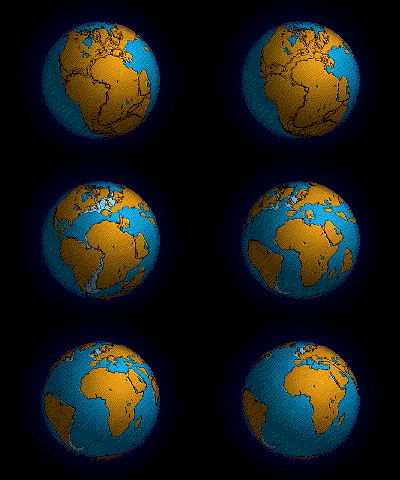
The breakup of Pangea didn’t end with massive lava flows like the Central Atlantic Magmatic Province—it’s a process that’s still happening today, as the American plates continue drifting away from Africa and Eurasia at about an inch per year, roughly the speed your fingernails grow. After surface volcanism slowed, seafloor spreading took over, giving birth to the Atlantic Ocean along the Mid-Atlantic Ridge—an underwater mountain chain marking the divergent boundary between these continents. Here, tectonic plates pull apart, allowing magma to rise, cool, and continuously form new oceanic crust, a process that began around 200 million years ago and still reshapes the seafloor today as ocean waters fill the widening gap. While most of this ridge lies hidden deep beneath the ocean, Iceland sits directly atop it, where an additional mantle plume has pushed so much volcanic material upward that it breaks the surface—creating a place where you can literally stand between continents as they drift apart. Without this ongoing tectonic activity, features like Iceland wouldn’t exist, and the vast Atlantic coastline, including places like the Outer Banks, would never have formed—reminding us that the forces that split Pangea are still actively shaping our world.

How the Beaches were Built

As the Atlantic Ocean widened, North America’s once-violent rifted edge transformed into a stable passive margin, where tectonic chaos gave way to erosion. Early on, the coastline was jagged and scarred by exposed bedrock and volcanic remnants from the Newark Supergroup, but as the continent drifted farther from the Mid-Atlantic Ridge, tectonic activity shifted offshore, leaving the land relatively quiet. By the start of the Cretaceous around 145 million years ago, rivers began carrying vast amounts of sediment—sand, mud, and gravel—from inland regions like the eroding Appalachians toward the coast. With no major tectonic disruptions, these materials accumulated into a broad continental shelf, where waves and currents reshaped them into beaches, barrier islands, and coastal plains. Much of the sand along modern coastlines, from Virginia Beach to Miami, originated from this slow breakdown of ancient mountains, illustrating a profound geological reversal: the same forces that built Pangea’s mountain ranges were now wearing them down and redistributing their remnants along a calm, expansive shoreline.

Pangea and People

Argillite Spearheads

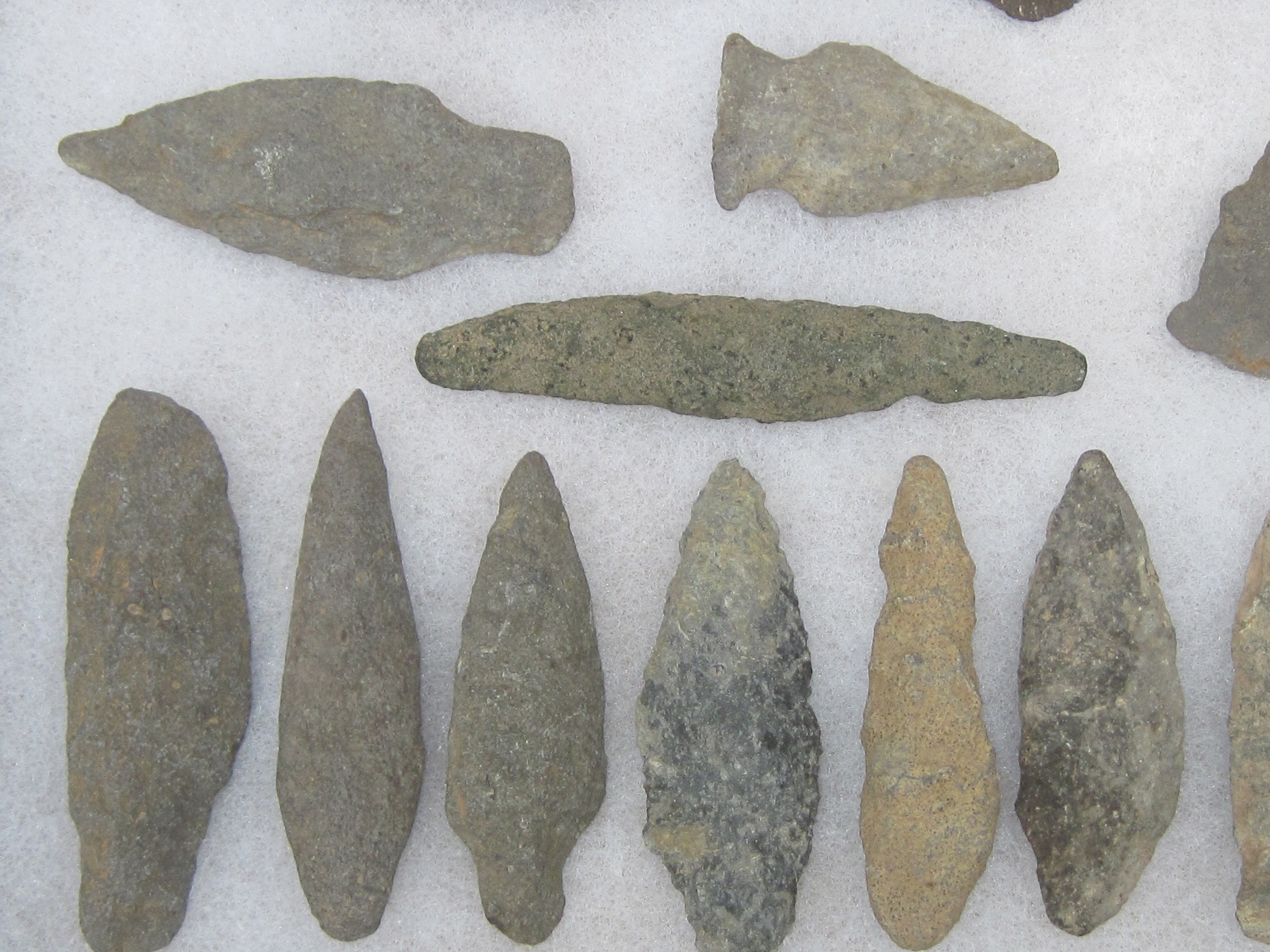
The breakup of Pangea didn’t just shape America’s landscapes—it directly shaped the human history that unfolded on top of them by concentrating the resources people later depended on. In the Mid-Atlantic, the Lenape (often called the Delaware) lived in a seasonal, highly adaptive way, moving between river villages, upland hunting grounds, and coastal fishing areas while cultivating crops like the “Three Sisters.” Much of their homeland sat within the Newark Basin, where they relied heavily on locally available argillite from the Lockatong Formation. This tough, fine-grained stone—abundant across what archaeologists call “Argillite Alley”—was quarried and knapped into a wide range of tools, including axes, scrapers, projectile points, and even drilling implements. Though not as sharp as chert, its availability made it a cornerstone of everyday life, and its distribution across regions like coastal New Jersey and Manhattan also reveals extensive trade networks and movement across the landscape.

After European arrival in the 1600s, the same geologic foundation took on a new economic role. Colonial powers prioritized extraction and export, and the Newark Basin’s geology again proved important through its scattered copper deposits. These ores formed when magma intrusions like the Palisades heated surrounding rocks and circulated metal-rich fluids through fractures, leaving behind veins of copper minerals such as chalcocite and chrysocolla. Mining began in the early 1700s at sites like the Schuyler Mine in New Jersey, where deep shafts, underground chambers, and even America’s first steam engine pump were used to combat flooding. Despite early importance, these operations eventually collapsed under economic pressure as richer, more accessible copper deposits were discovered in the American West, making the eastern mines uncompetitive.

Another enduring resource is brownstone, a reddish sandstone from the Stockton and Passaic Formations that owes its color to iron-rich hematite. Once used for simple colonial foundations, it became a defining architectural material in 19th-century American cities, prized for its workability and elegant appearance. Quarried heavily in New Jersey, it built many of New York City’s iconic townhouses, which today rank among the most expensive real estate in the world. Because the original quarries closed in the early 20th century, authentic brownstone is now finite, further increasing its cultural and economic value.

Together, these examples show how the breakup of Pangea set the stage for everything that followed—not only shaping mountains, basins, and coastlines, but also determining where people lived, what they used, and how wealth was built. The Atlantic is still widening today, meaning the same deep-time forces continue to shape both the land and the societies built upon it.

Sources:

[1] Marshak, S. 2012. Essentials of Geology (Fourth Edition). W. W. Norton & Company.

[2] What was Pangea?

[3] Tollo, R., et al. 2010. “From Rodinia to Pangea: The Lithotectonic Record of the Appalachian Region.” Geological Society of America Memoirs.

[4] Fossil Evidence

[5] Condie, K. C. (2016). “Plate Tectonics and Crustal Evolution.” Academic Press.

[6] Schultz, A. 1988. “Hydrocarbon potential of Eastern Mesozoic Basins.” UNITED STATES DEPARTMENT OF INTERIOR GEOLOGICAL SURVEY.

[7] Newark Basin

[8] Withjack, M., et al. 2012. “Development of the passive margin of eastern North America: Mesozoic rifting, igneous activity, and breakup.” in Bally, A. W., and Roberts, D. G., eds., Principles of Phanerozoic Regional Geology, Volume 1: Amsterdam,  Elsevier, p. 301-335.

[9] Herman, G., et al. 2010. “Contributions to the geology and hydrogeology of the Newark Basin.” New Jersey Geological Society, Bulletin 77.

[10] Geology of the Newark Rift Basin: Van Houten Cycle

[11] Harper, D. 2013. Roadside Geology of New Jersey. Mountain Press Publishing Company.

[12] Faust, G., 1975. “A review and interpretation of the geologic setting of the Watchung Basalt flows, New Jersey.” U.S. Geological Survey Professional Paper 864, 41.

[13] Blackburn, T., et al. 2013. “Zircon U-Pb Geochronology Links the End-Triassic Extinction with the Central Atlantic Magmatic Province.” Science 340(6135):941–945.

[14] Marzoli, A.et al. 2011. “Timing and duration of the Central Atlantic magmatic province in the Newark and Culpeper basins, eastern U.S.A.” Lithos, 122(3-4):175–188.

[15] Understanding plate motions

[16] Tectonic Movements Þingvellir

[17] Kraft, H. 2001. The Lenape-Delaware Indian Heritage: 10,000 BS to AD 2000.Lenape Books.

[18] Woodward, Herbert. 1944. “Copper Mines and Mining in New Jersey.” New Jersey Geological Society, Bulletin 57.

[19] Pallis, T. 2007. “New Jersey Brownstone.” Unearthing New Jersey, NJDEP, 3(1).

SUBSCRIBE FOR MORE