The Sharpest Weapon in Human History

May 04, 2026
Obsidian Macuahuitl

By: Greg Schmalzel

The sharpest weapons in human history probably aren’t what you think. They weren’t made of iron or steel, and they definitely weren't made of copper or bronze. In fact, they weren’t even metal. They were made of volcanic glass. You may have heard of obsidian from video games like minecraft or terraria, but in the real world, this was a key material in our species' ancient toolkits. It is extremely sharp, and because of this, it was used to make some of our most effective weapons and tools. Under the right conditions, it can form an edge so fine it approaches the limits of what we can even see.

But what makes obsidian so sharp? And when did humans start to realize its potential? I’m deeply fascinated by these questions. So join me in exploring how a piece of volcanic glass became one of the deadliest and most important materials in human history.

To watch the full YouTube video, click HERE.

What Is Obsidian?

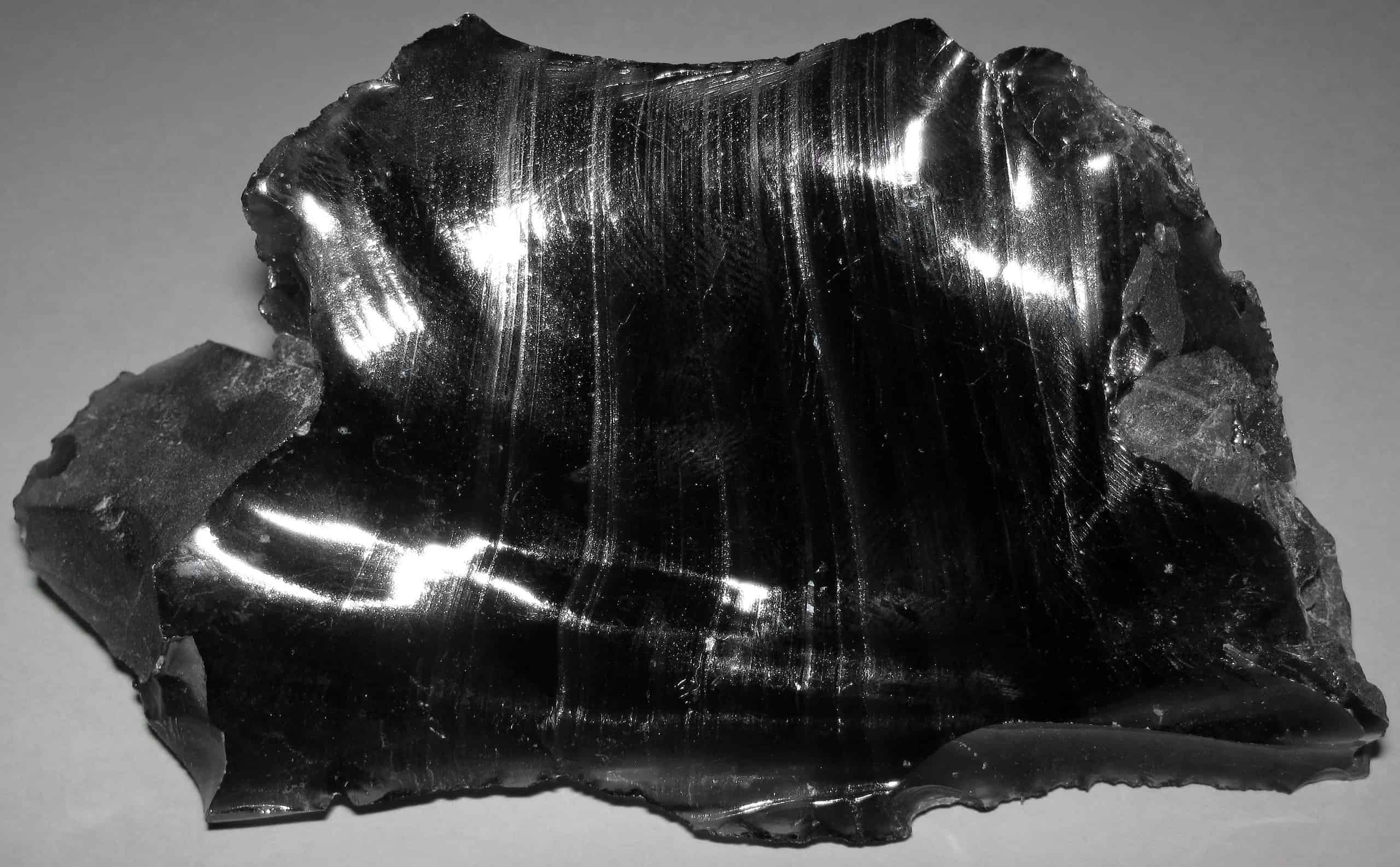
Raw obsidian

Obsidian forms during some of the most violent moments on Earth—volcanic eruptions. When silica-rich (rhyolitic or dacitic) lava erupts, its thick, viscous nature prevents atoms from moving freely. Normally, as lava cools slowly, atoms organize into crystals, like in granite. But obsidian forms under extreme thermal shock: when this lava cools almost instantly upon contact with air or water, the atoms are “frozen” in place before they can crystallize. The result is an amorphous material—volcanic glass—with no internal structure. This is what allows obsidian to fracture so cleanly and produce incredibly sharp edges. While it’s usually black due to iron or magnetite inclusions, variations in chemical composition can produce striking colors and patterns, from iridescent sheens to snowflake-like spots.

Why Is Obsidian So Sharp?

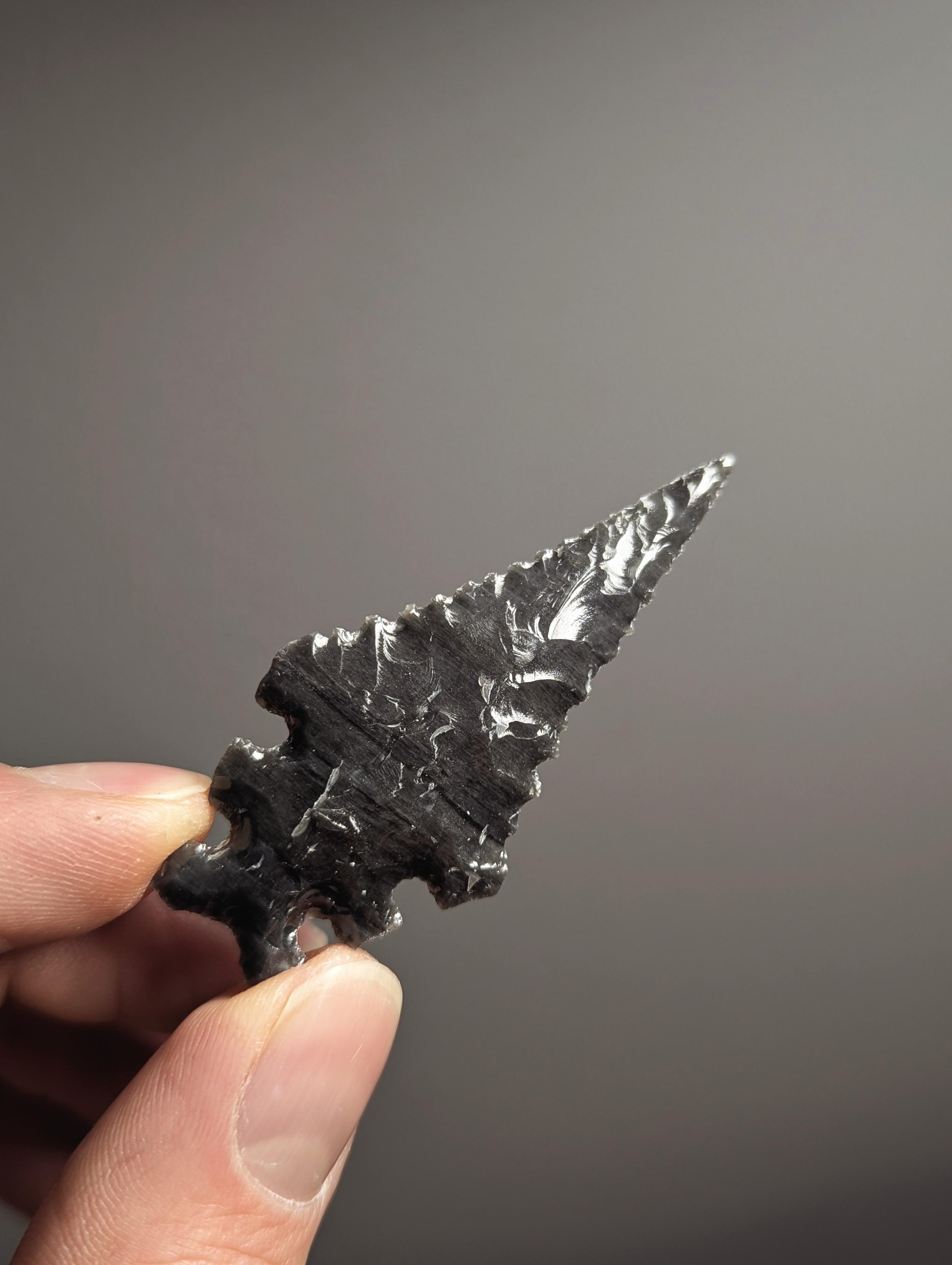
Obsidian projectile point

While some ancient cultures appreciated obsidian for its beauty, its true value came from how it breaks—and why that makes it so sharp. Most rocks fracture along internal crystal planes, but obsidian has no crystal structure at all. When struck, energy spreads through it in rippling waves, producing smooth, curved breaks known as conchoidal fractures. At the point of impact, a “bulb of percussion” forms, and from there, the fracture travels outward in a predictable arc. Skilled toolmakers learned to control this process with remarkable precision, shaping obsidian into blades and flakes with edges far sharper than typical stone tools.

That sharpness is so extreme it’s still recognized today. Under a microscope, steel blades appear jagged, with edges ranging from about 100 to 1000 nanometers thick. Obsidian, by contrast, can reach edges just a few nanometers wide—nearly molecular in scale. In some cases, obsidian scalpels have been shown to slice cleanly through individual cells, producing cuts so fine they may even reduce tissue damage and inflammation. It’s a reminder that this “primitive” material operates on a level of precision that even modern technology struggles to match.

Paleolithic Japan

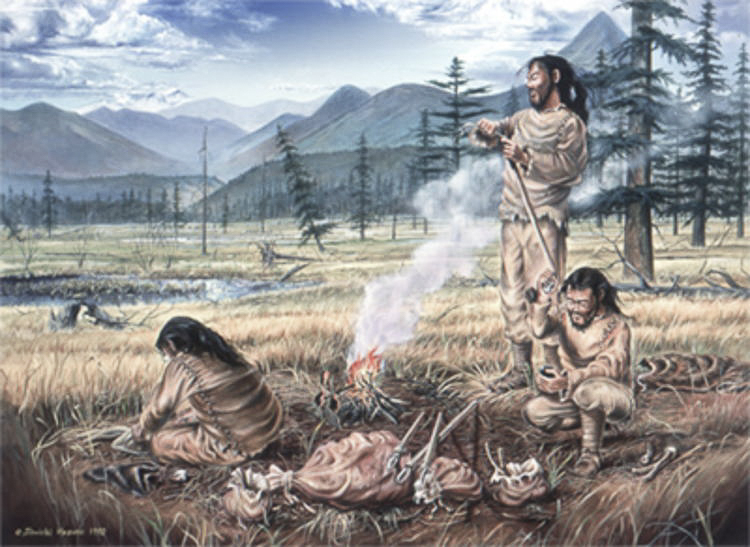
Ancient Japanese hunter-gatherers

For example, let’s take a look at paleolithic Japan. In Paleolithic Japan, obsidian became a cornerstone of early technology thanks to the region’s volcanic landscape. As early as 30,000 years ago, groups were mining it from multiple sources, including sites like Hoshikuso Pass, where shallow pits and workshops reveal organized extraction. Over time, toolmakers shifted from lower-quality materials to obsidian, crafting precise microblades and projectile points. At sites like Fukui Cave, thousands of these microblades have been found, often used as interchangeable inserts in composite weapons—grooved into bone or wood shafts to create barbed tools capable of inflicting severe wounds. This technology spread widely, with Japanese obsidian traded across thousands of kilometers, showing how valuable and mobile the material was among hunter-gatherers.

That importance didn’t disappear with the rise of settled societies—it expanded. In the ancient Middle East, early agricultural communities were already importing obsidian from sources up to 1,000 miles away, demonstrating the existence of long-distance trade networks. By the time of early urban centers like Tell Brak in Mesopotamia, obsidian was being used not just for tools, but for crafted objects, including delicate blades and even ceremonial items like a carved obsidian chalice. Its presence in large quantities far from natural sources highlights how integral it was to emerging systems of trade, industry, and social complexity. From mobile hunter-gatherers to some of the first cities, obsidian remained a material of both practical and cultural importance.

Mesopotamia and the Middle East

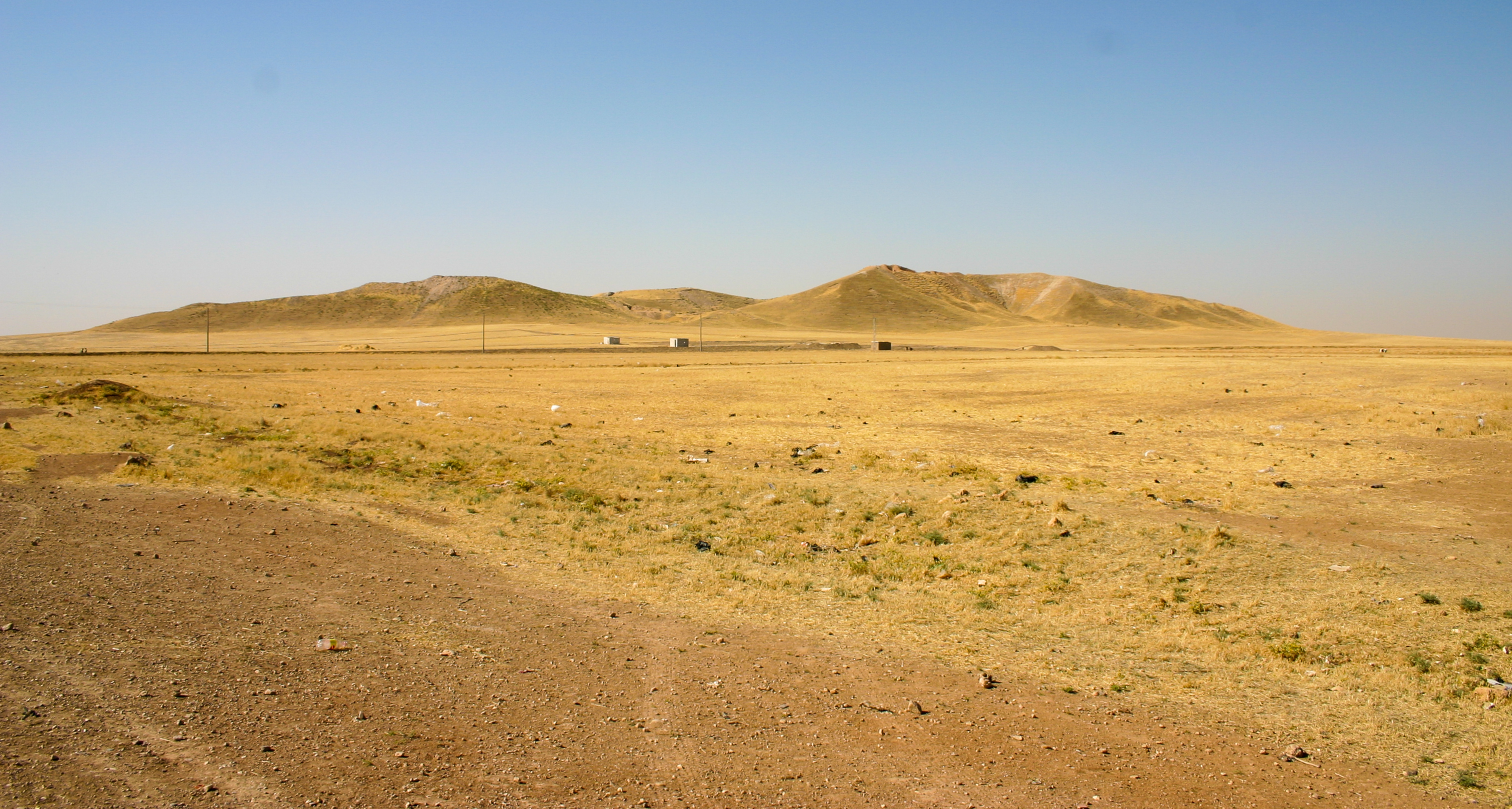
Tell Brak

In the Middle East, obsidian continues to appear in significant quantities as societies shift toward agriculture and permanent settlement. Sites in Iran dating to around 12,000 years ago contain large assemblages of obsidian—sometimes over 2,000 artifacts—despite much of the material being sourced from as far as 1,000 miles away. This indicates that long-distance exchange networks were already in place during the early stages of village life in the region.

As urbanism emerges in Mesopotamia, obsidian becomes even more embedded in complex economic and industrial systems. Sites like Tell Brak, a major urban center from the late fifth and early fourth millennia BCE, contain abundant obsidian raw material and finely worked tools, including blades and ground discs. One exceptional find—a chalice made from a hollowed obsidian core with a marble base—shows the material was not limited to utilitarian use. Since obsidian is not locally available, its presence at Tell Brak reflects extensive trade networks likely reaching into Anatolia, highlighting how volcanic glass circulated through early urban supply chains at the dawn of civilization.

The Aztecs and the Macuahuitl
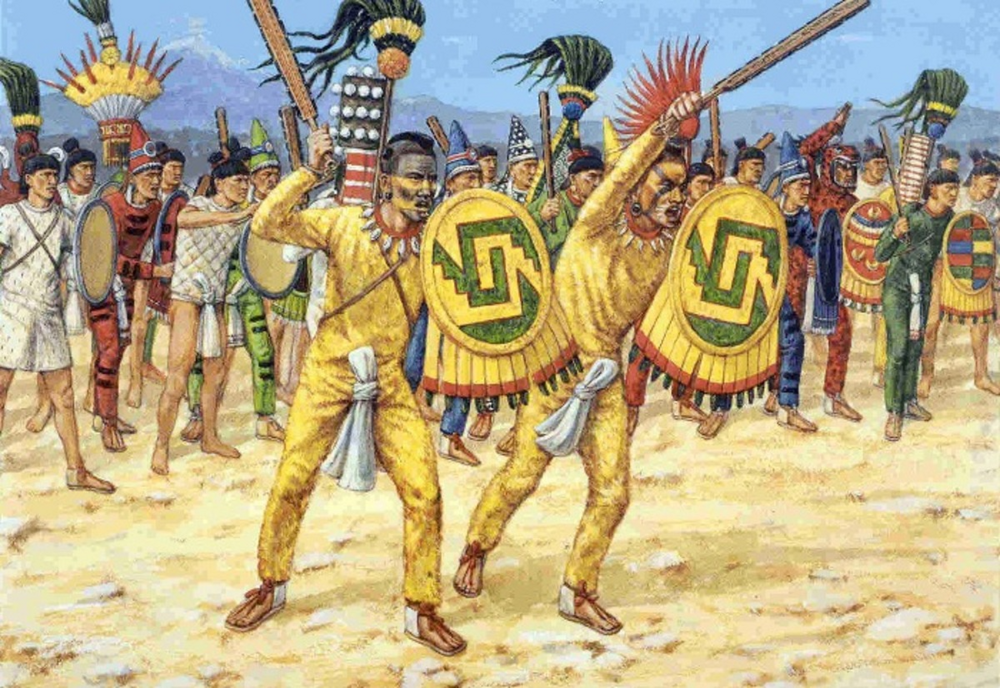
Aztecs weilding macuahuitl

If you want to see obsidian at its most dangerous, you can find it in central America. 

By the time the Spanish arrived in the early 16th century, the Aztec Empire—self-identified as the Mexica—dominated much of central Mexico from their island capital of Tenochtitlan. Despite lacking iron or steel, they developed a highly sophisticated society built on agriculture, tribute systems, religion, and warfare. Instead of metal, they relied heavily on stone technologies, especially obsidian, which was mined from sources such as the Sierra de las Navajas and fashioned into a wide range of tools including knives, scrapers, drills, and projectile points. In Aztec society, obsidian was as economically important as modern synthetic materials, forming the backbone of everyday technology.

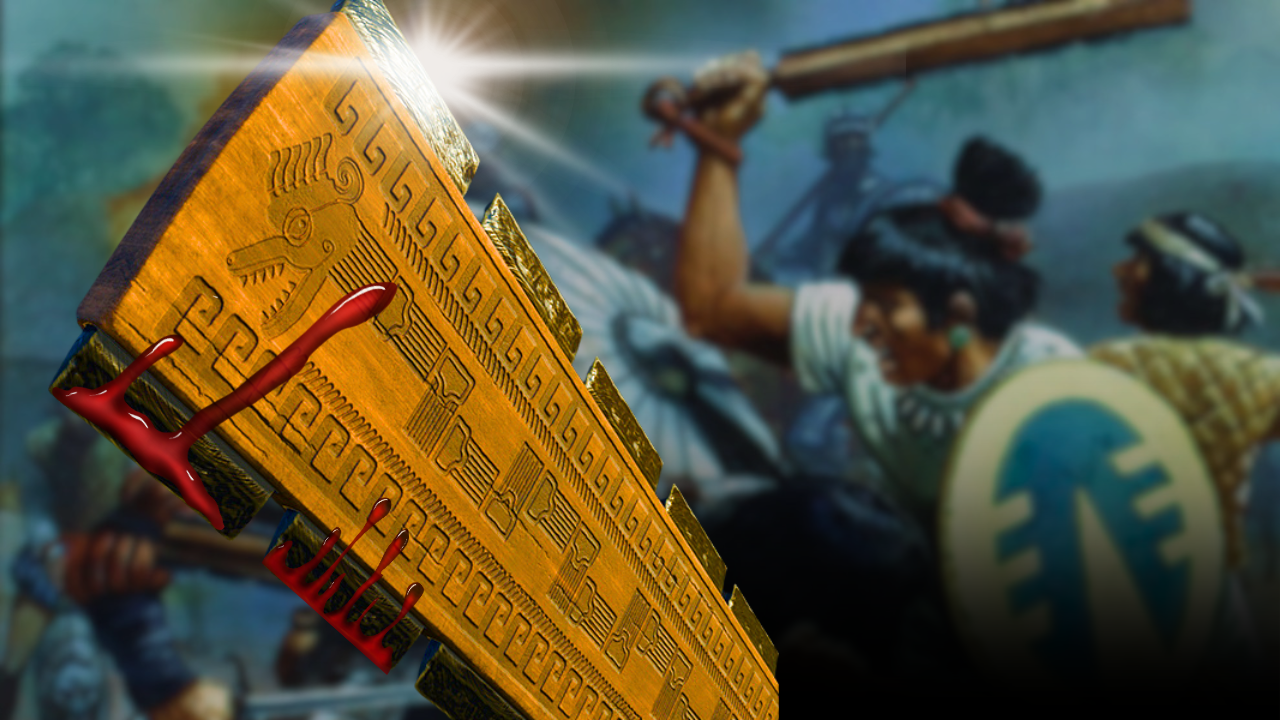
Obsidian also carried deep cosmological meaning. Its dark, reflective surface was associated with divinity, particularly the god Tezcatlipoca, the “Smoking Mirror.” Obsidian mirrors were used in ritual divination, linking the material to prophecy and the spiritual realm. This dual role—both practical and sacred—culminated most dramatically in warfare. The macuahuitl, an iconic Aztec weapon, was a wooden club embedded with razor-sharp obsidian blades set in grooves with resin. Rather than a continuous metal edge, it functioned like a serrated sword capable of inflicting severe, jagged wounds, as microscopic obsidian flakes often remained embedded in tissue.

Spanish observers were shocked by the effectiveness of these weapons, with accounts describing macuahuitl strikes powerful enough to kill horses or penetrate armor. While such reports may be exaggerated, they reflect the psychological impact of Aztec warfare. Other weapons like the tepoztopilli spear reinforced this reputation for lethality. At the same time, the design of obsidian weapons may have aligned with Aztec priorities of capturing rather than simply killing enemies for ritual sacrifice, making them tools shaped as much by ideology as by combat needs.

Sources:

[1] How Stone Age blades are still cutting it in modern surgery

[2] Disa, J., et al. 1993. “A comparison of obsidian and surgical steel scalpel wound healing in rats.” Plast Reconstr Surg. 92(5):884-7.

[3] Earliest use of obsidian  

[4] Izuho, M., and Sato, H. 2007. “Archeological obsidian studies in Hokkaido, Japan: retrospect and prospects.” Bulletin of the Indo-Pacific Prehistory Association 27

[5] Hoshikuso Pass Obsidian Source Site

[6] Hayashi, H. 1968. “The Fukui Microblade Technology and Its Relationships in Northeast Asia and North America Kensaku Hayashi.” Arctic Anthropology 5(1):128-190.

[7] New analysis of obsidian blades reveals dynamic Neolithic social networks 

[8] Frahm, E. and Carolus, C. 2022. “Identifying the origins of obsidian artifacts in the Deh Luran Plain (Southwestern Iran) highlights community connections in the Neolithic Zagros.” Proc. Natl. Acad. Sci. U.S.A. 119(43):e2109321119.

[9] Oates, J., et al. 2007. “Early Mesopotamian urbanism: a new view from the north.” Antiquity. 2007;81(313):585-600.

[10] Smith, Michael E. (1996). The Aztecs. Cambridge, Mass: Blackwell Publishers.

[11] John Dee's Spirit Mirror  

[12] Obregón, M. 2006. “The macuahuitl : an innovative weapon of the Late Post-Classic in Mesoamerica.” Arms and Armour 3(2):127-148.

[13] The Anonymous Conqueror. 1917. Narrative of Some Things of New Spain and of the Great City of Temestitán The Cortés Society. Archived 6 March 2015 at the Wayback Machine Chapter 4. New York. 

SUBSCRIBE FOR MORE