
The Secret Role of Geology in Human Evolution
Jan 26, 2026
By: Greg Schmalzel
The oldest evidence of life on earth comes from a rock in Australia. It’s called North Pole Chert. It’s about 3.5 billion years old and the fossils inside it are so small, you need a high-powered microscope to see them. Now, what if I asked you this: what does this rock in Australia have in common with ancient Native American technology? The answer might shock you, but as you’ll see throughout this video, there is a hidden connection here. A thread that spans all of human history.
That thread is woven into the fabric of mountains, into our species’ oldest tools, and into the shelters that kept us safe. It is geology. Human evolution didn’t happen in a vacuum. It happened on a planet that was constantly changing beneath our feet. Geology quietly shaped the conditions that made our survival possible, and even threatened us at times. The movement of continents influenced climate. Volcanic eruptions reshaped landscapes and buried archaeological sites. Glaciers opened and closed migration paths across the world.
As historian Will Durant once warned, “Civilization exists by geological consent, subject to change without notice.” So did geology secretly shape our evolution? Well, it becomes less secretive and more apparent the more we look.
For the full YouTube video, click HERE.
Earth: The Stage of Evolution
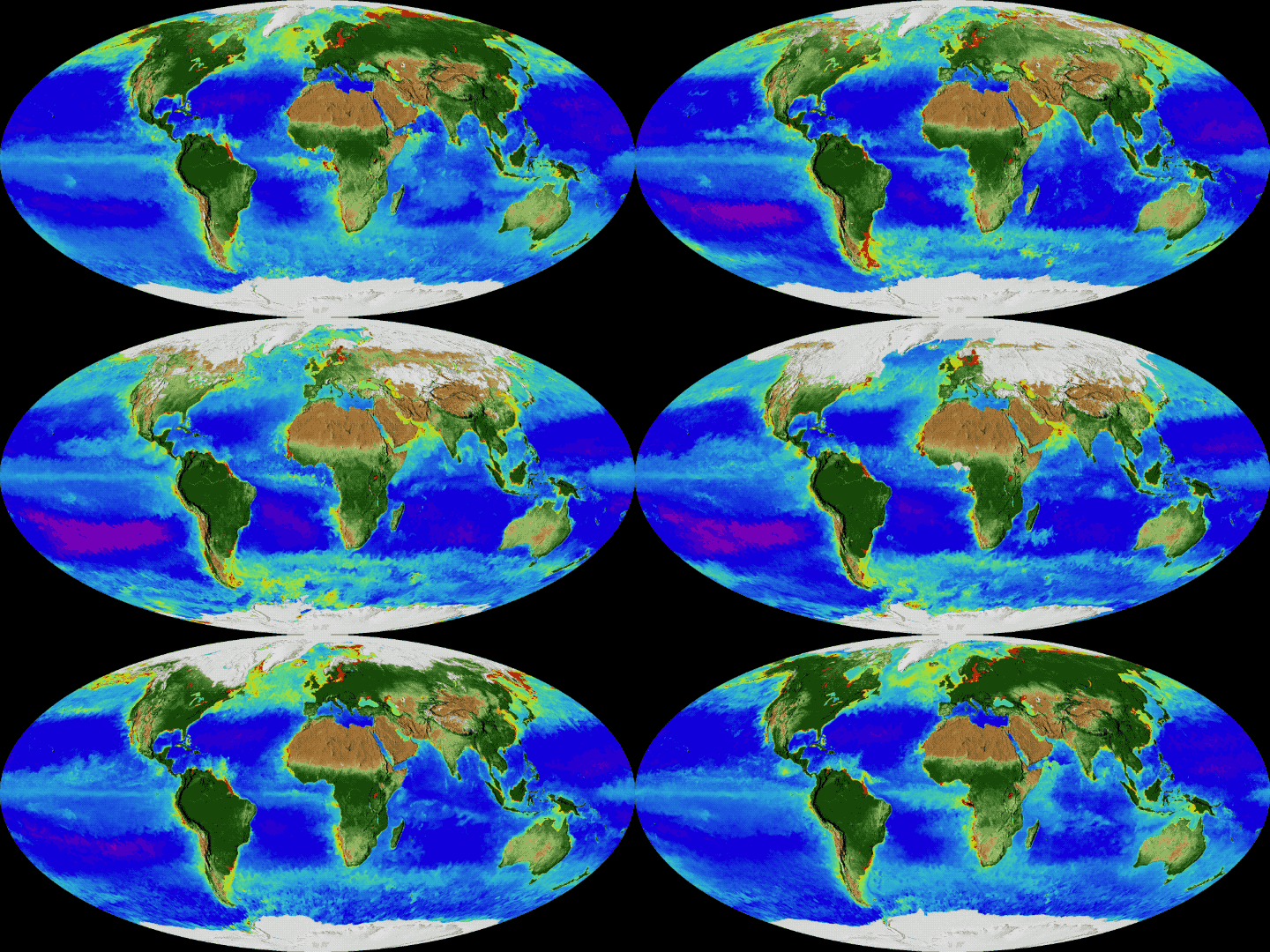
For starters, there is one rock more important to human evolution than any other—Earth. Around four billion years ago, it cooled enough for liquid water to persist and its crust stabilized. Oceans formed, minerals concentrated, and chemistry crossed the threshold into biology—a process scientists call abiogenesis. Earth’s geology created the stage for life to emerge.
As life took hold, the planet actively shaped its evolution. Plate tectonics rearranged continents, creating shallow seas rich in sunlight and minerals—evolutionary laboratories. Around 540 million years ago, stable climates and nutrient-rich oceans triggered the Cambrian Explosion, when complex life diversified. Hard skeletons built from calcium and other elements from Earth’s rocks appeared, predators and prey evolved, and an evolutionary arms race accelerated.
Mass extinctions, often triggered by volcanism or asteroid impacts, repeatedly reset the stage. One, 66 million years ago, ended the dinosaurs. Mammals survived, favored by adaptability. Some took to the trees, and primates evolved grasping hands and depth perception—early steps toward humanity.
Eventually, Africa’s competitive ecosystems shaped primates with cooperation, flexibility, and intelligence. From this lineage, humans emerged. Long before we built tools or shelters, Earth built us—setting the chemical, geological, and ecological foundations that made our evolution possible.
The story gets even more interesting once the human lineage appears—and that’s where our journey really begins.
Olduvai Gorge: A Prehistoric Silicon Valley
Dan Lundberg
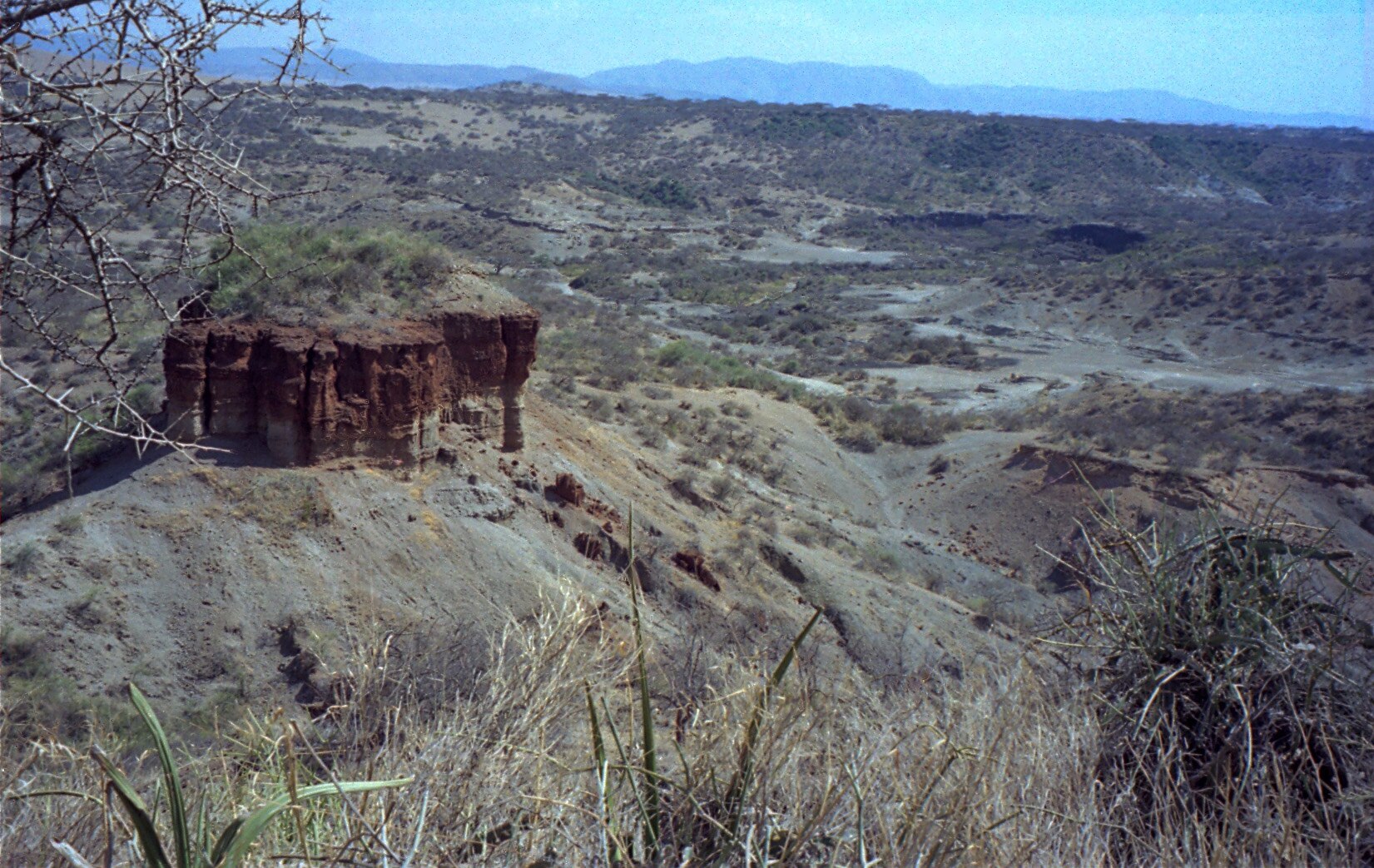
Earth didn’t just create space for life—it created spaces where innovation could explode. Few creatures capitalized on this better than humans. Millions of years ago, a prehistoric “Silicon Valley” emerged in Africa: Olduvai Gorge, one of the most important paleoanthropological sites in the world. Cutting through the Serengeti Plains along the East African Rift, the gorge formed as the African Plate slowly split, producing faults, basins, and volcanic activity. Lava flows and ash layers repeatedly covered the landscape, creating sediments that preserved fossils, footprints, and tools.
Olduvai’s stratigraphy spans nearly 100 meters. Bed I preserves Homo habilis, Paranthropus boisei, and early Oldowan tools (~1.8 million years ago). Bed II shows more advanced Oldowan and early Acheulean tools alongside Homo erectus. Beds III and IV contain later H. erectus and, eventually, Homo sapiens. This layered record allows us to see stone tool evolution in context with species turnover.
Stone tools were intimately linked to the geology. Hominins used basalt, quartzite, and rare chert, selecting materials based on fracture properties. Experiments show chert flakes produced sharper, longer-lasting edges. Archaeologists even identified a quarry, the MNK Chert Factory Site, where hominins extracted and shaped chert before transporting tools to camps.
Olduvai demonstrates that survival was not just about finding resources, but understanding them. Hominins learned the properties of different rocks, crafted tools with precision, and adapted their technology to the landscape. In essence, geology and ingenuity together shaped human survival and evolution.
The Advantages of Stone Tools
Suyash Dwivedi
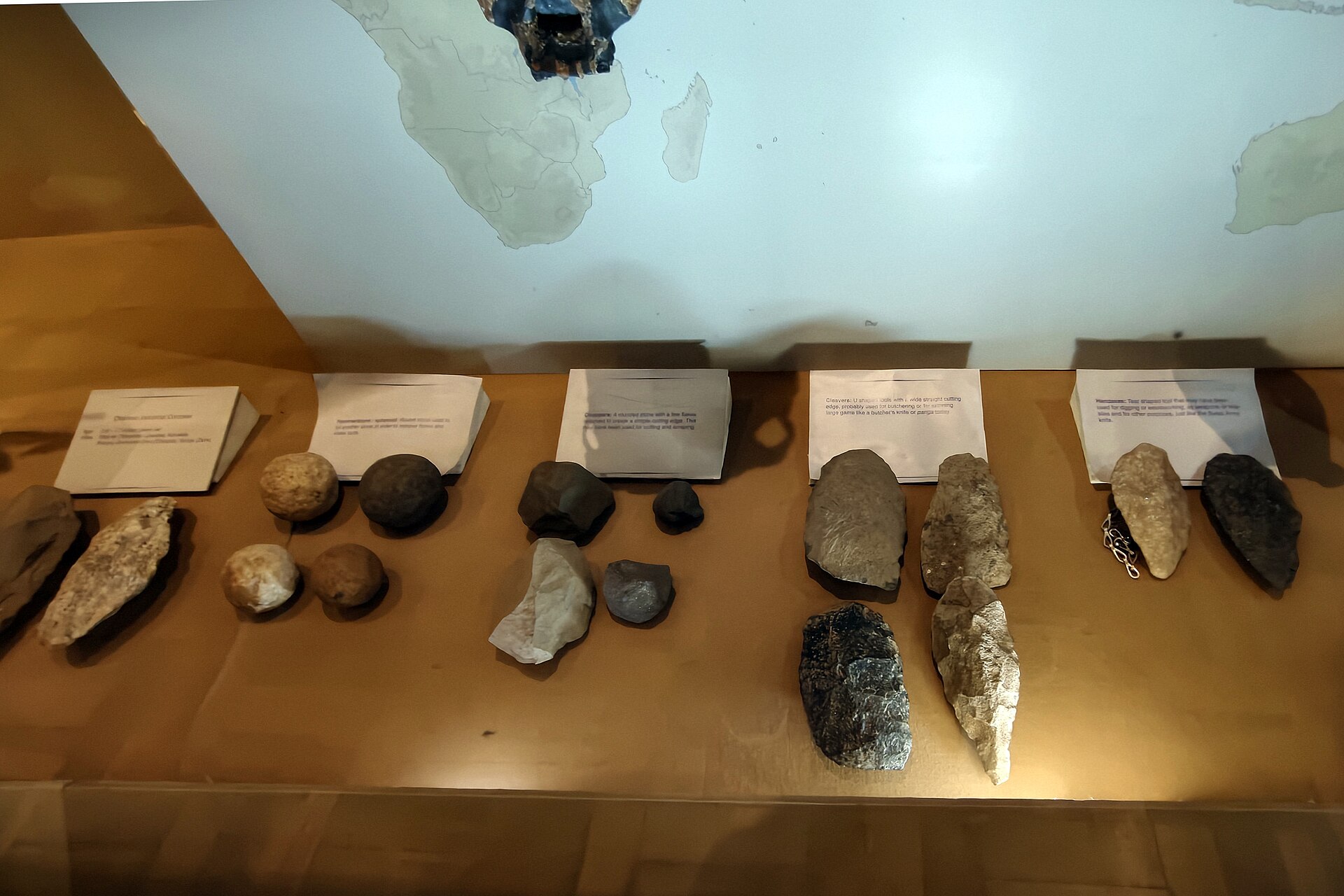
Stone tools provided humans a massive evolutionary advantage, compensating for biological weaknesses like a lack of natural weapons or physical strength. Humans are naturally underpowered compared to many large animals; our success is rooted in technology, not anatomy.
Tools enabled dietary expansion and increased caloric intake. Sharp flakes and larger stones allowed early hominins to butcher animals, access calorie-dense bone marrow, and process tough plant foods. This surplus energy fueled growth, reproduction, and crucially, brain development.
A powerful feedback loop emerged: better tools led to better nutrition, supporting larger, more complex brains. In turn, larger brains improved planning and learning, leading to even better tools. This cycle is evident in the archaeological record where tool complexity and brain size increased together. Consequently, natural selection began to favor intelligence over raw strength.
This intelligence fostered social learning and communication essential for teaching and imitating toolmaking. Tools selected for enhanced communication skills.
Ultimately, tools allowed humans to thrive in diverse environments globally. Instead of evolving specialized bodies, humans adapted culturally through technology, providing the flexibility to hunt different animals, process new foods, and cope with various climates. This adaptability enabled humans to become the most widespread large mammal on Earth.
Caves and Rockshelters
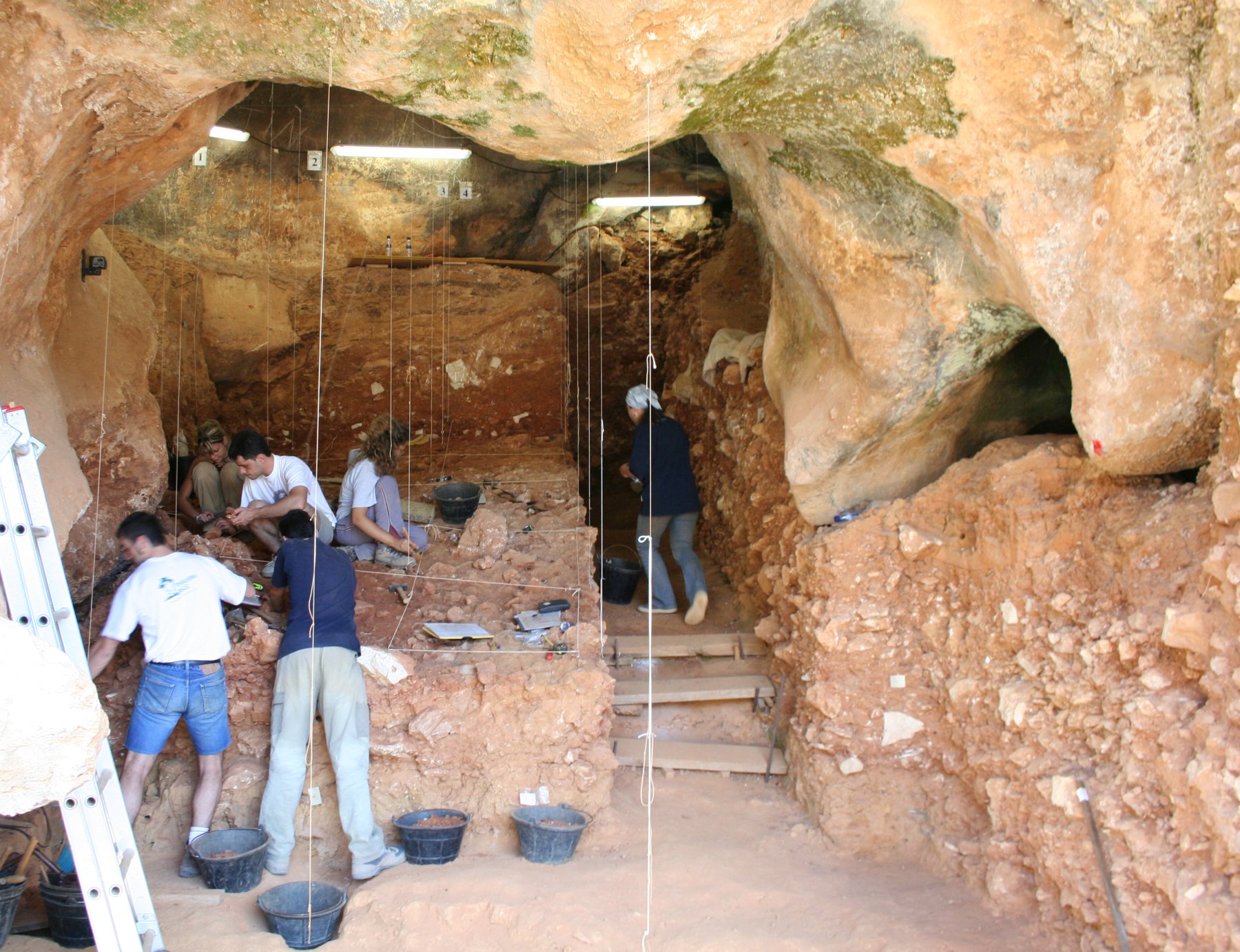
Survival in new lands required more than tools—it required shelter. As humans spread into colder, drier, and unpredictable landscapes, caves and rock overhangs became natural bases of operation. Archaeologically, they appear repeatedly because of their clear survival advantages. Caves provide a stable microclimate, staying cooler in summer and warmer in winter, reducing energy needs for thermoregulation. Combined with a fire, they offered warmth for the most vulnerable: infants, the elderly, or the sick. Enclosed geometry gave protection from storms, predators, insects, and UV exposure, while narrow entrances were easier to defend.
Caves also preserve evidence for archaeologists. Sediments accumulate over time, keeping artifacts and human remains intact. At Atapuerca in Spain, limestone caves like Gran Dolina and Sima de los Huesos record nearly a million years of hominin occupation. Unique finds, such as the red quartzite “Excalibur” hand axe, hint at symbolic behavior, while the caves may even have allowed Neanderthals to endure extreme Pleistocene winters.
In France, Grotte Mandrin shows how Homo sapiens and Neanderthals competed for the same shelter. Modern humans eventually prevailed, likely aided by more advanced stone tools. On the other side of the world, Danger Cave in Utah offered mobile groups in the Great Basin a reliable seasonal base for over 10,000 years, preserving plant remains, basketry, and consistent lifeways.
Even the earliest Americans used caves strategically. Meadowcroft Rockshelter in Pennsylvania preserves a record of over 16,000 years, including pre-Clovis tools like the Miller Lanceolate point. Across continents and millennia, caves provided not just protection but continuity, enabling humans to persist in challenging environments. From Africa to Europe to North America, these geological shelters were essential to survival, cultural development, and technological innovation.
What is Chert? What is Life?
James St. John
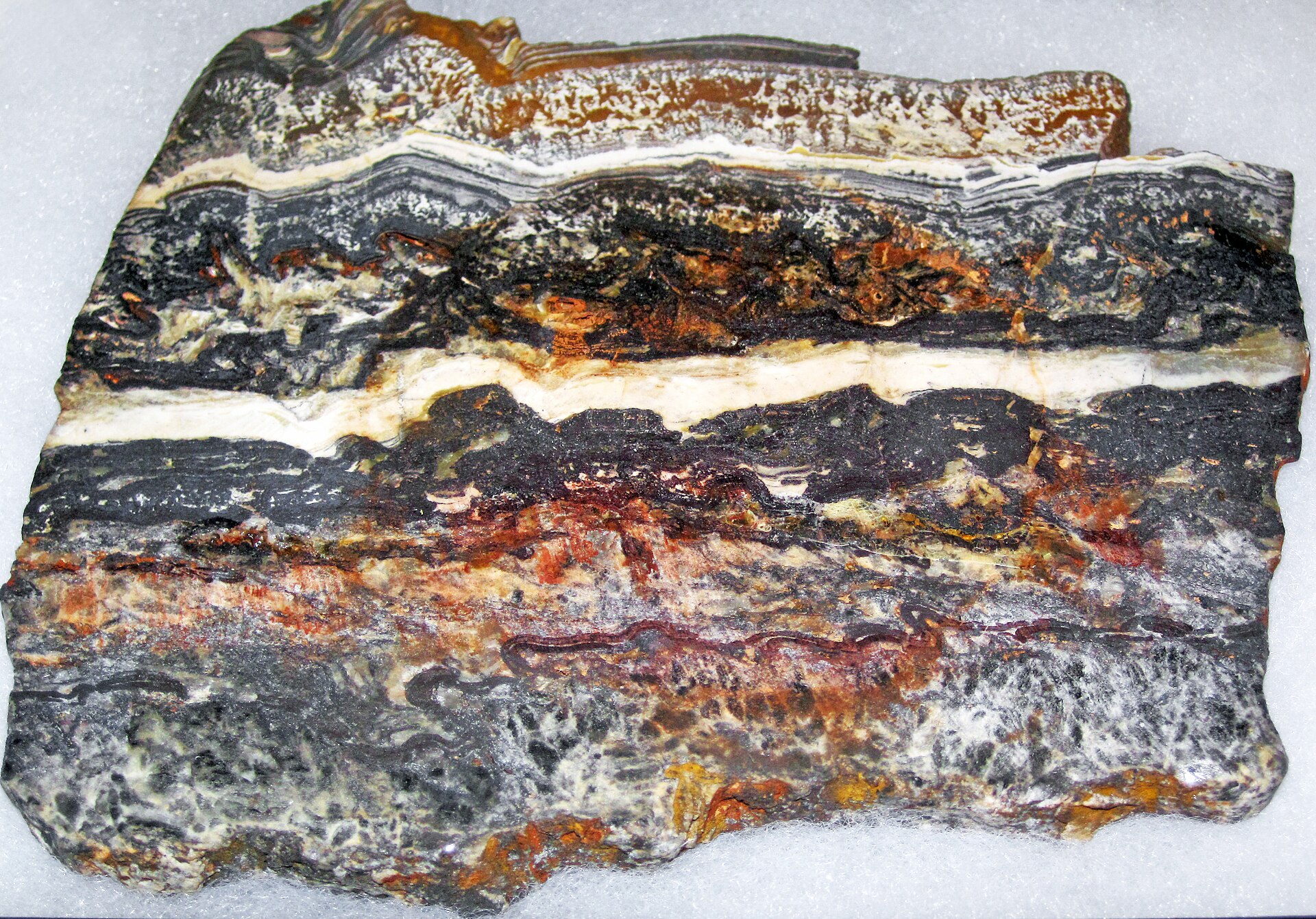
At the start, I asked about the connection between North Pole Chert in Australia and ancient Native Americans. The link is deeper than it seems—it’s all about life turned to stone.
Chert is a sedimentary rock formed from the microscopic skeletons of ancient marine organisms like radiolarians, diatoms, and sponges. When they died, their silica-based skeletons accumulated on the seafloor, compacted, and eventually hardened. This silica structure gives chert its smooth, fine-grained texture, allowing it to fracture predictably in sharp, spoon-shaped conchoidal fractures. That made it a perfect material for ancient tools, from Olduvai Gorge’s early choppers to the Miller points at Meadowcroft Rockshelter.
North Pole Chert, found in Western Australia’s 3.5-billion-year-old Dresser Formation, preserves some of the oldest evidence of life on Earth. Microbial mats, mainly cyanobacteria, were fossilized as silica replaced organic material molecule by molecule, literally turning life into rock.
The story continues with caves. Many limestone caves, relied on by humans for shelter, are also fossilized ecosystems. They formed from layers of shells, corals, and other marine life, compacted and cemented into stone, later carved by groundwater into caverns.
So whether in tools or shelters, humans have repeatedly used the remains of ancient life to survive. Chert and limestone are more than materials—they are recycled biology, transformed by geology into the technology and refuges that allowed humans to thrive across the globe. North Pole Chert, Olduvai Gorge, Meadowcroft, and countless caves share this same deep connection: life preserved, repurposed, and ultimately, a foundation for survival.
Sources:
[1] Ebinger, C. 2005. “Continental break-up: The East African perspective.” Astronomy & Geophysics 46(2):16-21.
[2] Leakey, Mary 1979. Olduvai Gorge. London: Book Club Associates
[3] Key, A. et al. 2020. “Raw material optimization and stone tool engineering in the Early Stone Age of Olduvai Gorge (Tanzania).” J R Soc Interface 17(162):20190377.
[4] Stiles, D. N., et al. 1974. “The MNK Chert factory site, Olduvai Gorge, Tanzania.” World Archaeology 5(3):285–308.
[5] Carbonell, E., et al. 1999. “The Pleistocene site of Gran Dolina, Sierra de Atapuerca, Spain: a history of the archaeological investigations.” Journal of Human Evolution37, 313-324.
[6] Arsuaga, J., et al. 2024. “How the Sima de los Huesos was won.” Anat Rec (Hoboken) 307(7):2225-2245.
[7] Bartsiokas, A. and Arsuaga, J. 2020. “Hibernation in hominins from Atapuerca, Spain half a million years ago” L'Anthropologie 124(5):102797.
[8] Weiss, F. 1984. “Danger Cave.” National Register of Historic Places Nomination Form, Salt Lake City, Utah: U.S. Department of the Interior, National Park Service.
[9] Slimak, L., et al. 2022. “Modern human incursion into Neanderthal territories 54,000 years ago at Mandrin, France.” Sci Adv. 8(6):eabj9496.
[10] Marshak, S. 2012. Essentials of Geology (Fourth Edition). W. W. Norton & Company.
[11] Noffke, N., et al. 2013. “Microbially induced sedimentary structures recording an ancient ecosystem in the ca. 3.48 billion-year-old Dresser Formation, Pilbara, Western Australia.” Astrobiology 13(12):1103-24.
[12] McConaughy, M. 2005. “Meadowcroft Rockshelter.” National Historic Landmark Nomination, NPS Form United States Department of the Interior, National Park Service.
Founder