
The Real Reason Humans Evolved to Walk Upright
Apr 20, 2026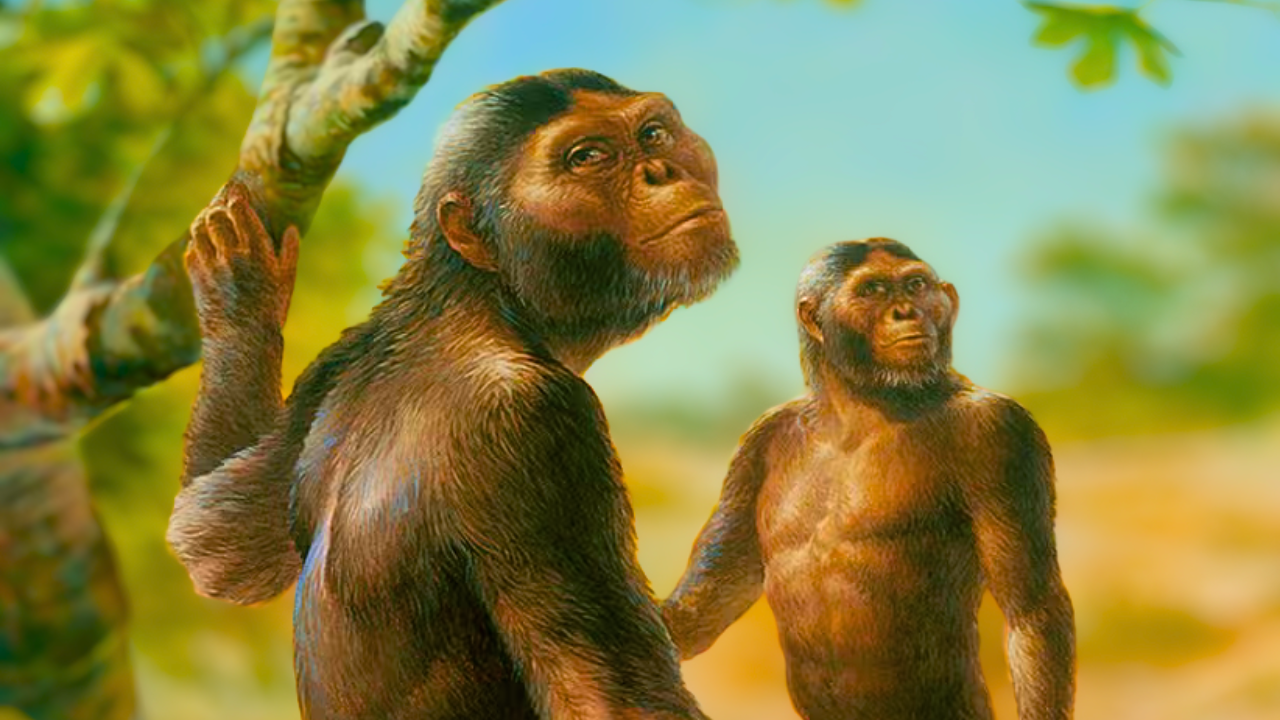
By: Greg Schmalzel
We’ve been told a simple story about how humans evolved. As Africa dried out over millions of years, forests disappeared, grasslands spread, and our ancestors stood up to survive on the savanna. Ever since, we’ve been the special upright ape. It’s clean, intuitive, and for decades it was right. But when you actually look at the evidence, it’s not so obvious that early humans were living on the savanna. Grasslands were certainly a part of the landscape, but the role that this environment played in human evolution has been largely overstated.
Instead, early humans moved through landscapes that kept changing. Forests may have turned into grasslands, but they would reverse or turn into something totally different. And there were deeper forces at play causing these changes. Forces that are hard to see, and that most people never think about.
In those ancient times, the position of the planet, its wobble, and the magma under the crust were creating chaos and constant change on Earth’s surface. And it was in that geological chaos, that something unusual happened. We stood upright not to face the savanna, but to face a world we could not predict. The real reason we became human is deeper than the savanna, and has a lot more to do with massive geological events that shaped the planet as a whole.
For the full YouTube video, click HERE.
What is the Savanna Hypothesis?
Mauricio Anton
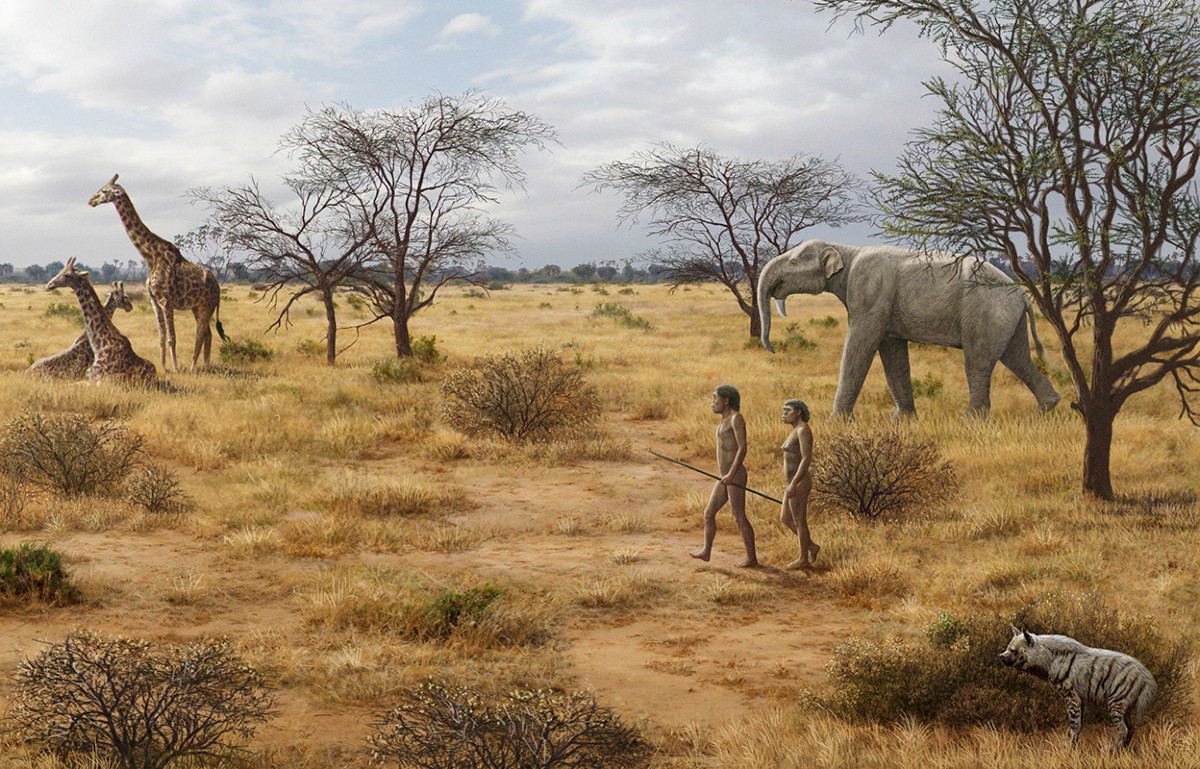
For over a century, scientists have tried to explain why humans walk on two legs while other primates mostly move on all fours. Monkeys and apes are highly adapted to life in the trees, and even when they come to the ground, they remain largely quadrupedal. Bipedalism in apes is rare and unstable. So what made humans different? One idea rose above the rest because it seemed to fit perfectly with early discoveries. As fossils were uncovered across Africa, scientists believed the continent was becoming drier, with forests giving way to open grasslands. The conclusion seemed obvious: our ancestors left the trees and adapted to life on the ground. This became known as the savanna hypothesis.
According to this idea, walking upright offered key advantages in open environments. It allowed early humans to see over tall grass, travel efficiently, and free their hands for carrying food or tools. Thinkers like Jean-Baptiste Lamarck and Charles Darwin helped shape this view, linking environmental change to human evolution. Later discoveries, including Australopithecus, seemed to support it, suggesting bipedalism came before larger brains.
Over time, the hypothesis expanded beyond biology. Psychologists argued humans still prefer savanna-like landscapes today. But in recent decades, new fossil discoveries have begun to challenge this simple narrative.
Three Important Human Species
John Gurche
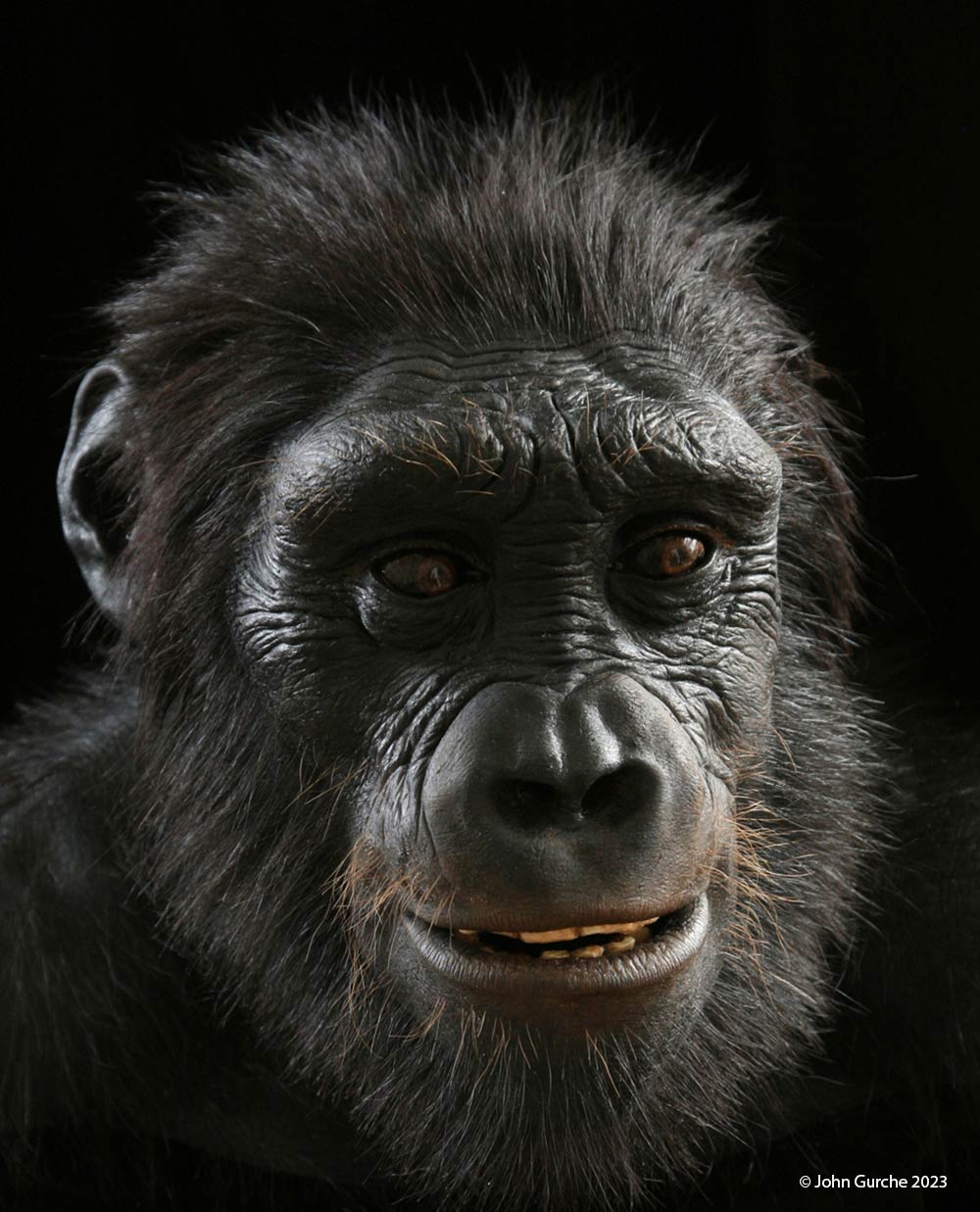
It starts with the discovery of three important hominin species. Sahelanthropus tchadensis, Orrorin tugenensis, and Ardipithecus ramidus.
Sahelanthropus tchadensis, dating to about 7 million years ago, is one of the earliest known hominins. Found in Chad, its skull—nicknamed Toumaï—shows a forward-positioned foramen magnum, suggesting an upright posture. Limb studies support this, with femur traits seen only in hominins. It may represent the first step toward bipedalism. But its environment challenges the savanna hypothesis. Fossil evidence shows a mixed landscape of lakes, woodlands, and grasslands, not open plains.
Orrorin tugenensis, from around 6 million years ago in Kenya, tells a similar story. Its femur suggests part-time bipedalism, with adaptations for upright walking. Yet its environment was also diverse, with forests, rivers, and open areas. Diet evidence from nearby animals shows both wooded and grassy habitats, reinforcing this mosaic setting.
Ardipithecus ramidus, dating to 4.4 million years ago, provides even clearer evidence. Its body shows both walking and climbing adaptations, with a grasping toe and stable pelvis. It lived in wooded environments and fed on forest plants. Together, these species show that bipedalism emerged not in open savannas, but in diverse, shifting landscapes shaped by instability.
The Geology of Ancient Africa (and beyond)
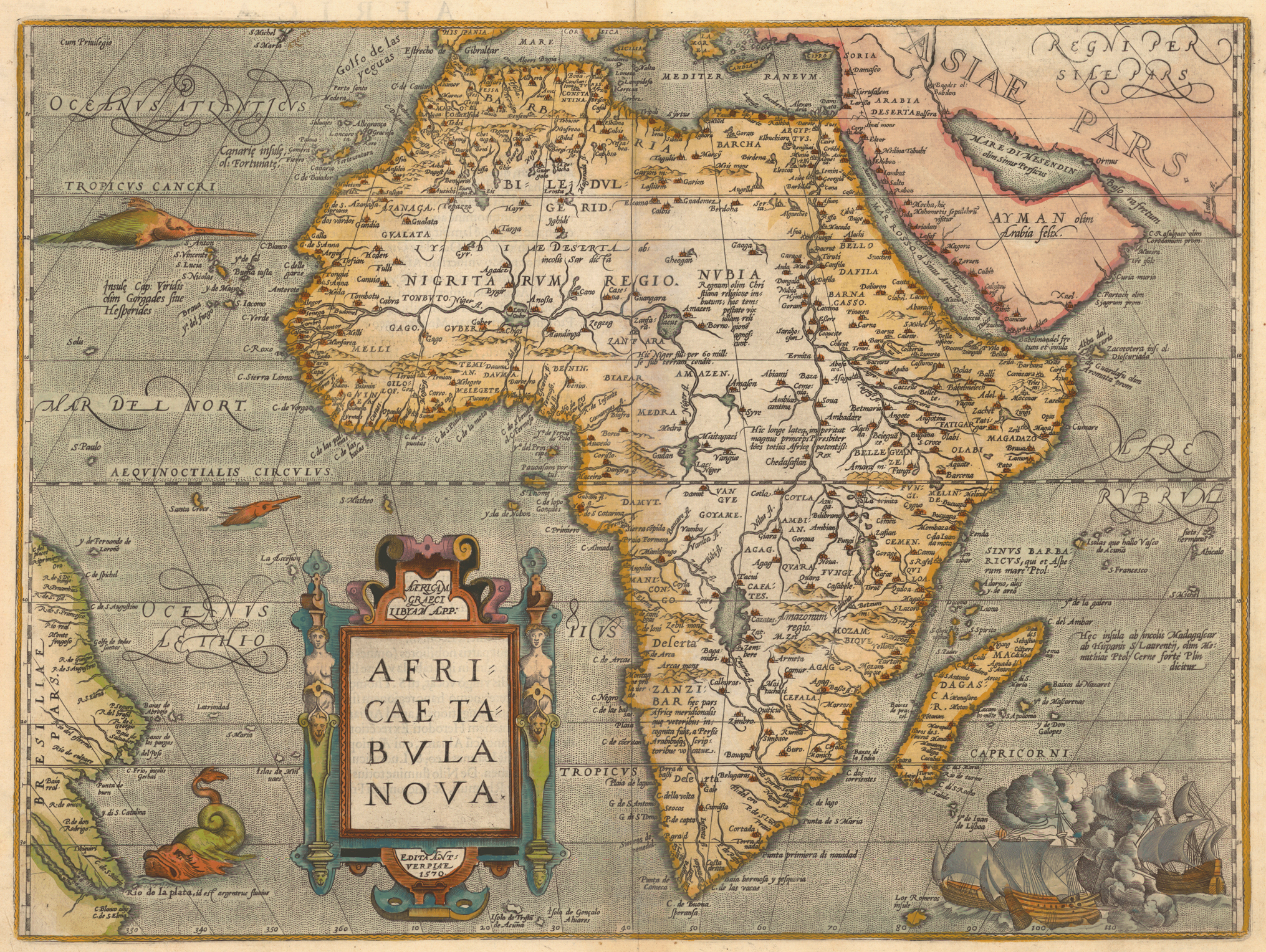
Important geological changes took place in Africa during human evolution, and they can be broken down into three scales: there were local, global, and astronomical events. Together, they transformed Africa into a dynamic and unstable landscape—one that may have driven our earliest adaptations.
At the local level, the story begins deep beneath Africa with the African Superplume—an upwelling of hot mantle material pushing against the continent for the past 30 million years. This force uplifted East Africa by over a kilometer while depressing regions like the Congo Basin, creating extreme and uneven topography. It also began tearing the continent apart, forming the East African Rift system, where the Nubian and Somali plates are slowly separating. This reshaped the environment into a patchwork of steep escarpments, deep valleys, and massive lakes—many of which preserve the fossil record of early hominins like Orrorin and Homo erectus.
These tectonic changes disrupted water systems and weather patterns. Rising plateaus created rain shadows that blocked Indian Ocean moisture, drying out East Africa and fragmenting once-continuous forests into mosaics of woodland and grassland. Volcanic activity added further instability, covering the landscape in ash while also providing raw materials like obsidian for later tool use—and the geological layers that allow us to date these fossils today.
But these changes weren’t isolated. Around 6–7 million years ago, a global tectonic event amplified this instability. The massive Ontong Java Plateau in the Pacific collided with a subduction zone and effectively jammed it, causing the Pacific Plate to rotate. Because tectonic plates are interconnected, this shift redistributed stress across the planet—a phenomenon some researchers call “ripple tectonics.” In Africa, this likely intensified rifting and uplift, accelerating environmental transformation. What had once been a relatively stable, forested region became fragmented, with ecosystems rapidly shifting between forests, lakes, and arid plains.
Yet the deepest layer of this story lies beyond Earth itself. In 1998, Richard Potts proposed the Variability Selection hypothesis, arguing that human evolution was driven not by any single environment, but by environmental instability itself. This idea is closely tied to Milankovitch cycles—long-term changes in Earth’s orbit, tilt, and axial wobble that alter how solar energy reaches the planet. These cycles, occurring over tens of thousands of years, drove dramatic climate oscillations in Africa, alternating between wet and dry extremes.
Geological records confirm this instability. Dust deposits in the Arabian Sea and organic-rich “sapropel” layers in the Mediterranean both show rapid, repeating swings in climate tied to these orbital cycles. When matched with the fossil record, a striking pattern emerges: key evolutionary milestones often coincide with periods of heightened variability.
The emergence of Australopithecus around 4.2 million years ago aligns with one such unstable phase, as forests began to fragment and bipedalism became more advantageous. Later, Australopithecus afarensis (Lucy) evolved during a relatively stable period but ultimately faced renewed volatility and extinction. Around 2.8 million years ago, another burst of instability coincided with the emergence of the genus Homo, including Homo habilis, with more efficient bipedal traits. Finally, between 1.9 and 1.7 million years ago, during intense climatic swings, Homo erectus emerged—combining long-distance walking, larger brains, and technological innovation.
Unlike earlier hominins, Homo erectus didn’t just endure instability—it thrived in it, becoming the first to leave Africa. In this view, human evolution wasn’t shaped by stable savannas, but by constant change. From shifting tectonic plates to the wobble of Earth’s axis, we are, fundamentally, the product of a restless planet.
Conclusion
Bipedalism makes sense in a savanna—but it makes even more sense in a world that doesn’t stay the same. Early hominin environments weren’t endless grasslands; they were shifting mosaics of woodland, water, and open terrain. In these unstable settings, survival depended on flexibility. Walking on two legs allowed individuals to move efficiently between scattered resources—crossing open patches, navigating forest edges, and traveling between unreliable water sources. Rather than tying early humans to one habitat, bipedalism enabled movement across many.
It also worked across unpredictable terrain. Rift landscapes in East Africa were uneven, fragmented, and constantly changing. Moving through them required balance, endurance, and efficiency. Upright walking helped stabilize the body over irregular ground while freeing the hands to carry food, tools, or offspring over longer distances.
More importantly, bipedalism reflects a generalist survival strategy. It wasn’t perfect for any one environment—but it was adaptable across many. In stable ecosystems, specialization often wins. But stability doesn’t last. A species built for one niche—like a cheetah built for speed on open plains—can struggle when conditions shift. Early humans avoided that trap by staying versatile.
And evolution hasn’t stopped. The same forces that shaped our past—climate cycles, tectonics, environmental instability—are still at work. Bipedalism wasn’t just an adaptation to where we lived, but to constant change itself. The real question now is whether that flexibility still defines us—or if we’ve become too specialized for a world that’s once again shifting beneath our feet.
Sources:
[1] Bender, R., et al. 2012. “The Savannah hypotheses: origin, reception and impact on paleoanthropology.” Hist Philos Life Sci 34(1-2):147-84.
[2] Darwin, C. 1871. The descent of man, and selection in relation to sex. John Murray.
[3] Dart, R. 1925. “Australopithecus africanus: The Man-Ape of South Africa.” Nature 115 (2884):195-199.
[4] Wheeler, P. E. 1984. “The evolution of bipedality and loss of functional body hair in hominids.” Journal of Human Evolution 13 (1): 91–98.
[5] Vrba, E.S. 1988. “Late Pliocene climatic events and hominid evolution.” In Evolutionary History of the 'Robust' Australopithecines, ed. F.E. Grine, pp. 405-426. Aldine de Gruyter, New York.
[6] Bennett, K. 2018. “Geographic distributions of psychological characteristics across diverse social and physical environments.” (Unpublished Doctoral thesis, City, University of London)
[7] Brunet, M. et al. 2002. “A new hominin from the upper Miocene of Chad, Central Africa.” Nature 418, 145-151.
[8] Scott A. Williams et al. 2026. “Earliest evidence of hominin bipedalism in Sahelanthropus tchadensis.” Sci. Adv.12, eadv0130.
[9] Le Fur, S., et al. 2009. “The mammal assemblage of the hominid site TM266 (Late Miocene, Chad Basin): ecological structure and paleoenvironmental implications.” Naturwissenschaften 96(5):565-74.
[10] Pickford, M., et al. 2002. “Bipedalism in Orrorin tugenensis revealed by its femora.” Comptes rendus - Palevol 1(4):191-203.
[11] Richmond, B., et al. 2009. “Orrorin tugenensis Femoral Morphology and the Evolution of Hominin Bipedalism.” Science 319,1662-1665.
[12] Dericquebourg, P., et al. 2015. “Environmental significance of Upper Miocene phosphorites at hominid sites in the Lukeino Formation (Tugen Hills, Kenya).” Sedimentary Geology 327:43-54.
[13] Roche, D., et al. 2013. “Stable isotope analyses of tooth enamel carbonate of large herbivores from the Tugen Hills deposits: Palaeoenvironmental context of the earliest Kenyan hominids.” Earth and Planetary Science Letters 381:39-51.
[14] White, T., et al. 2009. “Ardipithecus ramidus and the Paleobiology of Early Hominids.” Science 326(64):75-86.
[15] Moucha, R. and Forte, A. 2011. “Changes in African topography driven by mantle convection.” Nature Geosci 4, 707–712.
[16] Ben-Avraham, Z., et al. 2024. “Did plate tectonic changes lead to the emergence of hominid bipedalism?” Front. Environ. Archaeol. 3:1381510.
[17] Potts, R. 1998. “Variability selection in hominid evolution.” Evol. Anthropol. 7:81-96.
[18] Potts, R. and Faith, J. 2015. “Alternating high and low climate variability: The context of natural selection and speciation in Plio-Pleistocene hominin evolution.” J Hum Evol. 87:5-20.
Founder