
The Oldest Footprints Ever Discovered
Aug 24, 2026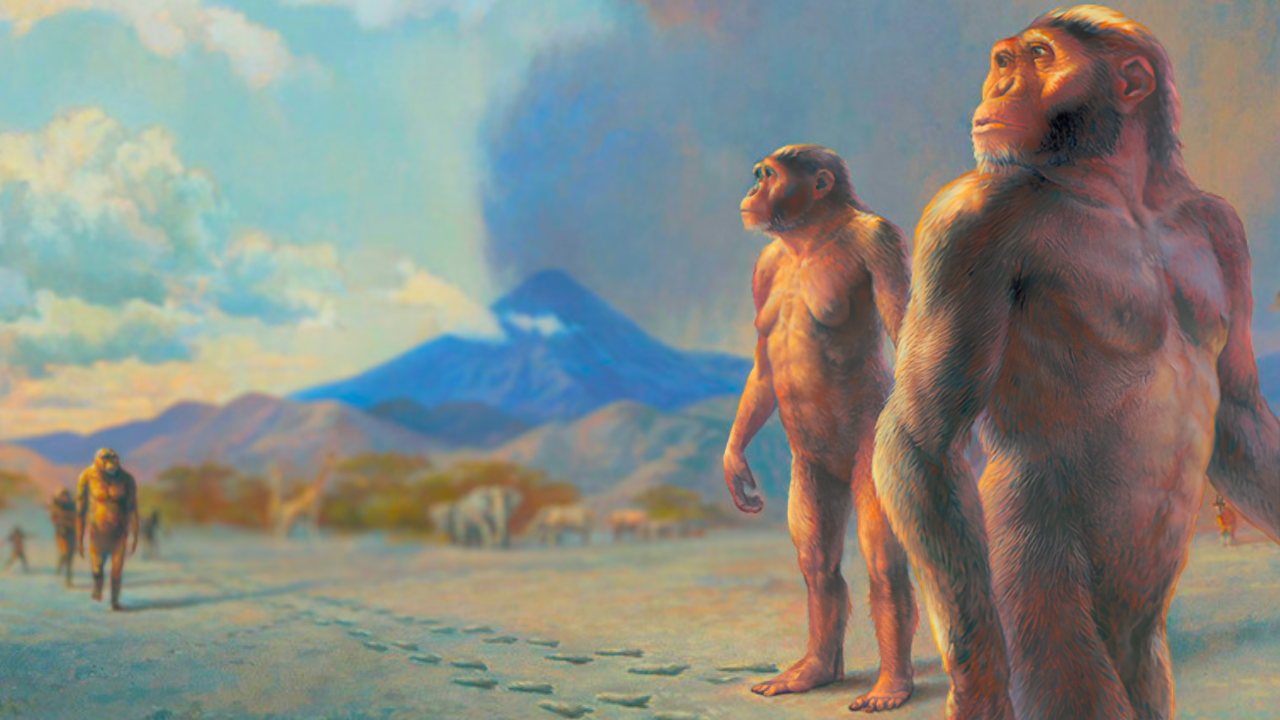
By: Greg Schmalzel
Today we will be covering the Oldest Footprints Ever Discovered. From the first steps ever taken by land animals, to giant dinosaurs, ancient Neanderthals, and the absolute oldest footprints left by modern humans. It’s a story of how life conquered land over hundreds of millions of years. So let's jump right into some of the most recent and controversial footprints. From there we’ll keep going deeper and deeper in time.
For the full YouTube Video, click HERE.
White Sands, New Mexico
The White Sands footprints are currently the oldest known evidence of humans in the Americas. Preserved around the ancient Lake Otero in New Mexico, the tracks date to roughly 21,000–23,000 years ago, placing them during the Last Glacial Maximum. The footprints appear to include those of a young person, possibly carrying a child, and one human track even overlaps with the track of a giant ground sloth.
Their age has been controversial. Critics initially argued that the radiocarbon dates could have been distorted by the “hard-water effect,” making the tracks appear older than they really were. However, subsequent dating of pollen and other organic material has provided additional support for a Last Glacial Maximum age. If correct, the tracks push human occupation of the Americas thousands of years earlier than the traditional Clovis-first model.
Cape South Coast, South Africa
The oldest known footprints attributed to Homo sapiens come from the Cape south coast of South Africa. Dating to around 153,000 years ago, the tracks were preserved in ancient coastal sands that later hardened into rock.
The footprints display several characteristics consistent with modern human feet, including a relatively aligned big toe and a pronounced arch. Multiple adults and children are represented, suggesting that groups of people traveled together along the ancient coastline. The sites also provide evidence of the sophisticated behavior of early Homo sapiens, including the use of marine resources and possibly simple footwear or walking sticks.
Matalascañas, Spain
Along the coast of Huelva, Spain, researchers discovered 87 footprints dating to approximately 106,000 years ago. They are attributed to Neanderthals and include tracks belonging to toddlers, children, adolescents, and adults.
What makes the site especially interesting is what the footprints appear to show. Several of the smaller tracks suggest that children were moving, jumping, and playing around the edge of an ancient lake. There are no associated tools or animal remains indicating hunting or other obvious activities. Instead, the tracks may provide a rare glimpse of Neanderthal children simply spending time together.
Happisburgh, England
In 2013, erosion along the coast of Happisburgh exposed a series of fossilized footprints in ancient mud. The tracks belonged to as many as five individuals, including adults and children, and date to roughly 850,000–950,000 years ago.
They are the oldest known hominin footprints discovered outside Africa. Researchers have suggested that they may have been made by Homo antecessor, although Homo erectus has also been proposed. Unfortunately, the tracks were exposed on an active beach and were rapidly destroyed by the North Sea. Within only two weeks, the physical footprints had disappeared, leaving high-resolution 3D scans as the primary record of the discovery.
Ileret, Kenya
The Ileret footprints in Kenya were made by Homo erectus around 1.5 million years ago. More than 90 footprints have now been identified, representing at least 20 individuals.
What makes them remarkable is how modern their feet appear. The tracks show a pronounced heel, an arch, and a forward-facing big toe, indicating a walking style very similar to our own. Their foot structure suggests that Homo erectus was highly efficient at long-distance walking, helping turn our ancestors into capable endurance travelers. The grouping of the tracks may also provide evidence of social behavior among these early humans.
Laetoli, Tanzania
The famous Laetoli footprints provide some of the oldest direct evidence of upright walking in our human lineage. Discovered by Mary Leakey's team in Tanzania, the tracks were preserved beneath volcanic ash approximately 3.6 million years ago.
The trail extends for roughly 75 feet and was made by at least two individuals, with a smaller individual apparently stepping into the footprints of one of the larger walkers. The tracks are attributed to Australopithecus afarensis, the same species as the famous “Lucy” fossil. Their anatomy shows that these early hominins were already walking on two legs long before the evolution of large human brains or stone-tool technology.
Ancient Mammals
Brasilichnium is not the name of a specific animal but a fossil-track type. The tiny footprints were made by small, four-legged mammals during the Late Jurassic and Early Cretaceous, roughly 130–140 million years ago.
The animals were probably about the size of modern mice, rats, or squirrels and lived in harsh desert environments while dinosaurs still dominated the planet. One strange feature of the tracks is that they overwhelmingly travel uphill across ancient sand dunes. This may be a preservation effect: tracks made while climbing could have been preserved more effectively, while footprints made going downhill may have been erased by collapsing sand.
Around 270 million years ago, during the Permian Period, saber-toothed predators called gorgonopsians roamed the supercontinent Pangaea. Although they looked somewhat reptilian, they possessed several characteristics associated with mammals, including specialized teeth and limbs positioned more directly beneath the body.
In 2025, researchers linked gorgonopsian footprints with skeletal remains in Mallorca. Their tracks reveal five-toed feet with large claws and even preserve impressions of skin creases. These animals were among the dominant predators of their time, but their lineage would ultimately disappear during the devastating Permian-Triassic mass extinction.
The Age of Dinosaurs
Lark Quarry in Queensland preserves what is considered the world's best-known dinosaur stampede. Around 95 million years ago, roughly 150 dinosaurs left approximately 4,000 footprints in the mud surrounding an ancient lake.
The tracks suggest that a large animal suddenly caused a group of smaller dinosaurs to scatter. For years, scientists believed the attacker was a large carnivorous dinosaur. More recent research, however, has suggested that the tracks may belong to a large herbivore such as Muttaburrasaurus. If so, the event may have been caused by territorial or aggressive behavior rather than a predator chasing its prey. The exact cause of the stampede remains uncertain.
Near Sucre, Bolivia, the Cal Orcko site contains one of the world's most spectacular concentrations of dinosaur footprints. More than 5,000 tracks cover a limestone wall that stretches for more than 3,000 feet and rises hundreds of feet above the surrounding landscape.
The tracks were originally made on the muddy shore of an ancient lake by a variety of dinosaurs, including massive titanosaurs, theropods, ankylosaurs, and hadrosaurs. The reason the tracks now appear on a vertical wall is geological rather than mysterious: tectonic forces associated with the formation of the Andes tilted the ancient lakebed upward, turning what was once a flat surface into a gigantic fossilized snapshot of Cretaceous life.
The Lesotho Megatheropod Tracks provide evidence that enormous predatory dinosaurs existed surprisingly early in the Jurassic Period. The three-toed tracks are about half a meter long and were made by a giant theropod estimated to have been around 9 meters long and 3 meters tall at the hip.
The animal, named Kayentapus ambrokholohali, was far larger than the predators scientists traditionally expected to find during this period. Yet despite the enormous footprints, no bones of the animal have been discovered. The tracks therefore provide a rare example of how footprints can reveal animals that are otherwise almost completely absent from the fossil record.
The First Pioneers of Land
The Coconino Sandstone of the Grand Canyon preserves thousands of footprints dating to roughly 280 million years ago. The tracks were made by four-legged animals moving across what was traditionally interpreted as an ancient desert.
One unusual feature is that many of the tracks appear to travel uphill, with signs of sideways movement and claw marks. Some researchers have argued that experiments show the detailed tracks are difficult to reproduce in dry sand and may instead have formed under wet or underwater conditions. This has led to debate over whether the Coconino environment was truly the vast, dry desert it has traditionally been interpreted as, or whether water played a much larger role in creating the tracks.
The Zachełmie Quarry preserves some of the earliest known footprints made by tetrapods—four-limbed vertebrates. The tracks date to around 395 million years ago, during the Devonian Period, when vertebrates were beginning to make the transition from water to land.
The tracks contain distinct footpads and digits rather than the belly or fin drag marks expected from swimming animals. Remarkably, they are roughly 18 million years older than the oldest known tetrapod body fossils and predate the famous “fish with legs,” Tiktaalik, by around 10 million years. The discovery suggests that four-limbed animals may have been experimenting with life on land earlier than the traditional fossil record indicated.
The oldest tracks in this journey were not made by a land animal at all. Around 400 million years ago, primitive lungfish were venturing onto exposed tidal mudflats in what is now Poland. Their movements left behind traces of their bodies, tails, fins, and snouts.
These fossils represent the oldest known evidence of vertebrate mobility on land. The fish appear to have used their snouts to anchor themselves in the mud while dragging their bodies forward. Even more surprisingly, about 97 percent of the snout traces are tilted toward the left, potentially representing the oldest evidence of a consistent directional preference—something comparable, in a very broad sense, to handedness.
The fossil record is often thought of as a collection of skeletons, teeth, and shells. But sometimes, the most revealing fossils are nothing more than footprints in the mud.
Sources:
[1] Bennett, M., et al. 2021. “Evidence of humans in North America during the Last Glacial Maximum.” Science 373, 1528-1531.
[2] Oviatt, C., et al. 2023. “A critical assessment of claims that human footprints in the Lake Otero basin, New Mexico date to the Last Glacial Maximum.” Quaternary Research 111:138-147.
[3] Holliday, V., et al. 2025. “Paleolake geochronology supports Last Glacial Maximum (LGM) age for human tracks at White Sands, New Mexico.” Sci. Adv.11, eadv4951.
[4] Helm, C., et al. 2023. “Dating the Pleistocene hominin ichnosites on South Africa’s Cape south coast.” Ichnos, 30(1):49-68.
[5] Helm, C., et al. 2023. “Possible shod-hominin tracks on South Africa’s Cape coast.” Ichnos, 30(2):79-97.
[6] Helm, C., et al. 2024. “A cluster of Pleistocene hominin ichnosites on South Africa’s Cape South Coast.” Ichnos, 31(4):293-316.
[7] Mayoral, E., et al. 2021. “Tracking late Pleistocene Neandertals on the Iberian coast.” Sci Rep 11, 4103.
[8] Colonising Britain – One million years of our human story
[9] Ashton, N., et al. 2014. “Hominin Footprints from Early Pleistocene Deposits at Happisburgh, UK.” PLOS ONE 9(2):e88329.
[10] Wiseman, A., et al. 2020. “The morphological affinity of the Early Pleistocene footprints from Happisburgh, England, with other footprints of Pliocene, Pleistocene, and Holocene age.” J Hum Evol. 144:102776.
[11] Kiura, P., et al. 2009. “Early Hominin Foot Morphology Based on 1.5-Million-Year-Old Footprints from Ileret, Kenya.” Science 323(5918):1197-1201.
[12] Hatala, K., et al. 2016. “Footprints reveal direct evidence of group behavior and locomotion in Homo erectus.” Sci Rep 6, 28766.
[13] Laetoli: The Unfolding Story
[14] Raichlen, D., 2010. “Laetoli footprints preserve earliest direct evidence of human-like bipedal biomechanics.” PLoS One 5(3):e9769.
[15] Masao, F., et al. 2016. “New footprints from Laetoli (Tanzania) provide evidence for marked body size variation in early hominins.” Elife. 5:e19568.
[16] Porchetti, S., et al. 2017. “Walking, running, hopping: Analysis of gait variability and locomotor skills in Brasilichnium elusivum Leonardi, with inferences on trackmaker identification.” Palaeogeography, Palaeoclimatology, Palaeoecology 465, 14-29.
[17] Lockley, M., 2011. “The ichnotaxonomic status of Brasilichnium with special reference to occurrences in the Navajo Sandstone (Lower Jurassic) in the western USA.” New Mexico Museum of Natural History and Science Bulletin 53: 306–315.
[18] Leonardi, G. and Carvalho, I. 2020. “Review of the early Mammal Brasilichnium and Brasilichnium-like tracks from the Lower Cretaceous of South America.” Journal of South American Earth Sciences 106, 102940.
[19] Tamales-Andreu, R., et al. 2025. “Track-trackmaker correlation of co-occurring gorgonopsian bones and footprints from the early–?middle Permian of equatorial Pangaea.” Palaeogeography, Palaeoclimatology, Palaeoecology 677, 113174
[20] Lark Quarry Conservation Park - Outback Queensland
[21] Romilio, A. and Salisbury, S. 2011. “A reassessment of large theropod dinosaur tracks from the mid-Cretaceous (late Albian-Cenomanian) Winton Formation of Lark Quarry, central-western Queensland, Australia: A case for mistaken identity.” Cretaceous Research 32 (2) 135-142.
[23] Lockley, M., et al. 2002. “Titanosaurid trackways from the Upper Cretaceous of Bolivia: evidence for large manus, wide-gauge locomotion and gregarious behaviour.” Cretaceous Research 23(3):383-400.
[24] Meyer, C., et al. 2021. “The Late Cretaceous dinosaur track record of Bolivia – Review and perspective.” Journal of South American Earth Sciences 106, 102992.
[25] Sciscio, L., et al. 2017. “The first megatheropod tracks from the Lower Jurassic upper Elliot Formation, Karoo Basin, Lesotho.” PLOS ONE 12(10):e0185941.
[26] Brand, L. and Tang, T. 1991. “Fossil vertebrate footprints in the Coconino Sandstone (Permian) of northern Arizona: Evidence for underwater origin.” Geology 19(12):1201-1204.
[27] Santucci, V. and Tweet, J. 2021. “GRAND CANYON NATIONAL PARK CENTENNIAL PALEONTOLOGICAL RESOURCES INVENTORY A CENTURY OF FOSSIL DISCOVERY AND RESEARCH.” Utah Geological Association Special Publication 1.
[28] Niedźwiedzki, G., et al. 2010. “Tetrapod trackways from the early Middle Devonian period of Poland.” Nature 463, 43-48.
[29] Fossil tracks record 'oldest land-walkers'
[30] Szrek, P., et al. 2025. “Traces of dipnoan fish document the earliest adaptations of vertebrates to move on land.” Sci Rep 15, 28808.
Founder