By: Greg Schmalzel
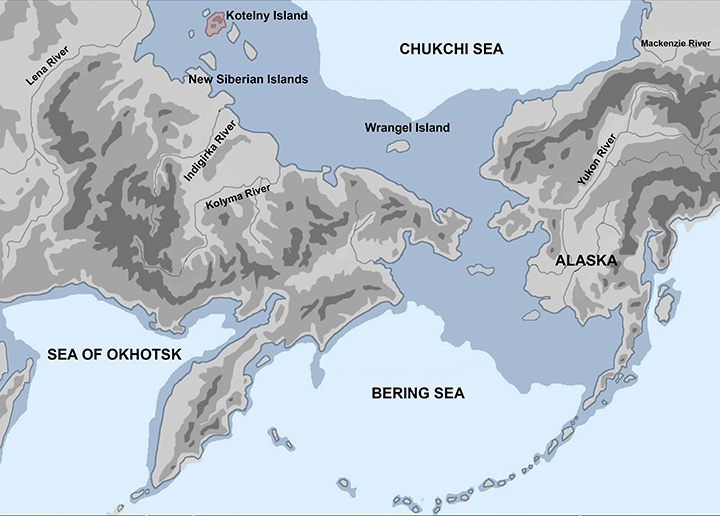
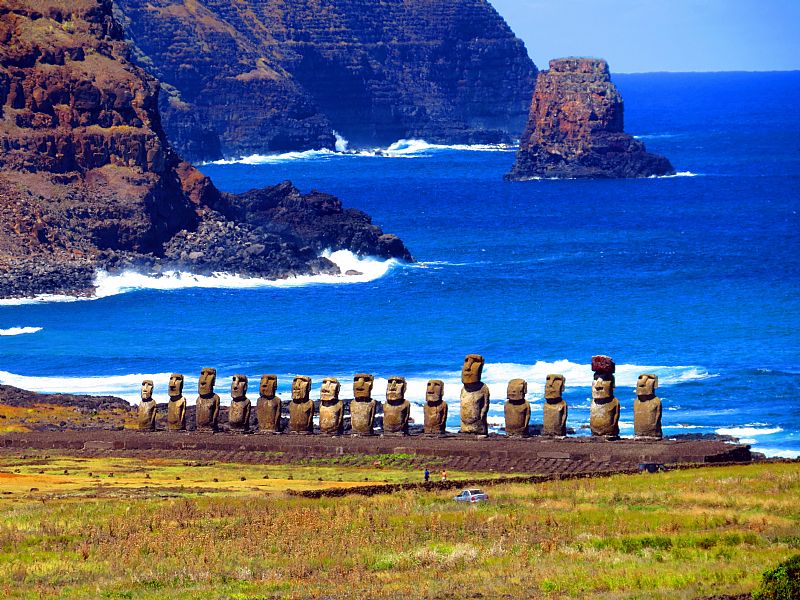
Why were the people of the past drawn to some of the most remote corners of the Earth? Beyond the edge of our modern neighborhoods and civil borders, there are places so far removed, so unforgiving, that even the idea of human presence feels improbable. Yet, time and again, archaeologists arrive in these landscapes and find the fleeting remains of ancient people. We’ve left our mark on secluded islands, atop volcanoes, deep within drowned caves, and beneath swallowing forests. These are the records of people pushing into places where survival had to be negotiated moment by moment. Sometimes, these places are only remote to us today, but were very habitable in ancient times. In these foreign places, the Earth does not yield its history easily. It’s often eroded away forever. But sometimes it hangs on, quietly, until someone finally finds it again. These are the most remote archaeological sites in the world.
To watch the full YouTube video, click HERE.
Underwater Caves in Mexico
Octavio del Río / Centro INAH Quintana Roo
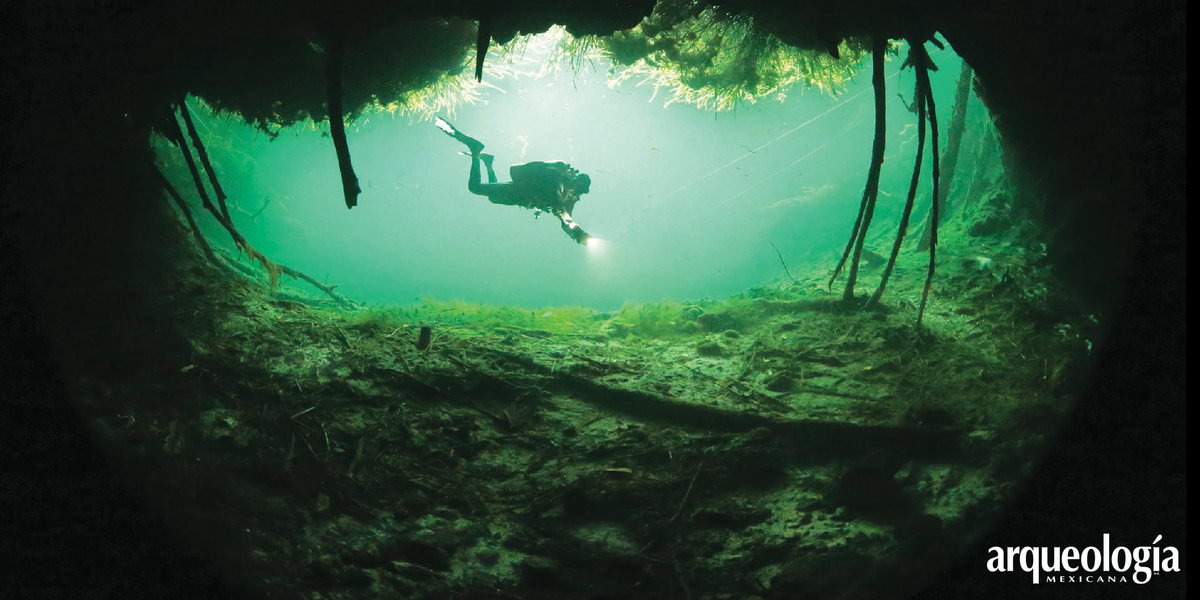
Beneath Mexico’s Yucatán Peninsula lies a hidden world of flooded caves, tunnels, and sinkholes carved into limestone. This vast system, including Ox Bel Ha—the longest underwater cave network on Earth—owes its existence to the asteroid impact that formed the Chicxulub crater 66 million years ago. The collision fractured the bedrock, allowing water to seep in and slowly dissolve the limestone into caves. During the last Ice Age, when sea levels were much lower, these caves were dry and accessible. Today, they are completely submerged, requiring scuba gear to explore—yet deep inside, archaeologists have found ancient human remains.
One of the most remarkable discoveries is Eva de Naharon, a young woman who lived around 13,700 years ago, making her one of the oldest known humans in the Americas. Her skeleton was found deep within a narrow, pitch-black section of the cave, over 20 meters below the surface. She likely entered when the cave was dry, possibly searching for freshwater in a region without rivers. Whether she became lost in the darkness or was intentionally placed there as part of an early burial ritual remains uncertain. As rising seas flooded the caves, they preserved her and others like her—turning these once-accessible lifelines into some of the most remote and haunting archaeological sites on Earth.
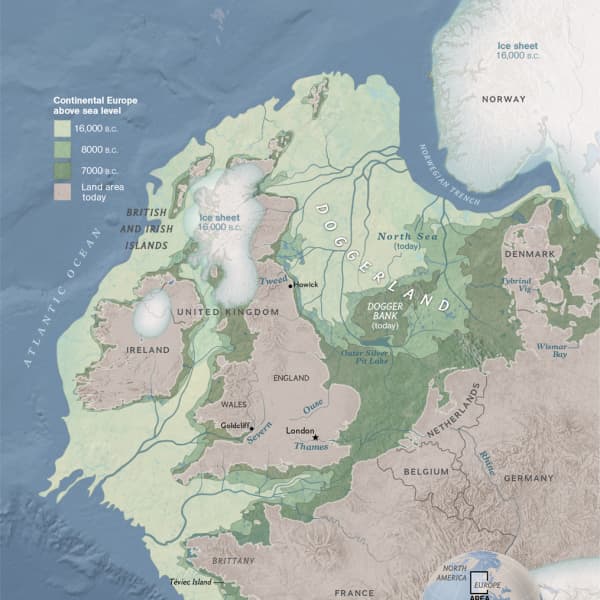
Doggerland
Stéphen Rostain
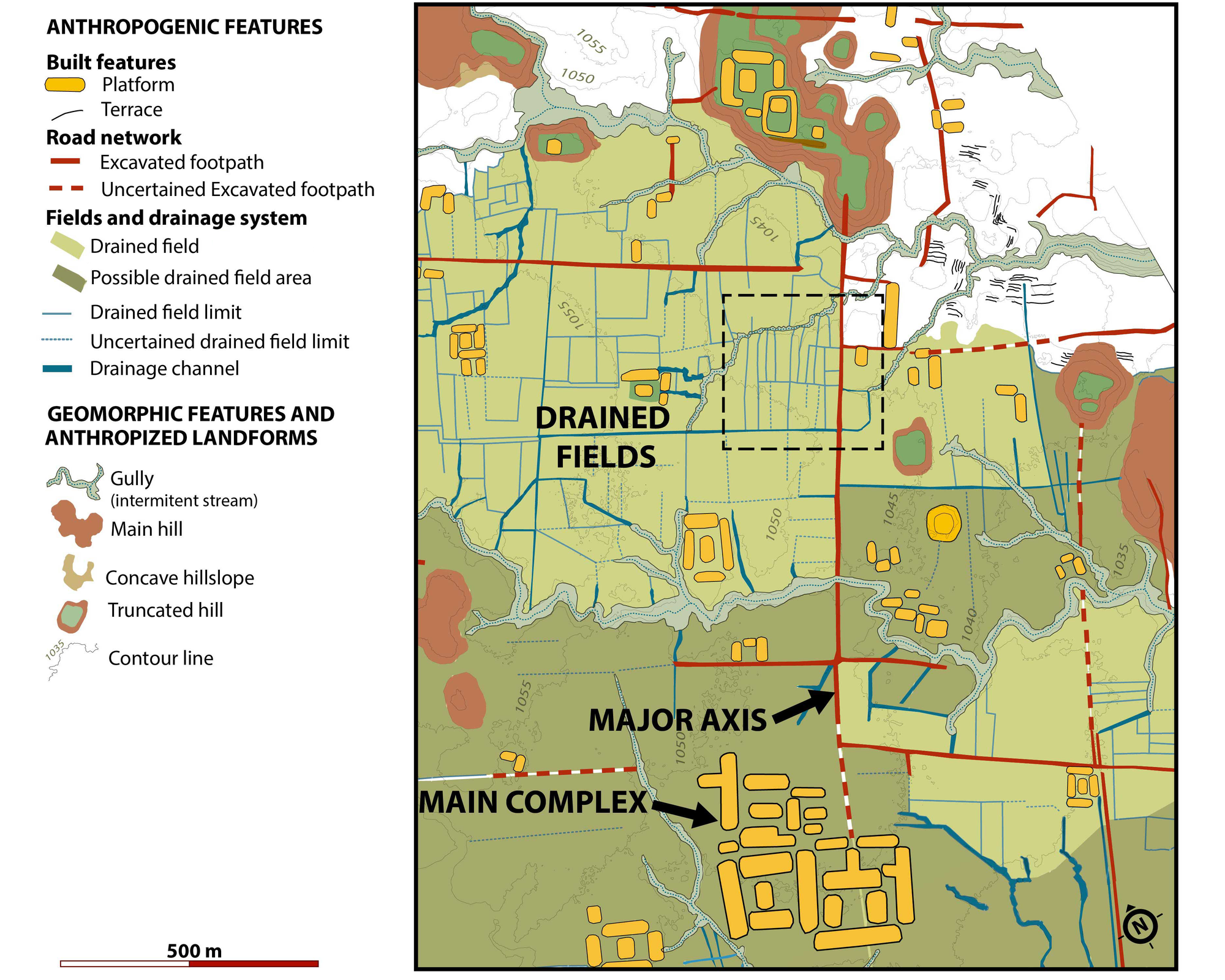
For centuries, the Amazon rainforest was thought to be an untouched wilderness, too hostile and nutrient-poor to support large human populations. This idea—sometimes called the “myth of the pristine Amazon”—suggested only small, scattered groups could survive beneath its dense canopy. But early European explorers told a different story, describing large settlements, roads, and complex societies along the rivers. Their accounts were largely dismissed—until recently. With the advent of LiDAR technology, researchers can now see through the forest, revealing vast hidden landscapes. In places like Bolivia and Ecuador, they’ve uncovered massive earthworks, pyramids, and thousands of interconnected platforms linked by long road systems—evidence of organized, urban-like societies embedded within the jungle.
These discoveries show that ancient Amazonians weren’t limited by their environment—they engineered it. A key innovation was “terra preta,” or Amazonian Dark Earth, a human-made soil created by mixing charcoal, organic waste, and other materials to dramatically increase fertility. This allowed them to sustain large populations and cultivate a wide variety of crops. Today, researchers estimate that millions of people once lived in the Amazon, and that most of their settlements are still hidden beneath the trees. Far from being a pristine wilderness, the Amazon is now understood as a landscape deeply shaped by human ingenuity—one that remained invisible for centuries until modern technology began to uncover its secrets.
Sources:
[1] Del Río Lara, O. 2024. “Tulum’s underwater caves: insights into the oldest human fossils in the Americas.” TransAmerica Review 2(2):e24006
[2] Oldest Skeleton in Americas Found in Underwater Cave?
[3] A prehistoric skeleton found deep in a flooded Mexican cave was likely placed there in a ritual
[4] Gaffney, V., et al. 2009. “Europe's Lost World: The Rediscovery of Doggerland.” Council for British Archaeology Research Report, 160.
[5] Upper Palaeolithic antler harpoon, Leman and Ower Banks, Doggerland
[6] Ötzi the Iceman: Examining New Evidence from the Famous Copper Age Mummy
[7] Wang, K., et al. 2023. “High-coverage genome of the Tyrolean Iceman reveals unusually high Anatolian farmer ancestry.” Cell Genomics, 3(9).
[8] Iceman Bled Out From Arrow Wound, X-Ray Scan Reveals
[9] Reinhard, J. and Ceruti, C. 2006. “Sacred Mountains, Ceremonial Sites, and Human Sacrifice Among the Incas.” Archaeoastronomy 19, 1-43.
[10] Reinhard, J. and Ceruti, M. 2010. Inca RItuals and Sacred Mountains: A Study of the World’s Highest Archaeological Sites. Cotsen Institute of Archaeology University of California, Los Angeles
[11] Russian expedition finds evidence of northernmost Stone Age hunters above the Arctic Circle
[12] Mulrooney, M. 2013. “An island-wide assessment of the chronology of settlement and land use on Rapa Nui (Easter Island) based on radiocarbon data.” Journal of Archaeological Science 40(12):4377-4399.
[13] Wallin, P. and Wallin, H. 2025. “From ritual spaces to monumental expressions: rethinking East Polynesian ritual practices. Antiquity.” 99(406):1082-1097.
[14] Davis, D., et al. 2024. “Island-wide characterization of agricultural production challenges the demographic collapse hypothesis for Rapa Nui (Easter Island).” Sci. Adv.10,eado1459.
[15] Meggers, B. 1971. Amazonia: Man and Culture in a Counterfeit Paradise. Smithsonian Institute.
[16] Prümers, H., et al. 2022. “Lidar reveals pre-Hispanic low-density urbanism in the Bolivian Amazon.” Nature 606, 325–328.
[17] Rostain, S., et al. 2024. “Two thousand years of garden urbanism in the Upper Amazon.” Science 383, 6679.
[18] Clement, C., et al. 2015. “The domestication of Amazonia before European conquest.” Proc. R. Soc. B.28220150813.
[19] Peripato, V,. et al. 2023. “More than 10,000 pre-Columbian earthworks are still hidden throughout Amazonia.” Science 382(6666):103-109.