Life in Paleolithic America (12,000 Years Ago)

Feb 23, 2026
Clovis culture paleoindian

By: Greg Schmalzel

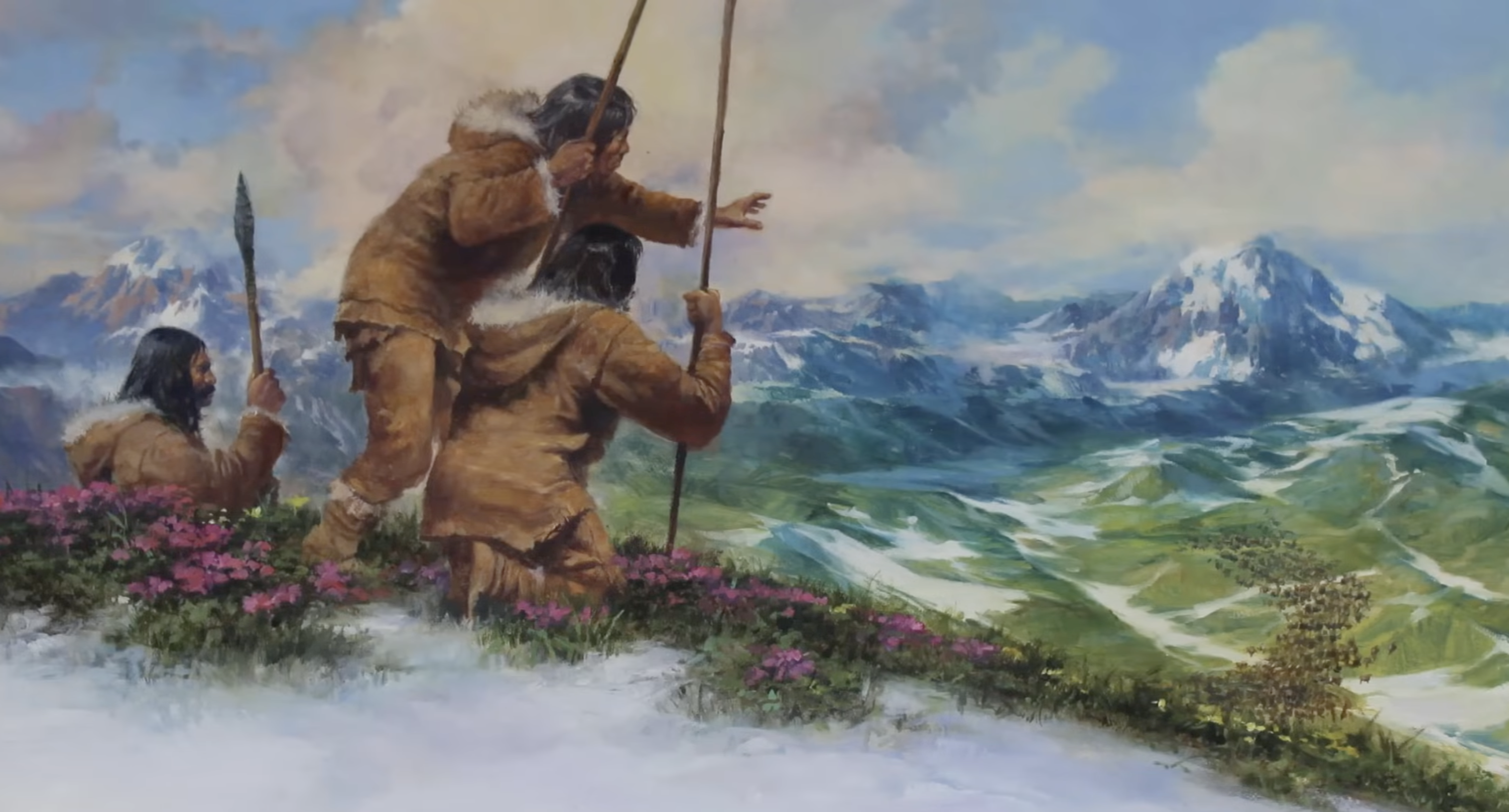
What was life like in the Americas thousands of years ago? Put simply, it would be almost unrecognizable. There were no cities, roads, or even farms. No border separated North from South. Instead, there were vast expanses of land, unusually large creatures, and small groups of people moving through a world locked in ice. These were the earliest Americans and they lived in an entirely different epoch - the Pleistocene Epoch. Their lives were tough, cold, and deeply connected to the natural world. What they left behind has either been buried or completely eroded away. Only a few traces remain: footprints in ancient mud, stone tools, and scattered campsites. From these fragments, archaeologists are beginning to piece together how they survived. In this documentary, we’ll use these pieces to reconstruct life in Paleolithic America.

For the full YouTube video, click HERE.

The Land
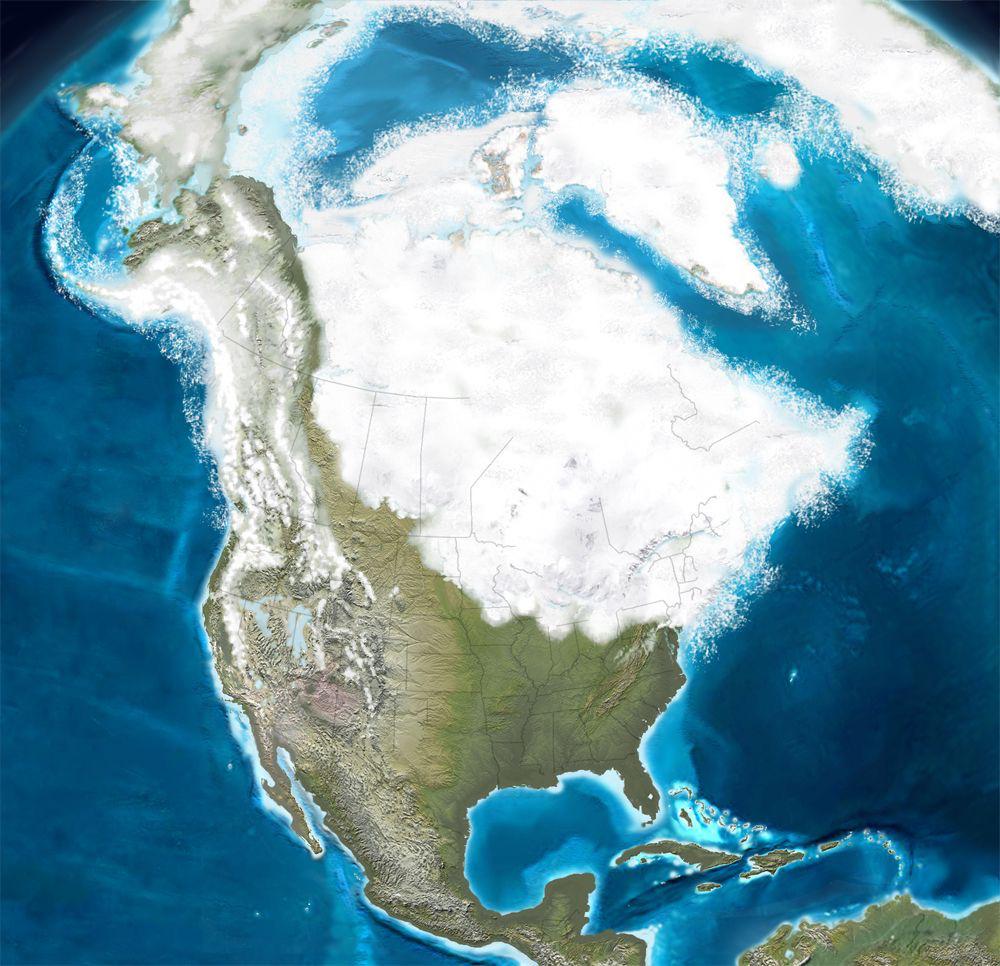
To understand the lives of the earliest Americans, we have to travel back to the Pleistocene Epoch, a span of time from about 2.5 million to 11,700 years ago defined by repeated Ice Ages. During the coldest phase—the Last Glacial Maximum around 20,000 years ago—massive ice sheets covered much of North America. The Laurentide Ice Sheet buried nearly all of Canada and stretched into the northern United States, while the Cordilleran Ice Sheet dominated the West. In some places, they were nearly two miles thick. Then, as temperatures rose, the ice retreated, culminating in a rapid warming 11,700 years ago that ushered in our current interglacial period, the Holocene.

This is the world early Americans knew: a continent physically unlike today’s. Sea levels were up to 120 meters lower, exposing vast coastal plains now submerged beneath the ocean. Mammoth remains and artifacts dredged offshore hint at entire landscapes lost to rising seas. South of the glaciers lay windswept tundra, blasted by katabatic winds spilling off the ice. Farther inland, enormous lakes filled basins that are dry today. Glacial Lake Missoula periodically unleashed catastrophic floods that carved canyons across the Pacific Northwest. Lake Bonneville once covered much of Utah, leaving visible ancient shorelines etched into the Wasatch Mountains.

The Americas at the end of the Ice Age were unstable, dramatic, and alive with change—a land of opportunity and danger for the people who called it home.

First Signs of Human Life

Davide Bonadonna
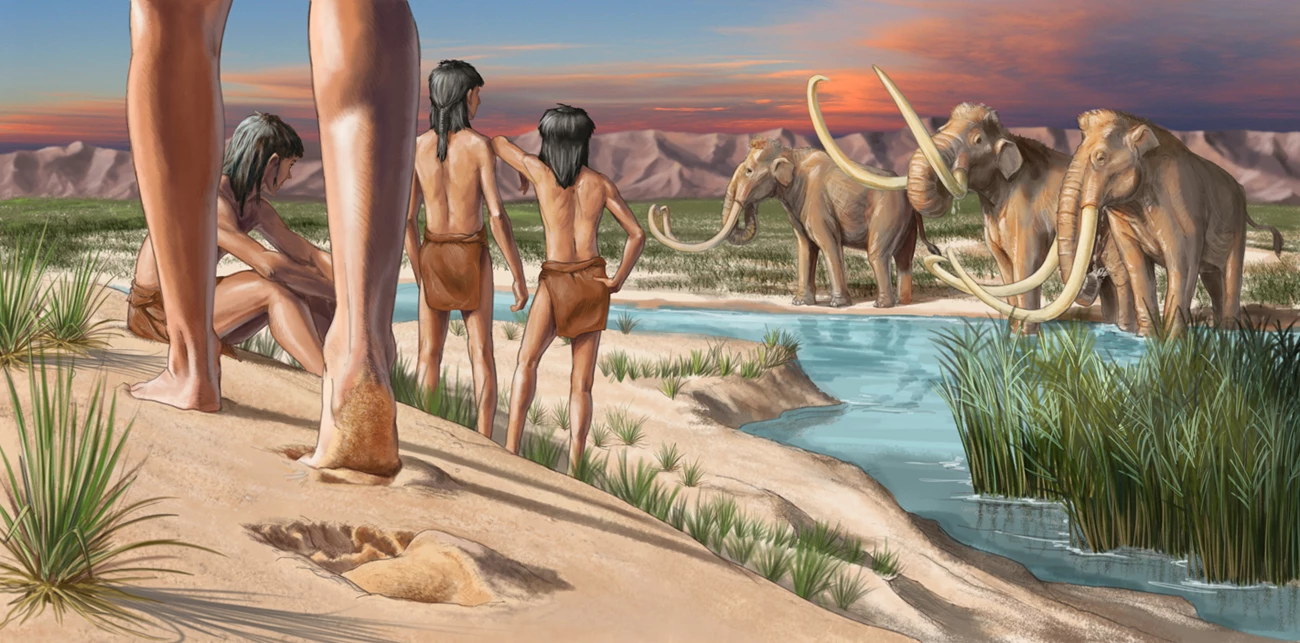
Another vanished lake offers one of the clearest snapshots of life in Paleolithic America. In southern New Mexico—now a landscape of dunes and desert—there once stretched a broad, shallow body of water known as Lake Otero. During the Last Glacial Maximum, cooler temperatures and increased rainfall sustained wetlands and muddy shorelines that drew mammoths, giant ground sloths, and humans. As the climate warmed, the lake evaporated, leaving behind thick gypsum deposits that wind later sculpted into today’s brilliant White Sands.

In 2021, archaeologists announced a remarkable discovery: human footprints preserved in the ancient lakebed, dated to roughly 23,000 years ago—near the height of the Ice Age. Some tracks overlap with those of mammoths and ground sloths. In one striking example, a human footprint lies inside a sloth track, capturing a fleeting moment of coexistence.

The dates were initially controversial. Critics suggested that aquatic plant seeds used in radiocarbon dating may have appeared artificially old due to the “hard-water effect,” where ancient carbon in lake water skews results. But follow-up research reexamined the sediments and applied dozens of new radiocarbon tests on multiple materials, including pollen and mud. The findings reinforced the original timeline: people were present here around 20,000 years ago.

Nearby, long parallel grooves in the mud hint at simple wooden drag devices—possibly the earliest evidence of transport technology. Though questions remain about who these people were and what became of them, one thing is clear: they walked this shoreline surrounded by giants.

Megafauna

Travis S.
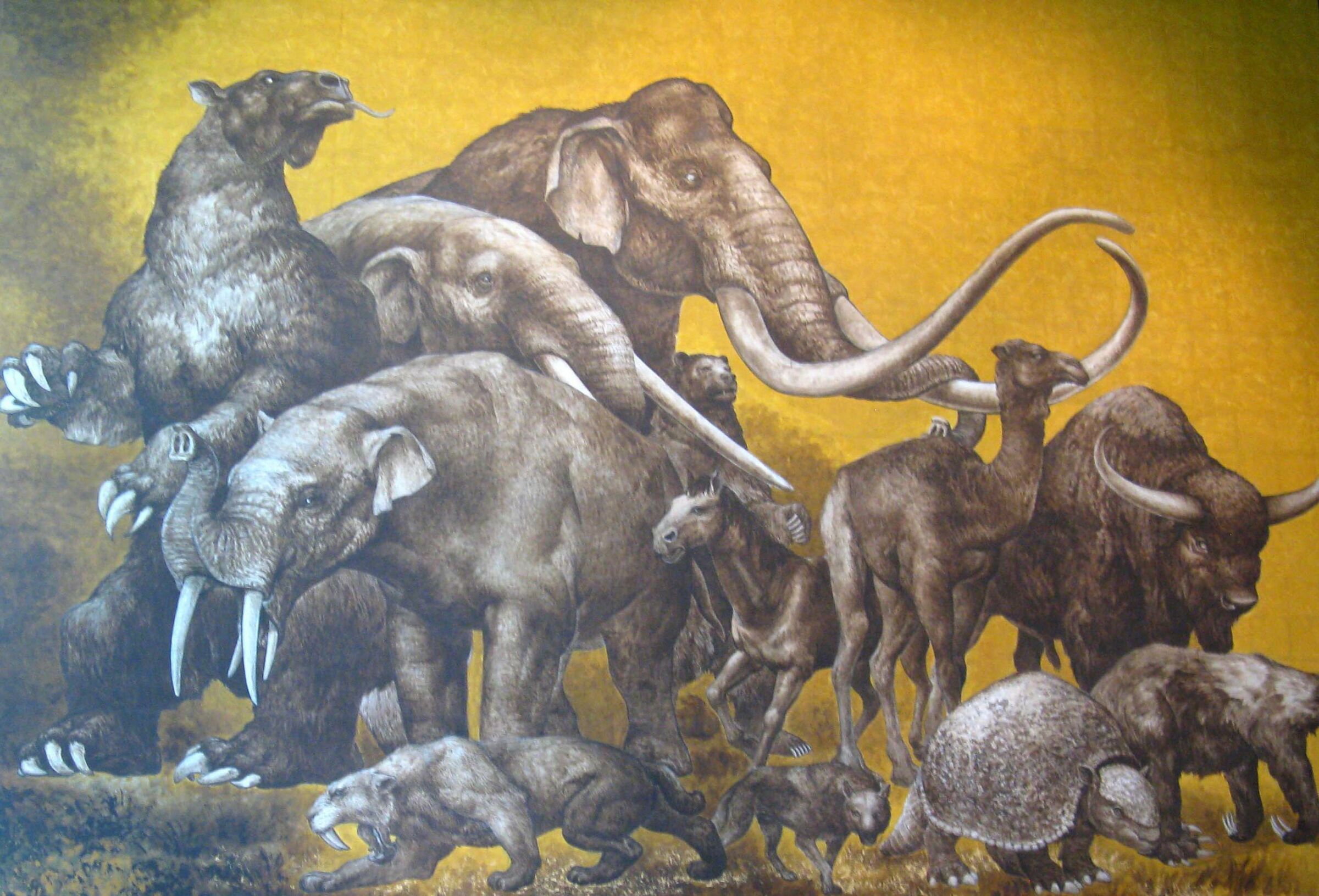
White Sands captures just a glimpse of the megafauna Paleolithic Americans knew. Across the continents, humans shared the landscape with an extraordinary cast of now-extinct animals. One of the best windows into that world is the La Brea Tar Pits, an active fossil site in the middle of modern Los Angeles. For tens of thousands of years, natural asphalt seeped to the surface, forming sticky traps that ensnared mammoths, mastodons, horses, camels, bison, and giant ground sloths. Their distress drew predators—saber-toothed cats, dire wolves, American lions, and short-faced bears—who often became trapped as well. Over three million fossils have been recovered, preserved in stunning detail by asphalt that sealed bones from decay, even protecting plant remains and traces of fur.

South America tells a parallel but distinct story. For much of the Pleistocene, it evolved in isolation, producing strange giants like glyptodonts and the heavy-bodied Toxodon. When the Isthmus of Panama rose around three million years ago, the continents connected in the Great American Biotic Interchange, allowing northern and southern species to mingle. By the time humans arrived, these blended ecosystems were already in motion. What remains debated is how deeply early Americans shaped the fate of these giants.

The Big Three Cultures
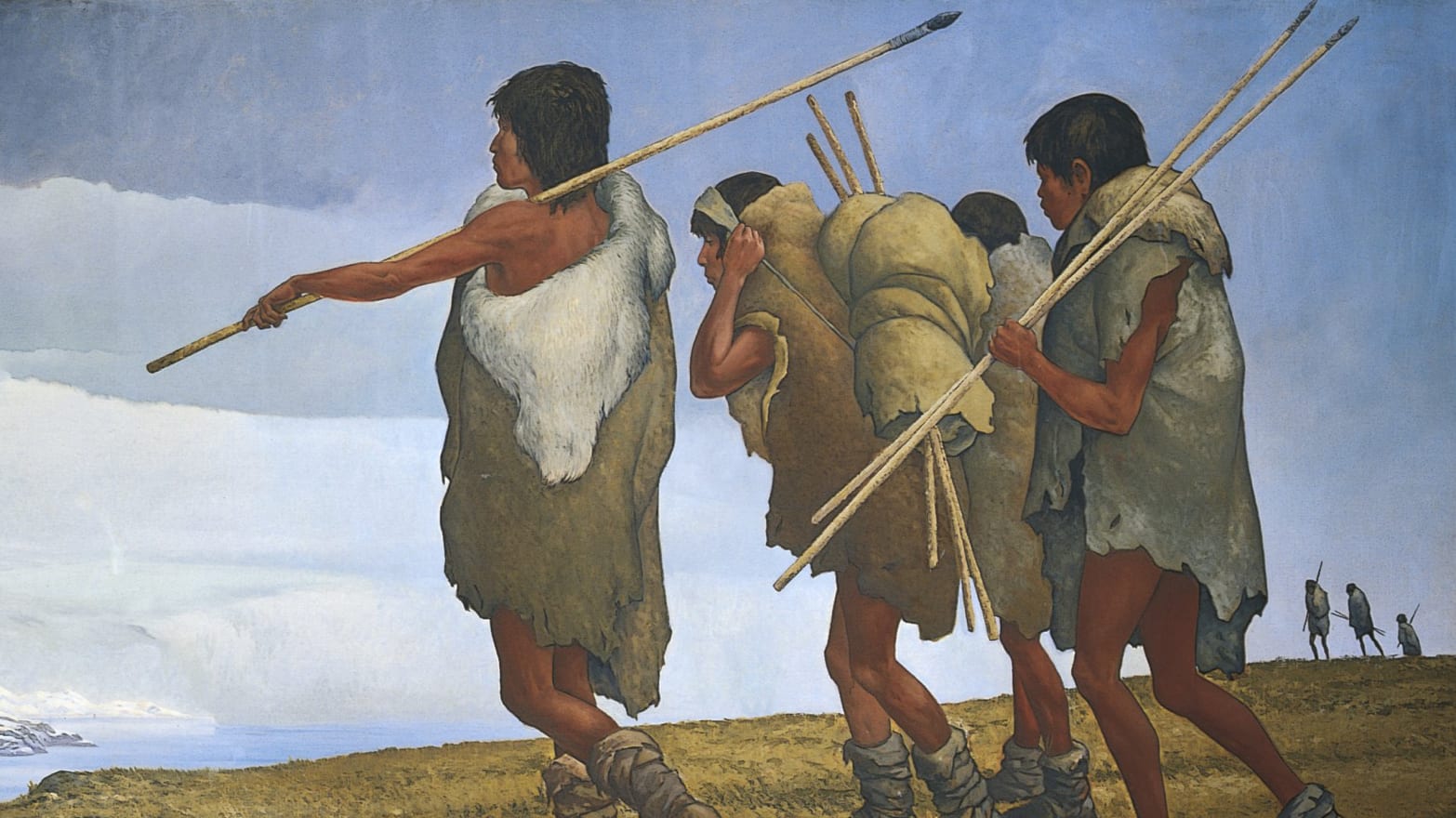
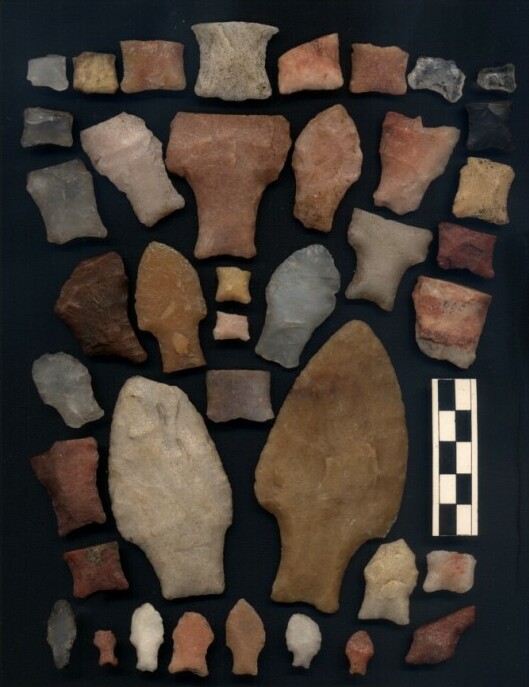
We can’t really make cultural distinctions in the Americas until a few thousand years after White Sands, simply because we don’t have enough evidence. And even then, the lines between these groups of people are blurry. The only real distinction we can make is based on their stone tools, so that’s what we’ll focus on. Stone tools are the defining feature of the paleolithic, which literally translates to “Old Stone Age”. This period began around between 2.5 to 3 million years ago with the first stone tools, and lasted until the advent of farming and settled societies. The earliest Americans lived right on the edge of that transition, and developed some of the finest stone tools in the archaeological record. There were essentially three broad tool traditions in the Americas during this time: The Clovis culture, the fishtail tradition, and the western stemmed tradition. Let’s start with the one most people are familiar with: Clovis.

The Clovis Culture

S. Byram
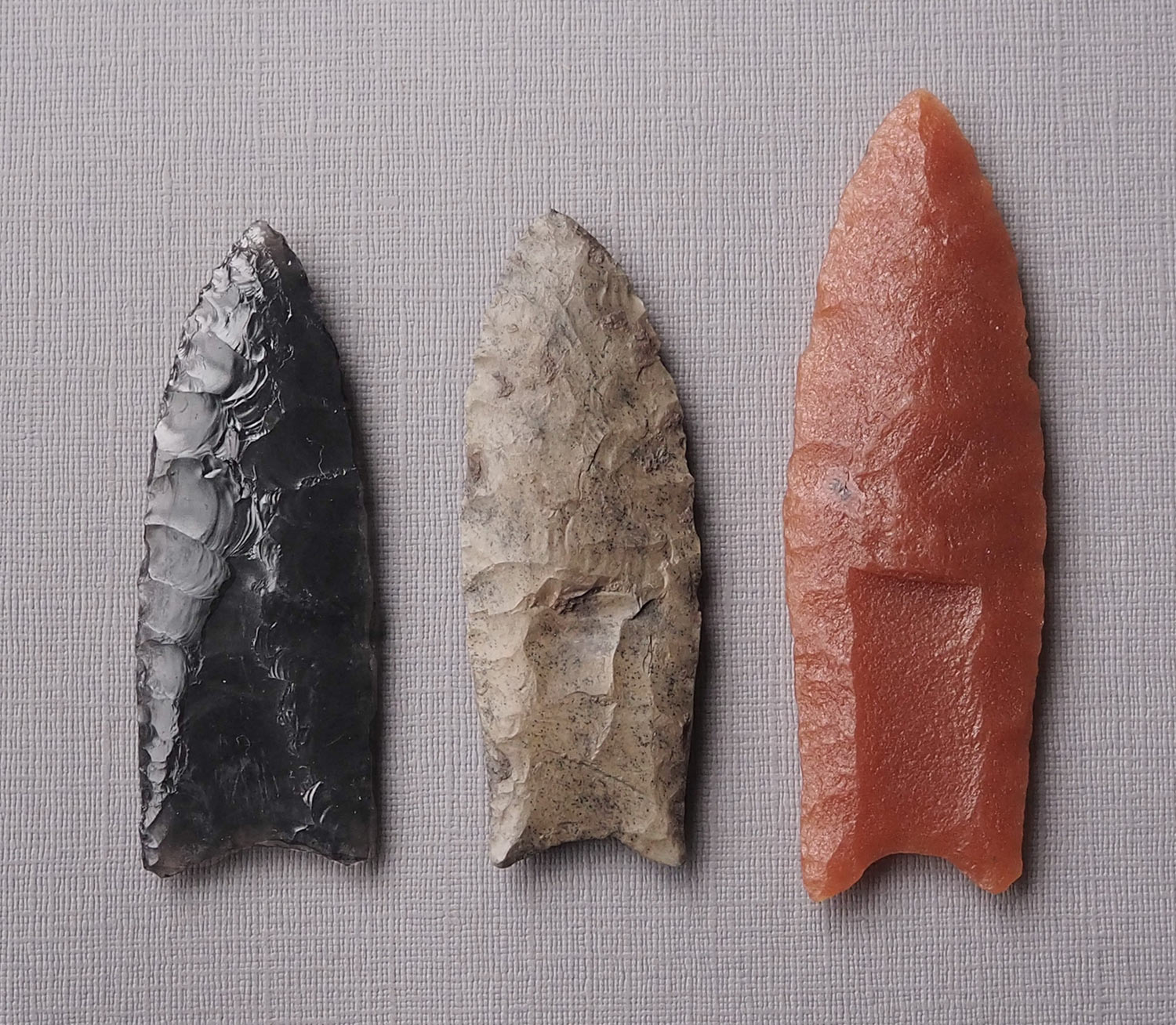
The Clovis culture appears in the archaeological record around 13,000–14,000 years ago and disappears by roughly 12,700 years ago. Once thought to represent the first widespread Americans, we now know they were not the earliest—but they were remarkably far-reaching. Clovis sites stretch from coast to coast, into Canada, and as far south as northern South America, tracking the retreating Ice Age glaciers.

Their signature artifact is the fluted Clovis point: a large, leaf-shaped stone tool with a distinctive groove removed from its base to help haft it onto a spear or shaft. These were masterfully crafted, but Clovis technology was not uniform. Regional differences reveal flexible traditions. Points from Carson-Conn-Short are large and deeply concave; Williamson points are smaller with broader bases, likely reflecting repeated resharpening; Topper falls in between. Shared technology, local expression.

Clovis groups were highly mobile. Geochemical sourcing shows stone traveled long distances. At the Gault Site in Texas, some chert points came from sources up to 300 km away. At the Plenge Site in New Jersey, tools were made from Munsungun Lake chert originating 800 km north in Maine—evidence of vast movement or exchange networks.

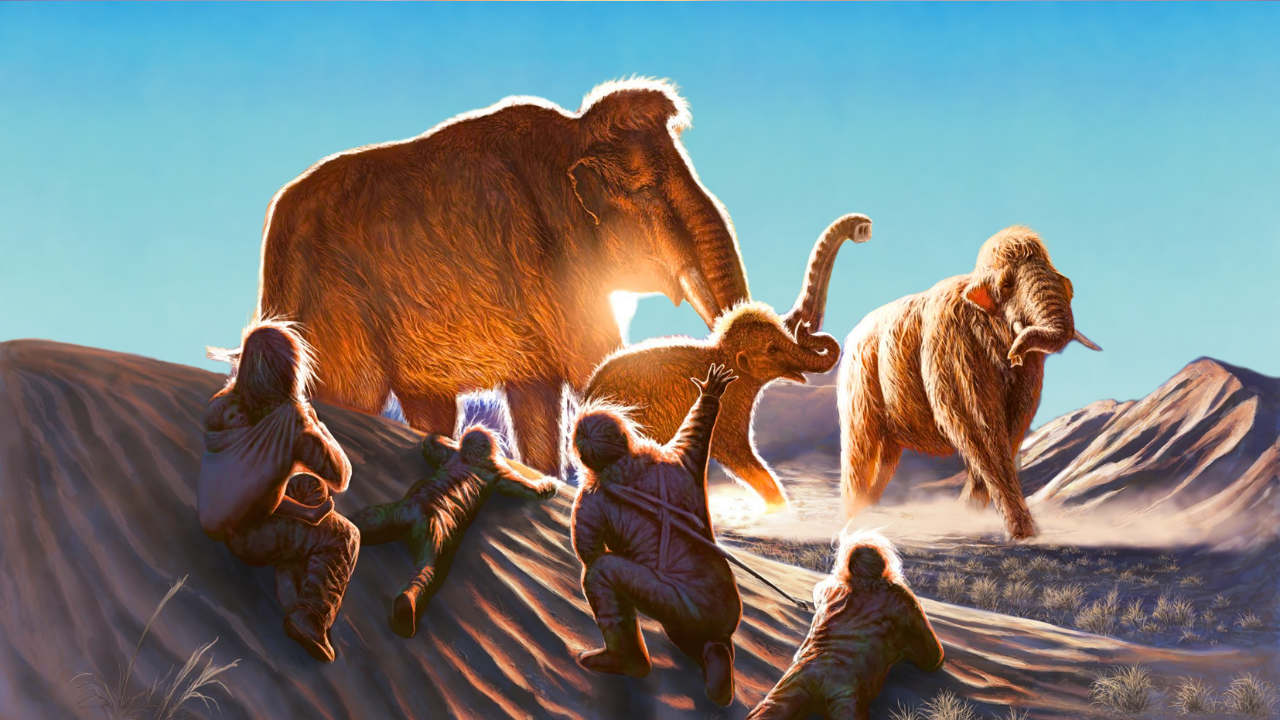
Diet remains debated. Protein residues show both small game and megafauna use. Some sites place points among mammoth and bison remains, though whether these animals were hunted or scavenged is unclear. Isotopes from the 12,800-year-old Anzick child suggest heavy megafauna consumption. Clovis lifeways, like their tools, were likely diverse and adaptable.

The Fishtail Tradition

Clovis were not alone at the end of the Ice Age. Across South America, archaeologists find a technologically similar tradition defined by distinctive “Fishtail” points. These stone tools have long, lance-shaped blades that narrow at the waist before flaring outward at the base—creating a shape that truly resembles a fish’s tail. Many even show fluting similar to Clovis, hinting at a possible shared ancestry or deep technological connection.

Like Clovis groups, Fishtail peoples were highly mobile. In Uruguay, their preferred material was silcrete, a silica-rich stone that outcrops in limited areas in the west. Yet Fishtail points made from this silcrete appear hundreds of kilometers away—sometimes 180 to nearly 500 km from their source. Some journeys to acquire it may have taken nearly a week. Strikingly, these groups often bypassed closer, more accessible stone sources. This suggests silcrete wasn’t chosen purely for practicality—it likely carried cultural or symbolic meaning.

Point size adds another layer. Large and medium examples show clear signs of hunting use, including impact fractures and animal fat residues. But miniature and atypical points lack this evidence, raising the possibility they served ritual or symbolic roles.

Even their discard patterns are revealing. Broken points cluster on prominent hilltops such as Cerro El Sombrero and Cerro Amigo Oeste, far apart yet remarkably similar in setting. These elevated landscapes may have functioned as lookout points, meeting grounds, or places of shared identity—suggesting Fishtail technology expressed not just survival, but worldview.

The Western Stemmed Tradition

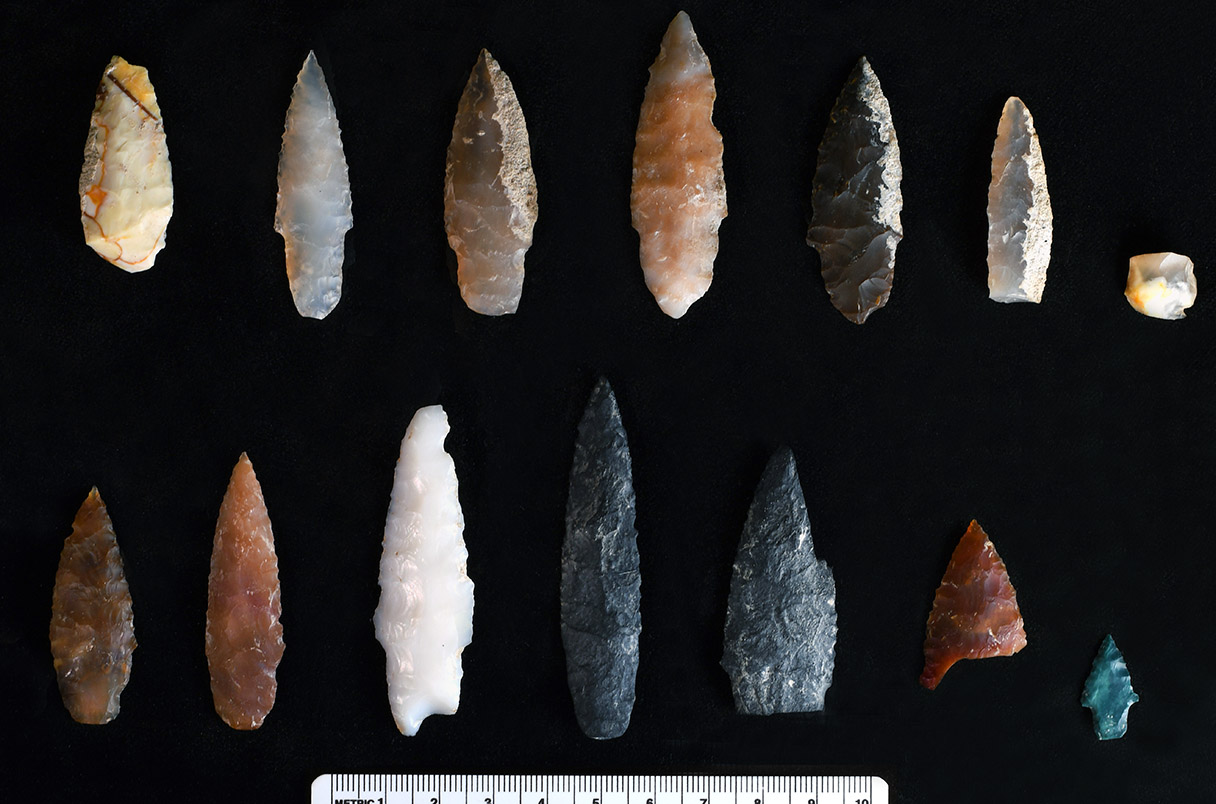
The Western Stemmed Tradition is the third major Paleoamerican culture, centered in the western United States. These groups lived alongside Clovis but likely arrived earlier. Sites like Cooper’s Ferry in Idaho date to around 16,000 years ago, suggesting people were in the Americas thousands of years before interior ice-free corridors opened—perhaps traveling along the Pacific coast, possibly by boat.

Western Stemmed projectile points are distinctive. They feature narrow stems but lack the fluting seen in Clovis and many Fishtail points. Intriguingly, their closest technological parallels aren’t in the Americas at all, but in Late Pleistocene northeast Asia, including Siberia and Japan. This resemblance hints at deep cultural continuities stretching across Beringia before people entered the New World.

Unlike the stereotype of specialized mammoth hunters, Western Stemmed groups appear to have been flexible generalists. They moved through deserts, wetlands, and mountain basins, fishing, gathering plants, trapping small game, and hunting opportunistically. Their adaptability may explain why their tradition endured for thousands of years.

One of the most remarkable discoveries comes from the Wishbone site in Utah, dated to about 12,300 years ago. At a seasonal wetland camp, archaeologists recovered charred tobacco seeds from a hearth—the earliest known evidence of tobacco use anywhere in the world. The plant did not grow locally, meaning it was deliberately carried in. The seeds were unlikely to be food or fuel, suggesting tobacco was chewed or smoked.

This discovery reveals something profound: complex ritual or social plant use appeared almost immediately in the Americas, long before agriculture

A Day in the Life

Archaeology allows us to imagine a day in Paleolithic America. At sunrise, reeds bent in the wind, waterfowl rose from shallow lakes, and megafauna moved across a vanished landscape. People read this world carefully—choosing whether to hunt, gather, fish, or repair tools by the fire. Children learned by watching skilled hands shape stone. Food came from fish, roots, seeds, and seasonal game, but nothing was guaranteed. At night, stories were shared beside the flames, sometimes with tobacco. They lived amid subtle but profound change—the last generations to know the Americas as a truly Ice Age world.

Sources:

[1] Marshak, S. 2012. Essentials of Geology (Fourth Edition). W. W. Norton & Company

[2] The Cordilleran Ice Sheet and Missoula Floods

[3] The Fishes of Lake Bonneville: Implications for Drainage History, Biogeography, and Lake Levels

[4] Bennett, M., et al. 2021. “Evidence of humans in North America during the Last Glacial Maximum.” Science 373,1528-1531.

[5] Haynes, V. 2022. “Evidence for humans at White Sands National Park during the last Glacial Maximum could actually be for Clovis people ∼13,000 years ago.” PaleoAmerica 8, 95-98.

[6] Holliday, V., et al. 2025. “Paleolake geochronology supports Last Glacial Maximum (LGM) age for human tracks at White Sands, New Mexico.” Sci. Adv.11,eadv4951.

[7] Bennett, M., et al. 2025. “The ichnology of White Sands (New Mexico): Linear traces and human footprints, evidence of transport technology?” Quaternary Science Advances 17, 100274.

[8] O’Keefe, F., et al. 2023. “Pre–Younger Dryas megafaunal extirpation at Rancho La Brea linked to fire-driven state shift.” Science381, eabo3594.

[9] Stock, C. 1929. “A Census of the Pleistocene Mammals of Rancho La Brea, Based on the Collections of the Los Angeles Museum.” Journal of Mammalogy 10(4):281-289.

[10] Webb, D. 2006. “THE GREAT AMERICAN BIOTIC INTERCHANGE: PATTERNS AND PROCESSES,” Annals of the Missouri Botanical Garden 93(2):245-257

[11] Waters, M., et al. 2020. “The age of Clovis—13,050 to 12,750 cal yr B.P.” Sci. Adv. 6, eaaz0455.

[12] Smallwood, A. 2012. “Clovis Technology and Settlement in the American Southeast: Using Biface Analysis to Evaluate Dispersal Models.” American Antiquity 77(4):689-713.

[13] Speer, C. 2019. “A blended model of mobility behavior: Clovis period hunter-gatherers at the Gault Site.” Quaternary Science Reviews, 215, 196–212.

[14] Gingerich, J. 2013. “Fifty Years of Discovery at Plenge.” Chapter From: In the Eastern Fluted Point Tradition, edited by Joseph A.M. Gingerich pp. 121-47. University of Utah Press, Salt Lake.

[15] Rockwell, H. 2020. “Red Chert Quarries in the Munsungun Lake Formation: Moving beyond Norway Bluff Red Chert Quarries in the Munsungun Lake Formation: Moving beyond Norway Bluff.” Paleoamerica 6(2):169-180.

[16] Nash, B., et al. 2024. “Clovis organizational dynamics at a Late Glacial campsite in the central Great Lakes: Belson site excavations 2020–2021.” PLoS ONE 19(5):e0302255.

[17] Moore, C., et al. 2023. “Paleoamerican exploitation of extinct megafauna revealed through immunological blood residue and microwear analysis, North and South Carolina, USA.” Sci Rep 13, 9464.

[18] Eren, M., et al. 2021. “On the efficacy of Clovis fluted points for hunting proboscideans.” Journal of Archaeological Science Reports 39(1):103166.

[19] Chatters, J. et al. 2024. “Mammoth featured heavily in Western Clovis diet.” Sci. Adv. 10, eadr3814.

[20] Suárez, R. and Barceló, F. 2024. “Mobility and raw material procurement by Fishtail people in Uruguay: Evaluation of silcrete long distance transport between campsites and outcrops during the late Pleistocene (ca. 12,900–12,250 cal BP).” Journal of Archaeological Science Reports 53(3):104338

[21] Flegenheimer, N and Weitzel, C. 2017. “Fishtail points from the Pampas of South America: Their variability and life histories.” Journal of Anthropological Archaeology 45(1-2):142-156.

[22] Mazzia, N., and Flegenheimer, N. 2013. “Rethinking Early Objects and Landscapes in the Southern Cone: Fishtail-Point Concentrations in the Pampas and Northern Patagonia por Nora Flegenheimer, Laura Miotti y Natalia Mazzia.” Paleoamerican Odyssey. Chapter 12. Editado Por Kelly Graf, Caroline Ketron y Micahel Waters, Pp. 359-376. Texas A. & M. University Press.

[23] Davis, L., et al. 2019. “Late Upper Paleolithic occupation at Cooper’s Ferry, Idaho, USA, ~16,000 years ago.” Science 365, 891-897.

[24] Smith, G., et al. 2020. “The Western Stemmed Tradition: Problems and Prospects in Paleoindian Archaeology in the Intermountain West.” PaleoAmerica 6(1):23:42.

[25] Duke, D., et al. 2022. “Earliest evidence for human use of tobacco in the Pleistocene Americas.” Nat Hum Behav 6, 183–192.

[26] Davis, L., et al. 2022. Dating of a large tool assemblage at the Cooper’s Ferry site (Idaho, USA) to ~15,785 cal yr B.P. extends the age of stemmed points in the Americas.” Sci. Adv. 8, eade1248.

SUBSCRIBE FOR MORE