
Every Human Species Discovered So Far
Sep 21, 2026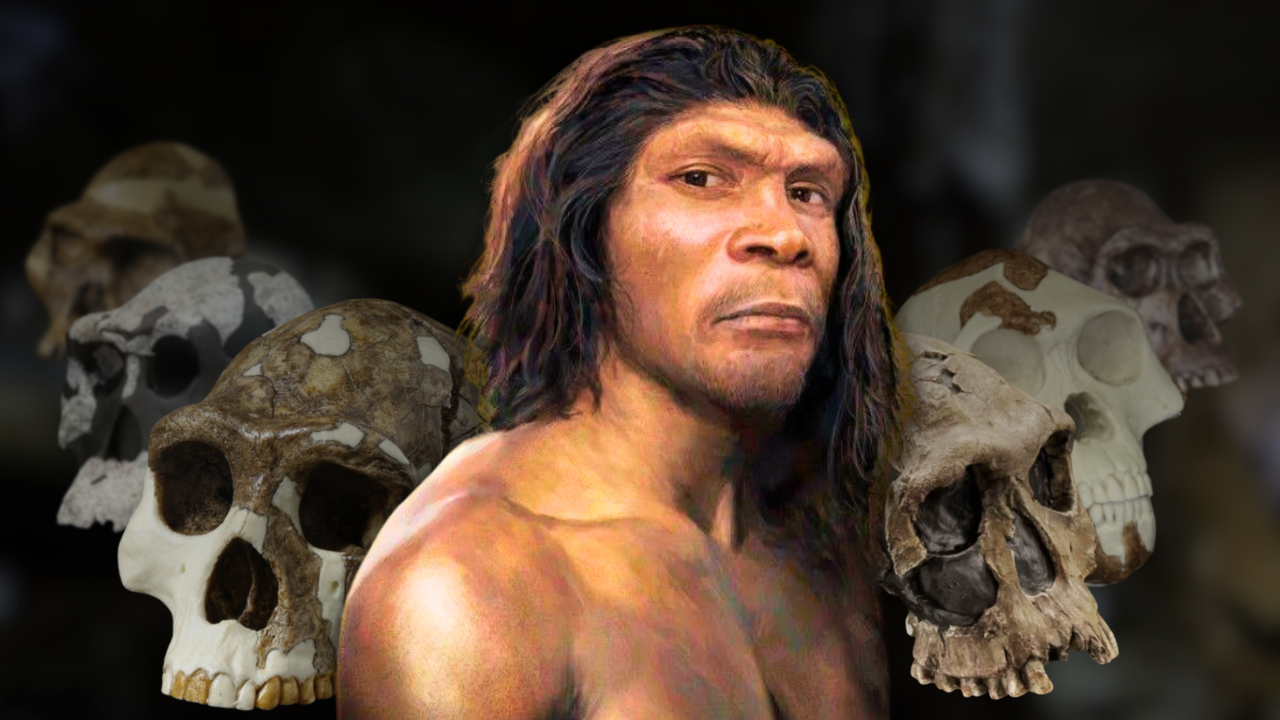
By: Greg Schmalzel
How many species of humans have existed? The answer depends on who you ask. Scientists recognize anywhere from a handful to dozens, because human evolution was never a straight line. For millions of years, different kinds of humans evolved, migrated, overlapped, and sometimes lived alongside one another. We know the famous ones. Homo erectus, Neanderthals, and Homo sapiens. But there were many others most people have never heard of. So who were they? Let’s travel back nearly seven million years and meet the human species discovered so far.
For the full YouTube video, click HERE.
Click here to subscribe to my FREE Newsletter for more.
The First Hominins
Didier Descouens
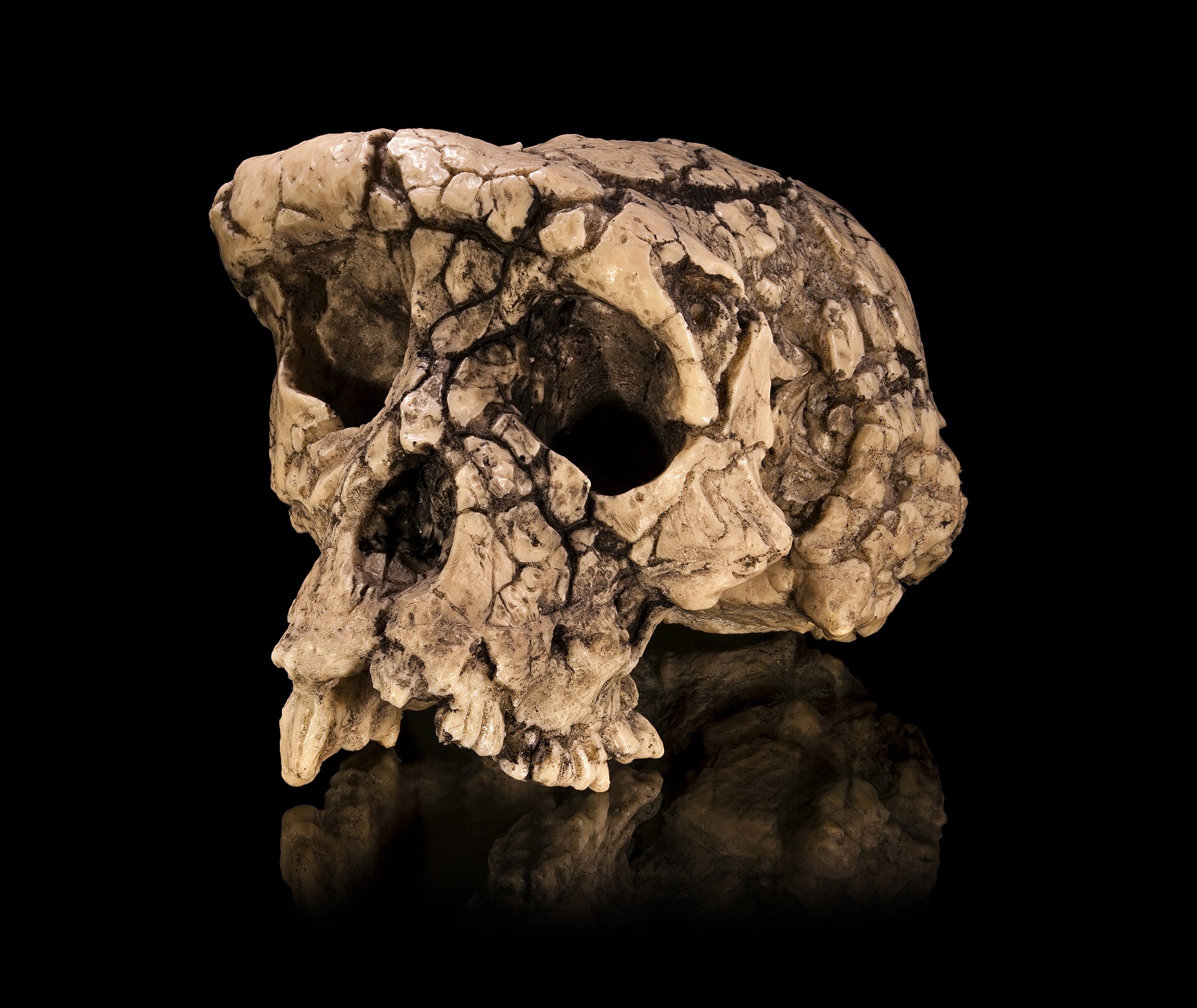
A good place to begin is with the first primates to experiment with walking upright. In anthropology, these early relatives—and everyone who came after them on our branch of the family tree—are called hominins. The earliest known candidate is Sahelanthropus tchadensis, which lived in Chad around 7 million years ago. Discovered in 2001, it is known from a single, crushed skull nicknamed Toumaï, meaning “hope of life.” Its brain was still ape-sized, but the position of its skull suggests it may have held its head on a spine suited for walking upright. If so, Sahelanthropus could represent one of the earliest steps toward human bipedalism.
About a million years later, Orrorin tugenensis appeared in Kenya. Its curved fingers and arm bones suggest it could still climb through trees, but the structure of its thigh bones indicates that it also walked on two legs. Then came two species of Ardipithecus in Ethiopia. Ardipithecus kadabba, around 5.5 million years ago, had ape-like canine teeth but anatomical features suggesting it could walk upright. Ardipithecus ramidus, or “Ardi,” lived about 4.4 million years ago and had a grasping big toe for climbing trees alongside a pelvis adapted for upright walking.
Together, these early hominins show that human evolution wasn't a simple transition from ape to human. They were creatures caught between two worlds—still comfortable in the trees, but increasingly adapted to life on two feet.
The Australopithecus Genus
Matheus Vieeira
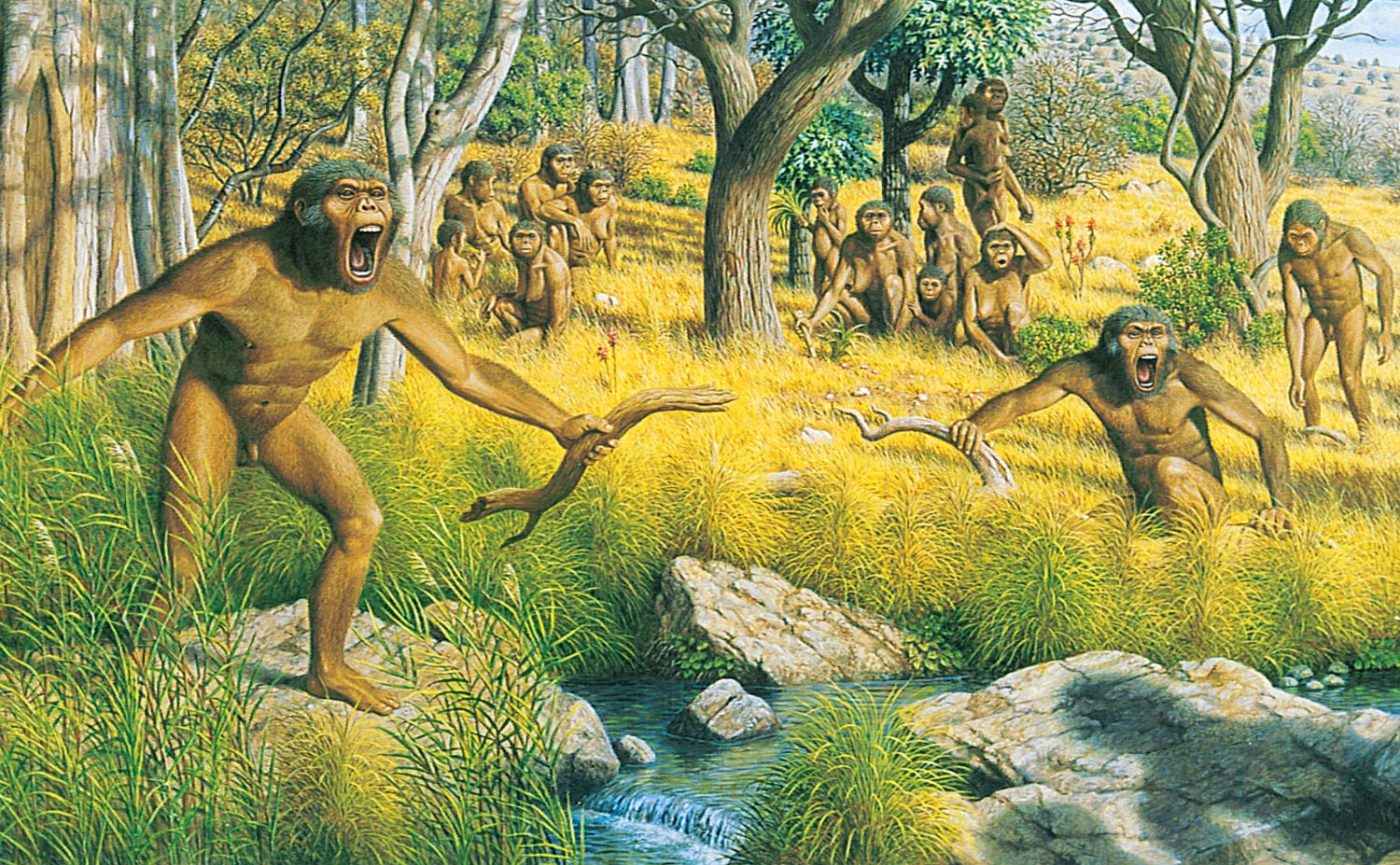
The next major chapter in human evolution belongs to the australopithecines. Members of the genus Australopithecus were more efficient bipedal walkers than the earlier hominins, while their brains were beginning to grow larger. They still looked much more ape-like than human, but they represent an important bridge between our earliest ancestors and the later genus Homo.
The first was Australopithecus anamensis, which lived around 4 million years ago in Kenya and Ethiopia. Its ape-like jaw was paired with surprisingly advanced leg and ankle bones, showing that it was already well adapted to walking on two feet. About a million years later came Australopithecus afarensis, the species made famous by Lucy. A. afarensis lived across East Africa, and fossil footprints preserved in volcanic ash show that these hominins were already walking together in groups—an early glimpse of the social behavior that would become increasingly important in our evolution.
Several other species lived around the same time. Australopithecus bahrelghazali was discovered in Chad, far west of the better-known East African fossils, while Australopithecus deyiremeda may have lived alongside A. afarensis in Ethiopia. Both are based on limited fossils, so their status as distinct species remains debated.
Further south, Australopithecus africanus became famous after the discovery of the Taung Child in South Africa in 1924. The specimen helped establish Africa as the birthplace of humanity. The child also appears to have met a grim end: marks inside its skull have been interpreted as evidence of predation by either a large eagle or a big cat.
Then there was Australopithecus garhi, whose name means “surprise.” It had a strange combination of primitive teeth and relatively human-like legs. Antelope bones found nearby also bear possible cut marks, raising the possibility that A. garhi was using stone tools to butcher animals. The evidence remains controversial.
Another unusual species was Australopithecus sediba, which lived in South Africa around 2 million years ago. Its hands had a surprisingly human-like ability to make precise grips, even though no tools have been found with it. This raises an intriguing possibility: perhaps hands capable of sophisticated tool use evolved before our ancestors actually began making sophisticated tools.
And tools take us to one of the biggest mysteries of all. Around 3.3 million years ago, someone living near Lake Turkana in Kenya made the Lomekwi stone tools, the oldest known stone tools currently discovered. Kenyanthropus platyops lived nearby at roughly the same time, leading some researchers to suggest that it may have been their maker. But because no tools have been directly associated with the species, we simply don't know.
Finally, there were the robust australopithecines, a group that included Paranthropus aethiopicus, P. boisei, and P. robustus. Rather than developing larger brains, these hominins specialized in powerful chewing. They had enormous jaws, huge grinding teeth, and bony crests on their skulls that anchored massive chewing muscles. P. boisei was even nicknamed “Nutcracker Man.” They were built to survive on tough, difficult-to-process foods.
For more than two million years, these various australopithecines spread across Africa. But eventually, another lineage began taking a different evolutionary path. Instead of relying on massive jaws and powerful bodies, it began investing in something far more transformative: a bigger brain. The age of the australopithecines was coming to an end, and the genus Homo was about to emerge.
The Homo Genus
S. Entressangle / E. Daynes
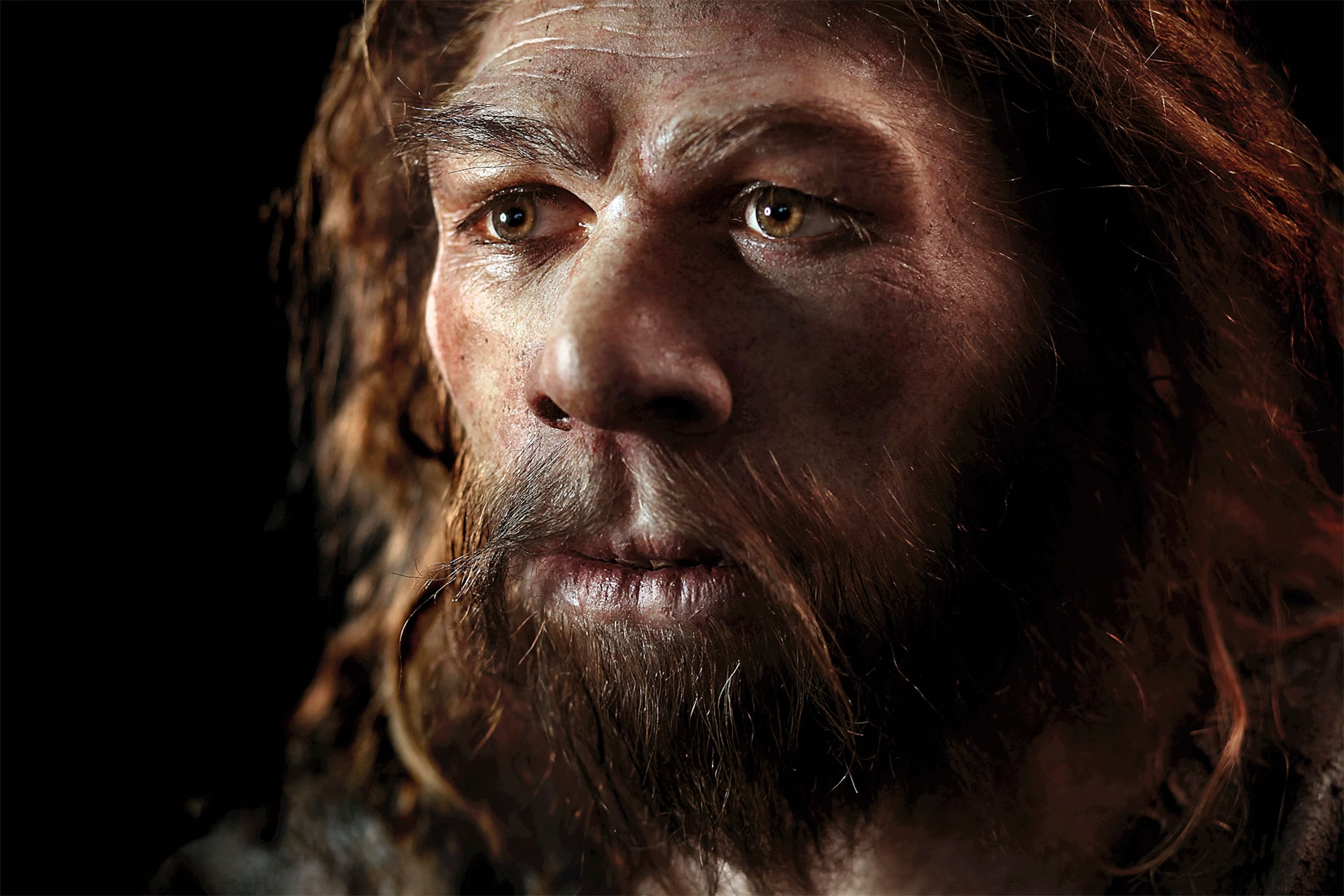
The genus Homo appears in the fossil record around 2.5 million years ago with Homo habilis, often called the “handyman.” Found at Olduvai Gorge in Tanzania, H. habilis had a larger brain and a lighter, more human-like skull than earlier australopithecines. Most importantly, it was associated with the Oldowan stone tools—simple but deliberately crafted flakes and choppers that made it easier to cut meat and crack open bones. This likely gave these early humans access to more meat and calorie-rich marrow, providing valuable energy for their increasingly expensive brains.
Living alongside H. habilis was Homo rudolfensis, a mysterious species known for its large brain, broad face, and unusually large molars. Because it lived in the same region and period as H. habilis but looked noticeably different, some researchers recognize it as a separate species, while others see it as another variation of habilis. Either way, it shows that our genus may have been diverse from the very beginning.
Then came Homo erectus, around 2 million years ago. This was a major evolutionary leap. H. erectus had a tall, human-like body with long legs, a much larger brain, and the ability to travel long distances. It was also the first human species to spread widely beyond Africa, reaching parts of Europe and Asia. Fire may have helped these populations survive in colder environments, while their Acheulean handaxes represented a major advance over the simpler Oldowan tools.
Because H. erectus fossils vary so much across this enormous geographic range, scientists disagree about how many species they represent. Some researchers “lump” them together as one widespread species, while “splitters” argue that several regional populations deserve their own names. Among these are Homo ergaster, the relatively slender African form, and Homo georgicus, whose fossils at Dmanisi in Georgia show that humans with surprisingly small brains were already leaving Africa nearly 2 million years ago.
Around 900,000 years ago, Homo antecessor appeared in western Europe. At the Gran Dolina cave in Spain, archaeologists discovered human bones bearing extensive butchery marks, providing evidence that these early humans sometimes consumed other humans. The reasons remain uncertain.
By about 700,000 years ago, Homo heidelbergensis had emerged across parts of Africa and Europe. These were large, powerfully built humans with substantial brains and increasingly modern-looking faces. They are often placed near the evolutionary crossroads that eventually produced Homo sapiens, Neanderthals, and Denisovans, although the exact relationships remain debated. Some fossils once classified as H. heidelbergensis have also been reassigned to names such as Homo rhodesiensis and Homo bodoensis.
From this point, human evolution becomes even more complicated. Neanderthals emerged in Europe and western Asia roughly 400,000 years ago and became highly specialized for life in cold environments. They had powerful, compact bodies and brains as large as—or sometimes larger than—ours. They were skilled hunters and toolmakers, using sophisticated techniques to produce sharp stone points and scrapers. Evidence also suggests they cared for injured members of their communities, deliberately buried their dead, and created symbolic objects and artwork.
Yet around 40,000 years ago, Neanderthals disappeared as a distinct population. Exactly why remains debated. What we do know is that they did not simply vanish without a trace. They interbred with Homo sapiens, and many people alive today carry Neanderthal DNA.
Other strange human species were still thriving around this time. Homo naledi, discovered deep inside South Africa's Rising Star Cave, lived roughly 335,000 to 236,000 years ago despite having a remarkably small brain. The discovery of numerous bodies deep within the cave has led some researchers to suggest that H. naledi deliberately placed its dead there, although this interpretation remains controversial.
Then there was Homo floresiensis, the tiny “Hobbit” of Indonesia. Standing only around 3.5 feet tall, it may have evolved its small body after becoming isolated on the island of Flores. Despite its tiny brain, it made stone tools, controlled fire, and hunted. Another island species, Homo luzonensis, lived on the Philippine island of Luzon and presents a similar mystery: how did its ancestors reach an island separated from mainland Asia by deep water?
Meanwhile, mainland Asia was home to the Denisovans, an enigmatic human lineage first identified through DNA recovered from a small finger bone in Siberia. Denisovans occupied a remarkably wide range of environments, from the high Tibetan Plateau to tropical Southeast Asia. They also produced sophisticated artifacts, including jewelry and delicate bone needles. More recently, the famous Harbin “Dragon Man” skull has been linked genetically to the Denisovan lineage, giving researchers a much better idea of what these mysterious humans looked like.
The relationship between Denisovans and other proposed Asian human species—including Homo longi and Homo juluensis—remains an active area of debate. The names may represent distinct populations, regional forms, or overlapping parts of the same complicated lineage. What is clear is that Asia was once home to a much greater diversity of humans than we might have imagined.
Finally, we arrive at Homo sapiens. Our species appeared in Africa roughly 300,000 years ago, with some of the earliest fossils discovered at Jebel Irhoud in Morocco. For most of our early history, we were simply one human species among several. We shared the planet with Neanderthals and Denisovans and likely encountered other now-extinct populations as well.
Over time, however, Homo sapiens developed an extraordinary combination of technology, cooperation, communication, and cultural learning. We created increasingly sophisticated weapons, formed enormous social networks, shared stories and beliefs, and adapted to environments ranging from Arctic tundra to tropical forests and deserts. Eventually, we also began transforming those environments through agriculture and domestication.
Today, Homo sapiens is the only surviving human species. But our evolutionary history was never a straight line toward us. For millions of years, the planet was home to a diverse cast of humans—some large-brained, some tiny, some powerful, some highly specialized, and many that we are still struggling to understand.
Sources:
[1] Larsen, Clark Spencer. 2019. Essentials of Biological Anthropology. 4th ed. New York, NY: W.W. Norton & Company, Inc.
Founder