
Earth Tried To Kill Us, But We Evolved Language
Nov 02, 2026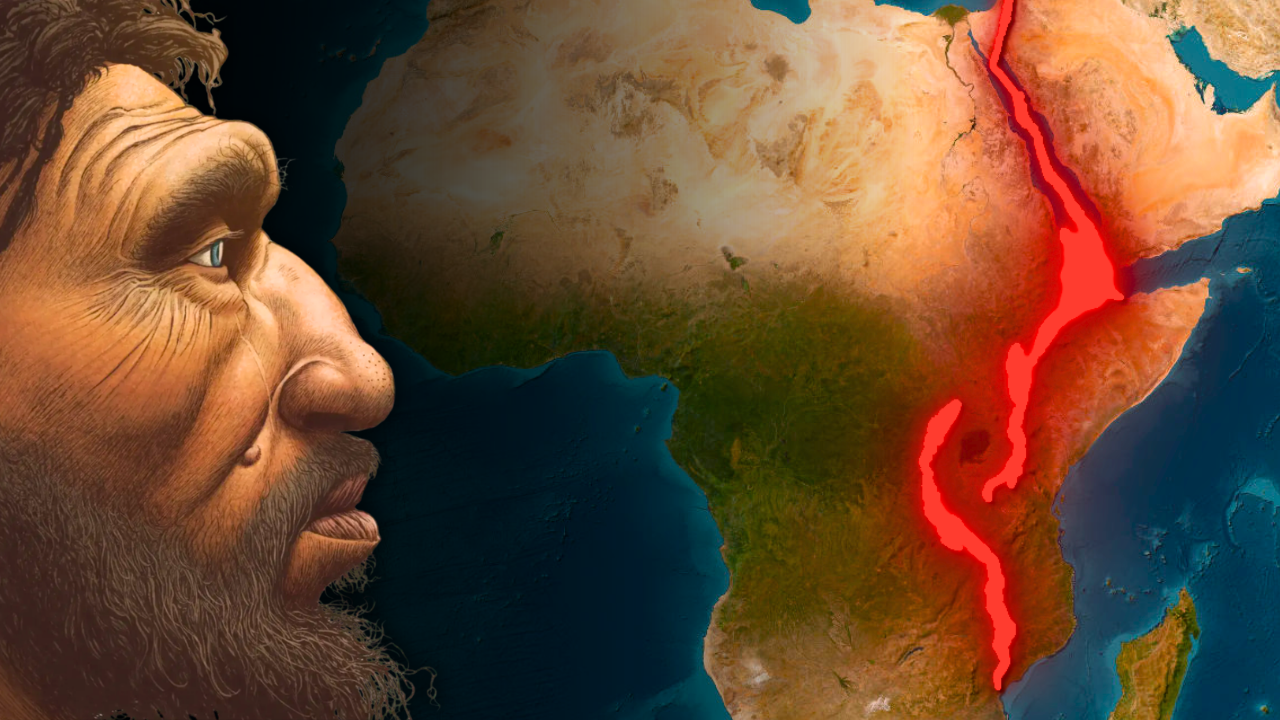
By: Greg Schmalzel
For most of human history, Earth was out to get us. It was constantly throwing new obstacles in our way. Droughts. Famines. Floods. Wildfires. Volcanoes. You name it. Places that were green one year dried out the next. Lakes could appear, disappear, and reappear. And sometimes, the animals we depended on simply vanished. But somewhere along the way, our ancestors developed something more powerful than claws, fur, or fangs. They figured out how to put one of their ideas inside another’s head. They began using language. This was arguably the key to our success in such an unrelenting world. And here’s the important part: language as we know it didn't appear overnight. It was the end result of a much longer evolutionary story.
The chapters of that story are stored in the rocks beneath our feet, in the fleeting lakes of ancient Africa, and in the remarkable tools that our ancestors left behind. In this video, we're breaking the entire story down. We'll dive into the East African Rift, where tectonic forces were literally tearing our homeland apart. Then, we'll see how Earth's position in space triggered catastrophic climate shifts. And finally, we'll explore how surviving this unpredictable planet forced us to evolve one of the most powerful adaptations biology has ever produced. The ability to share an idea. This is how Earth turned us into the talking ape.
Click here for the full YouTube video.
Click here to sign up for my free newsletter.
The Talking Ape
Elisabeth Daynes
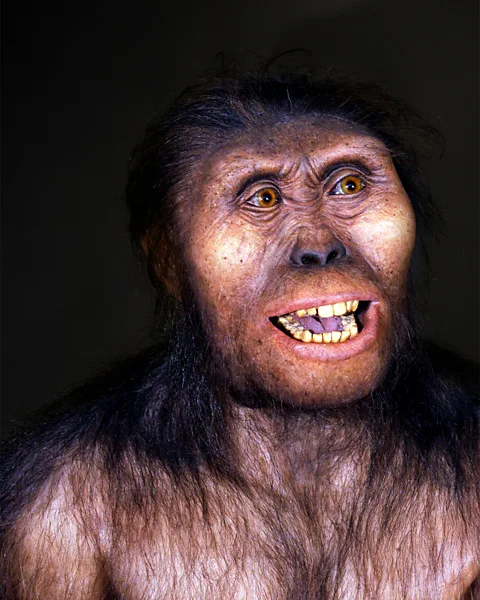
Language feels effortless, but its origins stretch deep into prehistory. Animals have always communicated, from elephants using ground-borne infrasound to dolphins with signature whistles. Even dinosaurs had some form of communication. Human language is different in three ways: we can discuss the past, future, and fiction; we build infinite new meanings from a finite set of sounds; and we rely on grammar, where word order changes meaning.
When did these abilities emerge? Our earliest relatives, around 7 million years ago, probably communicated much like chimpanzees, using calls, gestures, and facial expressions. The oldest vocal clue is a 3.3-million-year-old hyoid bone from Australopithecus afarensis, which resembles a chimp’s more than ours. It is the only australopithecine hyoid ever found, since the bone is small and fragile.
Nearly three million years later, hyoids from Spain’s Sima de los Huesos (about 450,000 years old) look much more human. Skull reconstructions suggest their vocal tracts had proportions that could produce distinct vowels. Neanderthal vocal tracts and hyoids appear closer still, and ear structures show that both groups could hear the frequencies critical to speech.
Together, the fossils reveal a gradual evolution of the biology needed for speech, refined to modern levels within the past couple hundred thousand years. But bones can’t explain why language evolved. That is a harder question. And to understand why human language evolved, we need to first debunk an outdated understanding of human evolution.
Africa Wasn’t Just a Savannah
Goodshoot

For decades, the savannah hypothesis dominated anthropology. It claimed that shrinking forests forced our ancestors onto open grasslands, where walking upright helped them spot predators, travel efficiently, and carry food. Language and our other quirks supposedly followed.
But modern research has undermined this tidy story. Africa’s ancient landscape wasn’t uniform savannah. It was a shifting mosaic of grasslands, forests, and lakes. Early hominins also combined tree-climbing and walking traits, suggesting they were flexible generalists rather than plains specialists. Bipedalism likely evolved as a response to unpredictable environments, and language may have followed a similar path. When the land is stable, there is little pressure to adapt or cooperate. When it’s shifting beneath you, survival depends on working together.
The Truth About Ancient Africa
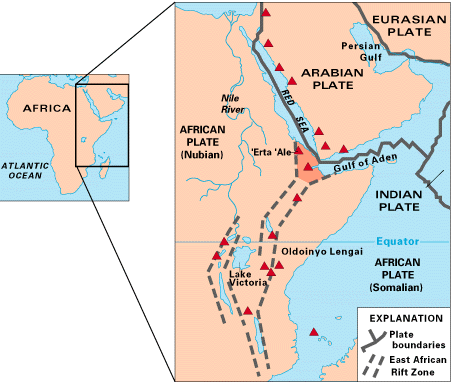
Early human evolution unfolded in a volatile world, shaped by two forces: one from within the Earth and one from space.
The first is the East African Rift, where most early hominin fossils have been found. This 2,000-mile system exists because a massive plume of molten rock is stretching the African plate until it splits. Over thousands of generations, earthquakes, volcanoes, and shifting lakes kept reshaping the landscape. Amplifier lakes, for example, swelled to hundreds of meters deep, then vanished into desert, isolating populations and rewarding groups who could read changing conditions and share what they learned.
The second force is Milankovitch cycles: changes in Earth’s orbit, tilt, and wobble. Paleoanthropologist Richard Potts found eight periods of extreme climate variability over the past five million years, each lasting at least 192,000 years. Deep-sea sediment cores, dust layers, and Nile-fed mud bands reveal swings between severe drought and heavy monsoon flooding, matched by rift basin deposits that flip between lakes, floodplains, and volcanic ash.
Remarkably, nearly every major human ancestor and stone tool technology appeared during these unstable windows, including Australopithecus, Homo habilis, Homo erectus, and Homo sapiens. Our ancestors weren’t adapting to savannahs. They were adapting to change itself, becoming flexible generalists.
Tools and Language
Vincent Mourre
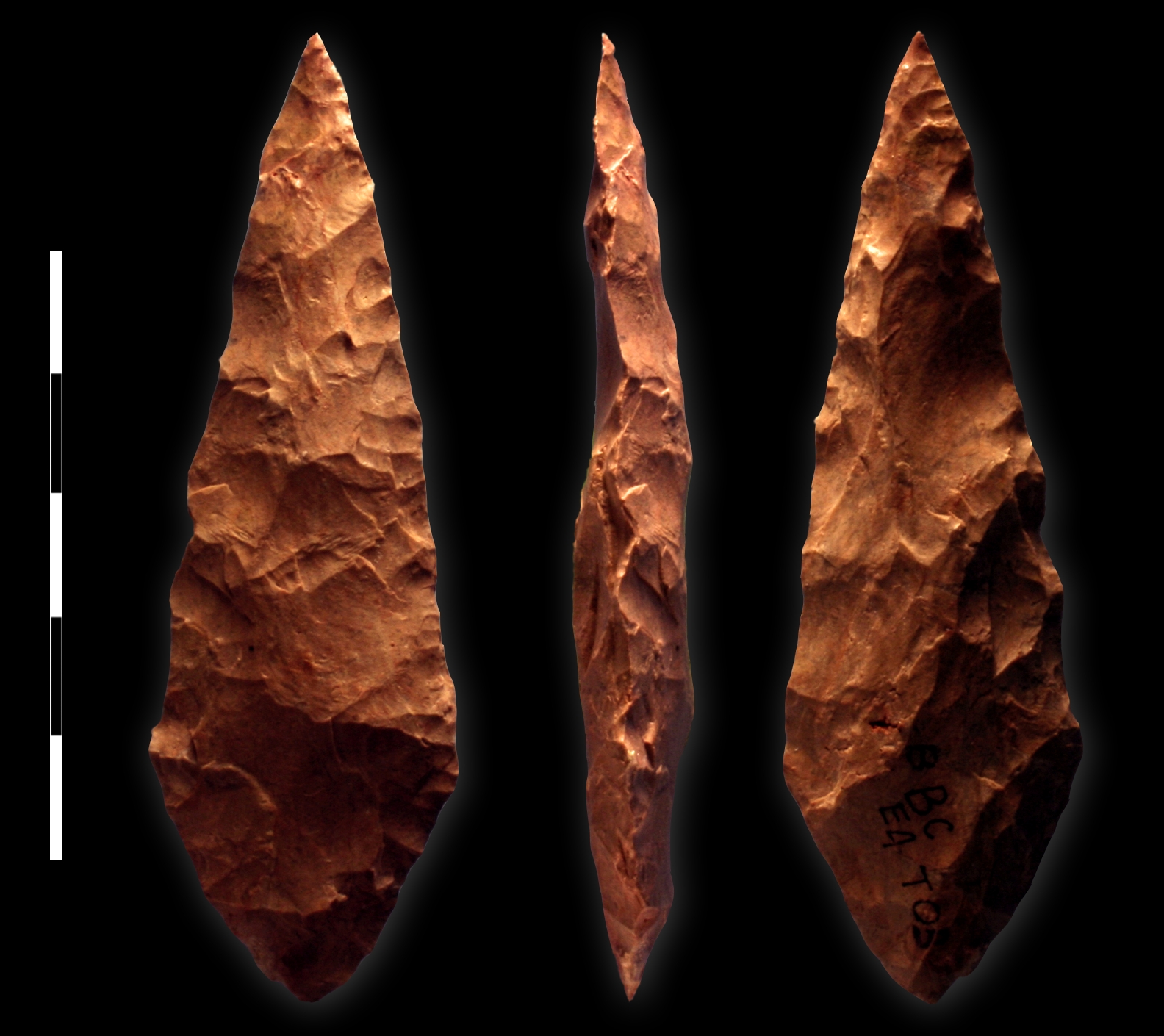
Stone tools show where language mattered most. Nobody is born knowing how to knap a stone, so the skill must be taught, and as tools grew more complex, so did the communication needed to pass them on. Simple gestures and imitation probably sufficed for the earliest tools, but speech became essential for step-by-step instruction later. Speech doesn’t fossilize, but its products do.
The record follows the climate swings. Lomekwan tools appeared around 3.3 million years ago, Oldowan tools around 2.5 million, and symmetrical Acheulean handaxes shortly after 2 million, which demanded forethought and teaching.
Around 400,000 years ago, tectonic faulting and climate swings fractured the landscape at Olorgesailie. Large mammals suffered an 85% turnover, and flexible small-game species took over. Humans abandoned handaxes for smaller Middle Stone Age projectile points, and began moving obsidian from up to 60 miles away.
Making these points requires a strict sequence of steps, mirroring the order-dependent rules of grammar. Neuroimaging supports the link: Broca’s area and the basal ganglia activate during both tool-making and complex sentence processing. Technology and language evolved together.
Obsidian trade also pushed groups into neighboring territories, demanding diplomacy and deepening social ties.
Prehistoric Symbolism
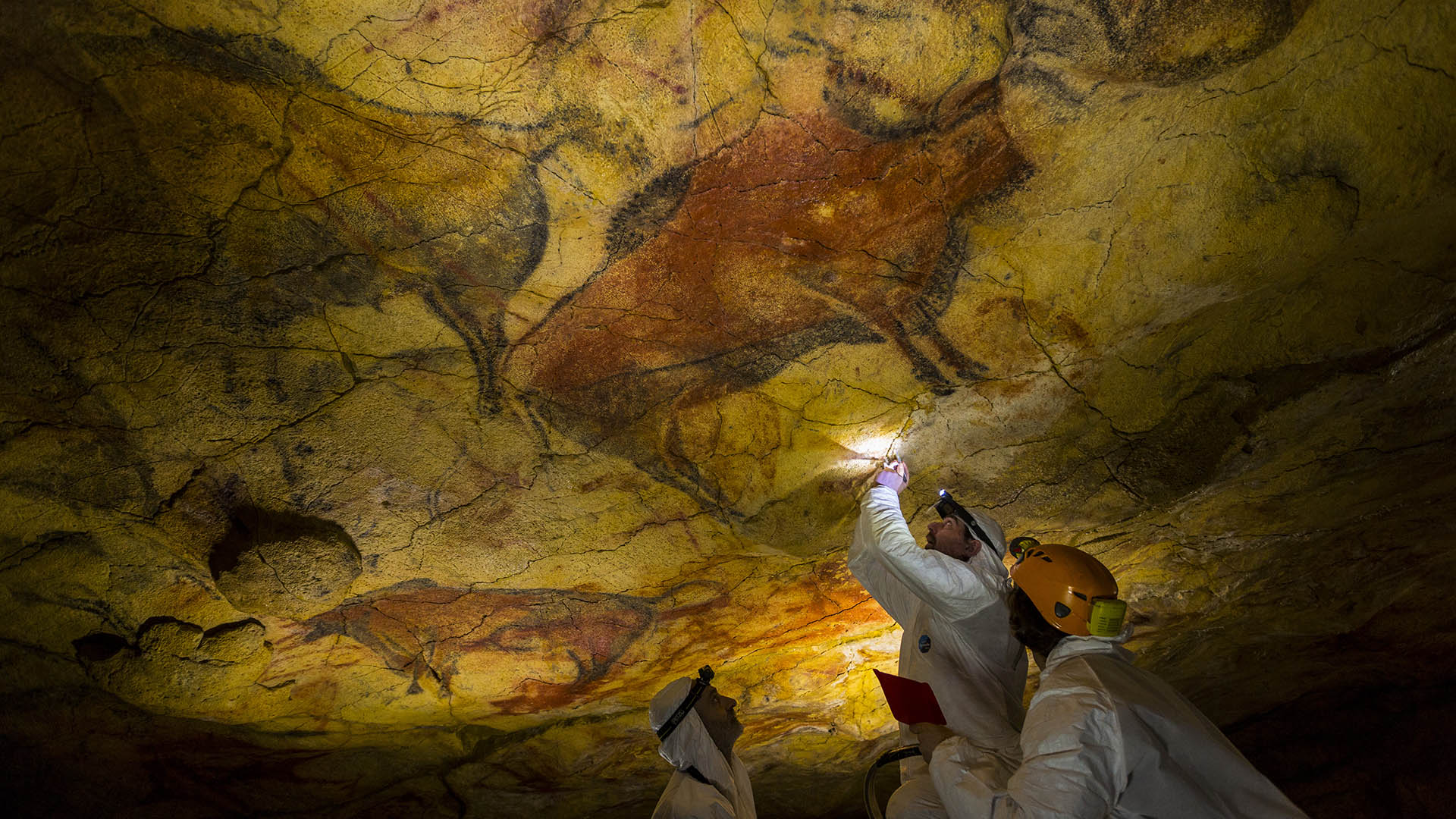
At Olorgesailie, the shift to Middle Stone Age technology coincides with the appearance of pigments. Early humans deliberately hauled red ochre and black manganese oxides from distant regions, and microscopic scans show grinding, notches, and even attempted drilling. These weren’t functional tools. They were the earliest visual tokens of symbolic expression, perhaps signaling identity, alliances, or intent, much like flags or clothing today. Agreeing on what colors meant likely required language, which started a feedback loop: shared language built larger groups, and larger groups generated more ideas.
As networks expanded, communication had to move beyond survival basics toward abstract stories and social agreements. By roughly 50,000 years ago, Homo sapiens were creating cave paintings at sites like Altamira and Lascaux, many showing animals in motion, as if telling a story. Three-dimensional art followed, including the 40,000-year-old Lion-Man of Hohlenstein-Stadel, the widespread Venus figurines, and the 13,000-year-old Swimming Reindeer.
We will likely never know the languages behind these works, but they are products of a species that refused to die. Earth’s volatility filtered out rigidity and rewarded flexibility. Our ancestors learned to share their thoughts and pass on the skills that kept them alive. Every story we tell today echoes that adaptation.
Sources:
[1] Alemseged, Z., et al. 2006. “A juvenile early hominin skeleton from Dikika, Ethiopia.” Nature, 443(7109):296-301.
[2] Anatomy, Head and Neck: Hyoid Bone
[3] Steele, J., et al. 2013. “Comparative morphology of the hominin and African ape hyoid bone, a possible marker of the evolution of speech.” Hum Biol. 85(5):639-72.
[4] Martínez, I., et al. 2008. “Human hyoid bones from the middle Pleistocene site of the Sima de los Huesos (Sierra de Atapuerca, Spain).” Journal of human evolution, 54(1):118-124.
[5] Theories of Vowel Systems: Quantal Theory and Adaptive Dispersion
[6] Martínez, I., et al. 2013. “Communicative capacities in Middle Pleistocene humans from the Sierra de Atapuerca in Spain.” Quaternary International 295, 94-101.
[7] La Ferrassie
[8] D’Anastasio, R., et al. 2013. “Micro-Biomechanics of the Kebara 2 Hyoid and Its Implications for Speech in Neanderthals.” PLOS ONE 8(12):e82261.
[9] Quam, R. M., 2017. “Evolution of hearing and language in fossil hominins.” In Primate Hearing and Communication (pp. 201-231). Springer, Cham.
[10] Quam, R., et al. 3023. “Early hominin auditory capacities.” Sci. Adv.1,e1500355.
[11] Bender, R., et al. 2012. “The Savannah hypotheses: origin, reception and impact on paleoanthropology.” Hist Philos Life Sci 34(1-2):147-84.
[12] Moucha, R. and Forte, A. 2011. “Changes in African topography driven by mantle convection.” Nature Geosci 4, 707-712.
[13] Potts, R. 1998. “Variability selection in hominid evolution.” Evol. Anthropol. 7:81-96.
[14] Potts, R. and Faith, J. 2015. “Alternating high and low climate variability: The context of natural selection and speciation in Plio-Pleistocene hominin evolution.” J Hum Evol. 87:5-20.
[15] Junginger, A. 2010. “Human evolution in a variable environment: the amplifier lakes of Eastern Africa.” Quaternary Science Reviews 29(23-24):2981-2988.
[16] Potts, R., et al. 2020. “Increased ecological resource variability during a critical transition in hominin evolution.” Sci. Adv.6, eabc8975.
[17] Olorgesailie Drilling Project
[18] Evolutionary Roots of Language
[19] Putt, S. 2016. “Human brain activity during stone tool production : tracing the evolution of cognition and language.” Doctoral Thesis, University of Iowa.
[20] Thibault, S et al. 2021. “Tool use and language share syntactic processes and neural patterns in the basal ganglia.” Science 374, eabe0874.
[21] Brooks, A., et al. 2018. “Long-distance stone transport and pigment use in the earliest Middle Stone Age.” Science360, 90-94.
[22] 320,000-Year-Old Stone Tools Push Back Origins of Human Innovation
[23] Cave of Altamira and Paleolithic Cave Art of Northern Spain
[24] Prehistoric Sites and Decorated Caves of the Vézère Valley
[25] Dalton, R. 2003. “Lion man takes pride of place as oldest statue.” Nature 425, 7.
[26] Dixson, A., et al. 2011. “Venus Figurines of the European Paleolithic: Symbols of Fertility or Attractiveness?” Journal of Anthropology, 2090-4045.
[27] Swimming reindeer: an Ice Age masterpiece
[28] Le Fur, S., et al. 2009. “The mammal assemblage of the hominid site TM266 (Late Miocene, Chad Basin): ecological structure and paleoenvironmental implications.” Naturwissenschaften 96(5):565-74.
Founder