
4 Billion Years of Evolution Before Humans
Mar 09, 2026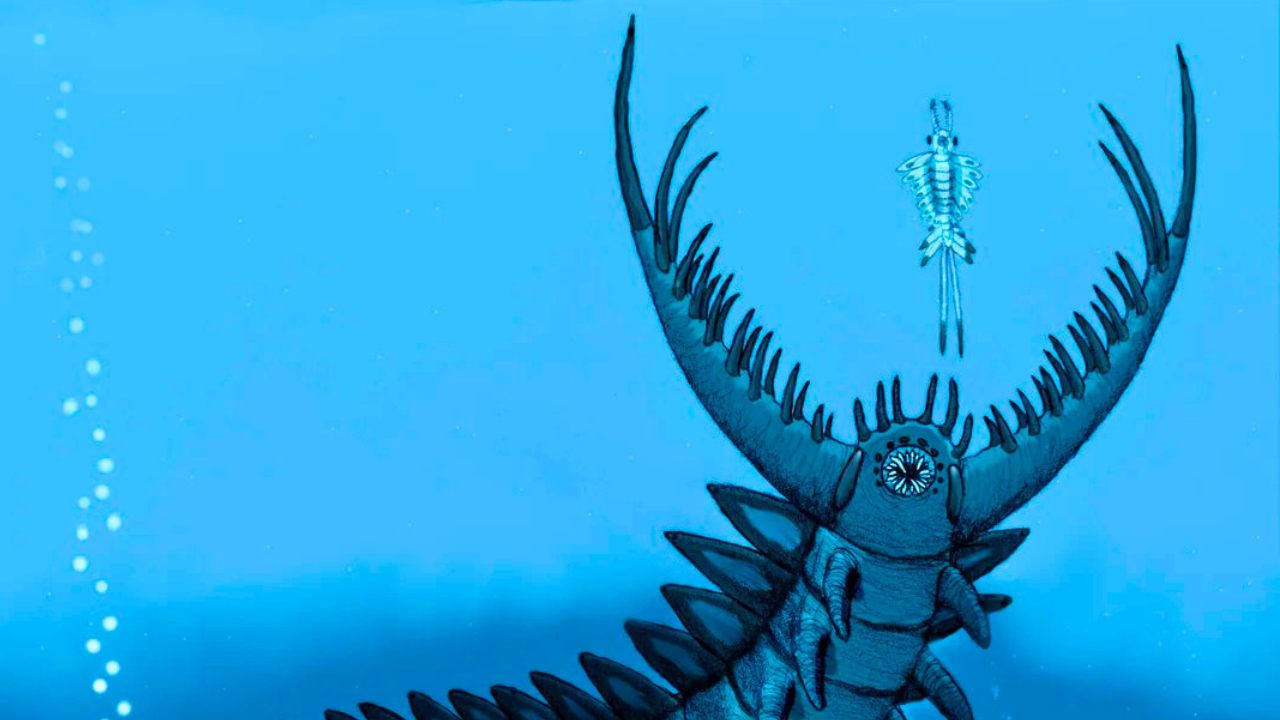
By: Greg Schmalzel
If you zoom out far enough, human history disappears. For most of Earth’s existence, there were no people, no plants, no animals - just stone, water, chemistry, and time. Life spent billions of years experimenting, failing, and starting over long before we ever showed up. Bacteria ruled the Earth for an almost unimaginable span. Continents collided and tore apart. Oceans froze solid. Mass extinctions erased entire populations. Every step toward complexity came at a cost. Only after these evolutionary trials and errors do humans appear. We are the footnote of a page that’s 4 billion years long and this video is about what the rest of that page looked like.
For the full YouTube video, click Here.
Geologic Time
To understand evolution, we have to think in **geologic time**—the system scientists use to divide Earth’s 4.6-billion-year history into eons, eras, periods, and epochs. These boundaries aren’t based on calendars but on major changes: shifting continents, climate upheavals, mass extinctions, and the emergence of new life. On this scale, a million years is brief. Dinosaurs ruled for over 160 million years, while our species has existed for only about 300,000. If Earth’s history were compressed into a single day, complex life would appear after 8 p.m., dinosaurs just before midnight, and all of human civilization in the final seconds. Evolution unfolds slowly across this immense timescale.
The Hadean Eon
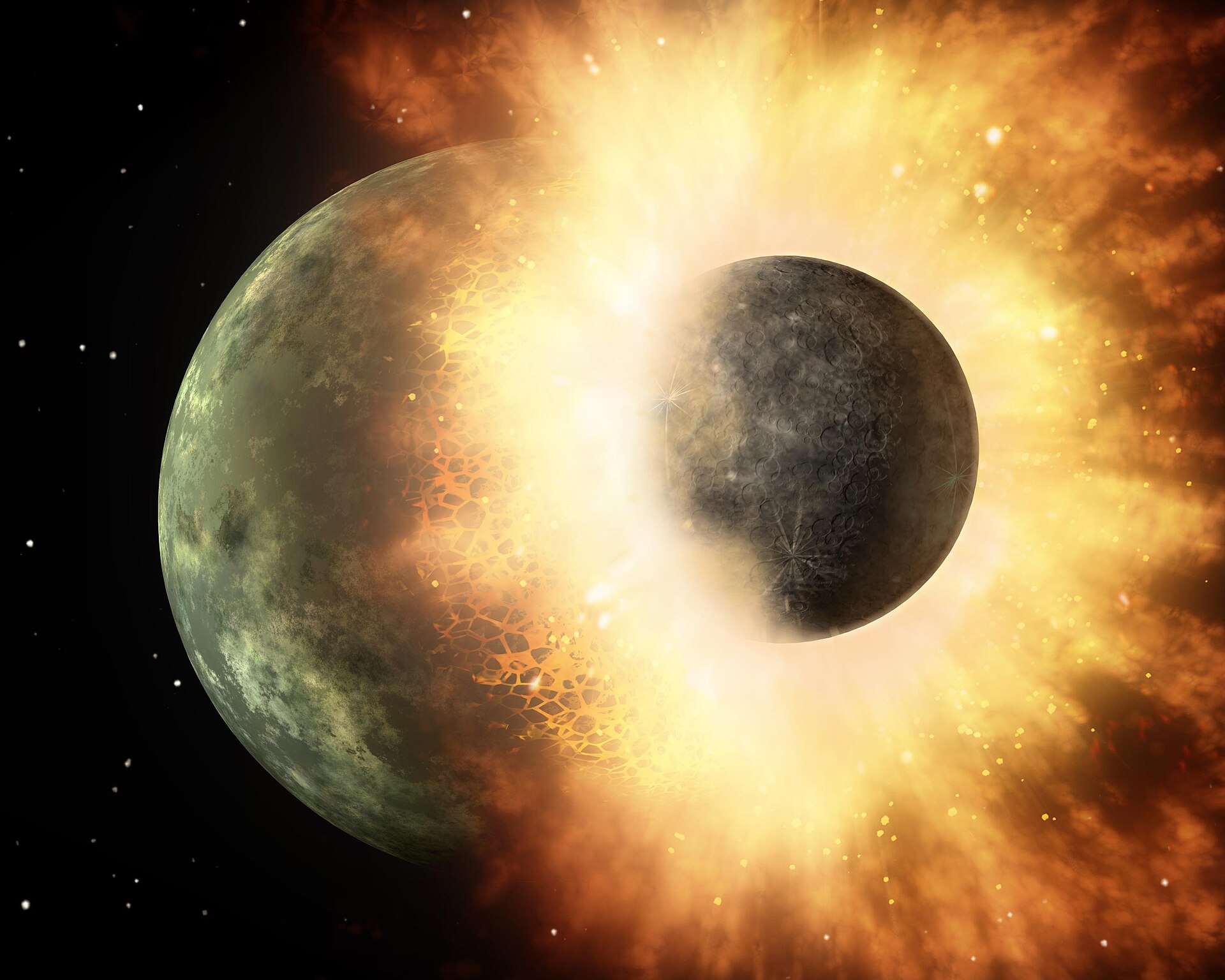
The Hadean Eon began about 4.6 billion years ago as Earth formed from gas and dust orbiting the young Sun. Through accretion, countless collisions built a growing planet. Intense heat from impacts and radioactive decay left much of early Earth molten, allowing dense iron to sink and form the core while lighter rock formed the mantle and crust. Named after the Greek underworld, the Hadean was long imagined as a hellish era of constant impacts. One collision with a Mars-sized body, Theia, likely created the Moon. Yet ancient zircons dated to 4.4 billion years suggest liquid water—and possibly oceans—existed before life appeared in the rock record.
Life Begins: Abiogenesis
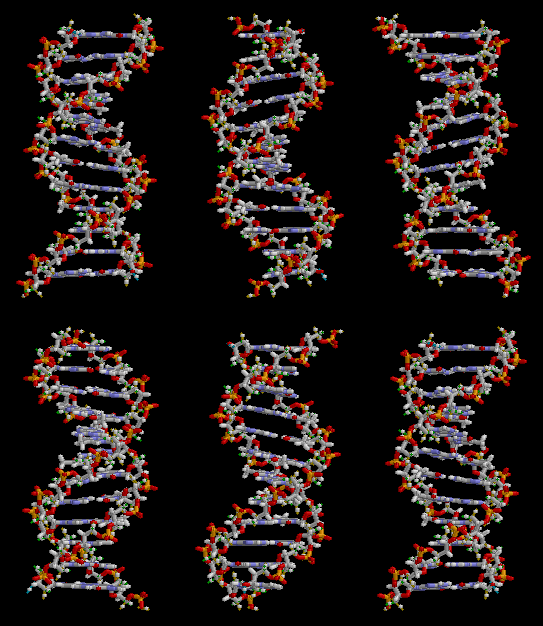
The transition from chemistry to biology is called Abiogenesis, the idea that life emerged naturally from nonliving molecules. Scientists think this occurred roughly 4.0–3.5 billion years ago, when chemical compounds formed proto-cells capable of self-replication. The process hasn’t been directly observed; instead, it’s reconstructed through experiments and models. One leading idea places life’s origin near Hydrothermal Vent Hypothesis, where mineral-rich seafloor vents created energy and chemical gradients for complex reactions. Another proposal, Panspermia, suggests meteorites delivered organic building blocks. Many researchers favor the RNA World Hypothesis, in which self-replicating RNA molecules eventually led to the first cells, including Last Universal Common Ancestor.
The Bacteria Earth
The earliest clear fossils appear before 3.5 billion years ago in the form of Stromatolites, layered structures created by microbial communities in shallow water that trapped and bound sediments. Some of the oldest examples, about 3.48 billion years old, come from Western Australia. For nearly two billion years afterward, Earth was dominated by microscopic life, mainly bacteria. Among them were Cyanobacteria, which used photosynthesis to produce energy and released oxygen as a byproduct. Over immense spans of time, this process transformed Earth’s atmosphere, eventually triggering the Great Oxidation Event around 2.4 billion years ago during the Archean Eon.
The Great Oxidation Event
Before the Great Oxidation Event, Earth’s atmosphere and oceans contained almost no free oxygen, which suited early anaerobic life. But photosynthetic Cyanobacteria steadily released oxygen as a byproduct, causing it to accumulate in the environment. For many early microbes, oxygen was toxic, leading to one of the planet’s first major extinction events. Yet rising oxygen also created new possibilities. Oxygen-based metabolism produces far more energy than anaerobic processes, enabling more active and complex organisms. In this sense, oxygen was both destructive and transformative—eliminating many early life forms while laying the metabolic foundation for larger, more complex life to evolve.
Eukaryotes and Cooperation
Chriswick Chap
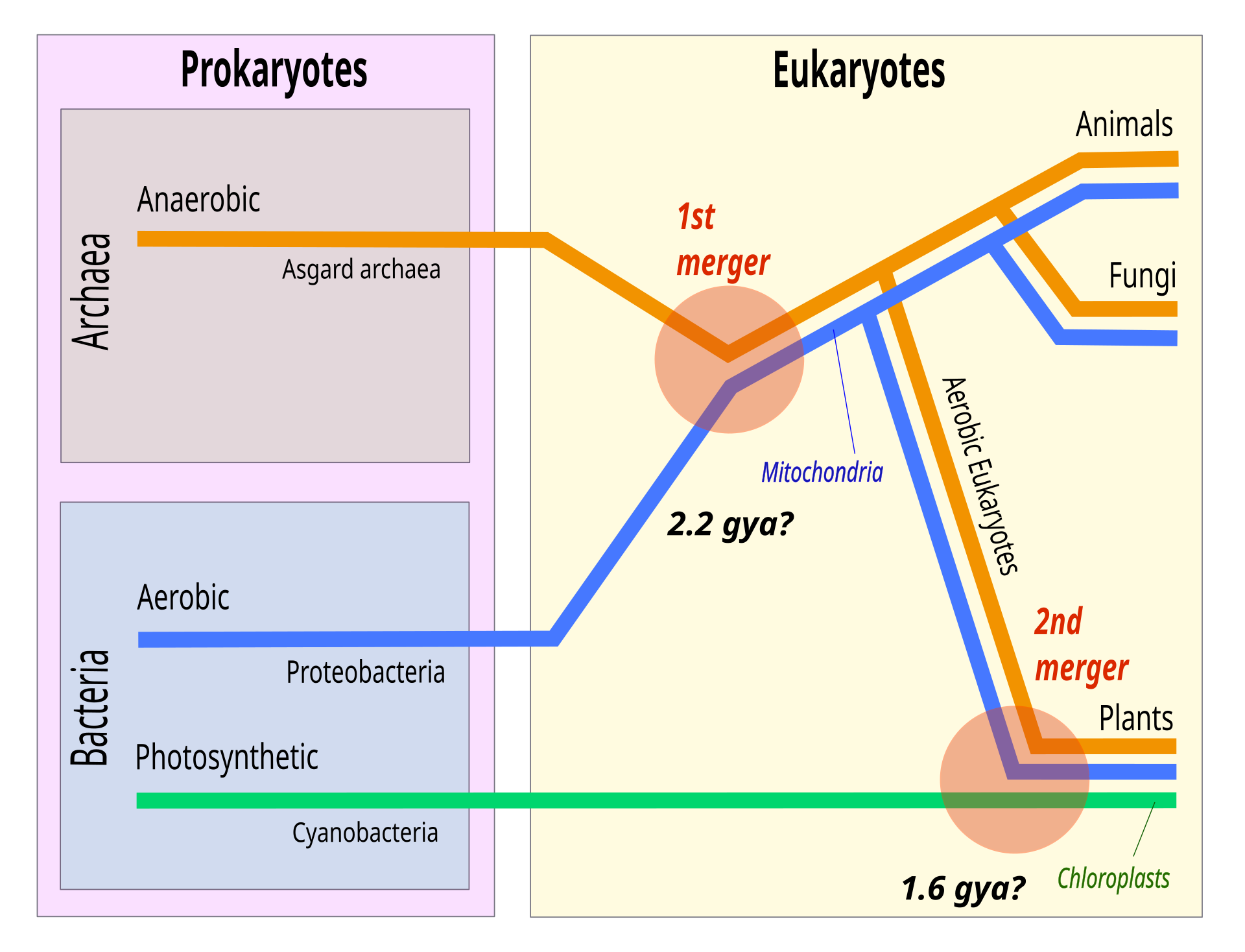
Around 2 billion years ago, life made a major leap with the rise of Eukaryotes, cells with internal compartments like a nucleus and specialized organelles. This complexity likely arose through Endosymbiosis, when one cell engulfed another and formed a cooperative relationship instead of digesting it. An oxygen-using bacterium became the Mitochondrion, which produces most cellular energy. Later, photosynthetic bacteria evolved into Chloroplast in plants and algae. This energy surplus, along with genetic mixing through Meiosis, allowed larger genomes, greater adaptability, and eventually the evolution of complex multicellular life.
Multicellular Organisms
The oldest known multicellular Eukaryotes date to about 1.6 billion years ago, discovered in northern China. These fossils show chains of connected cells called filaments, with small internal structures likely used for reproduction, suggesting a primitive form of algae. Multicellularity meant cells began cooperating—sticking together, communicating, and dividing labor into specialized roles such as movement, digestion, or reproduction. This shift mirrors Endosymbiosis, but at a higher biological level. Importantly, Multicellularity evolved independently many times during the Proterozoic Eon, showing that cooperation repeatedly became a successful survival strategy in evolution.
Snowball Earth and Survival
Oleg Kuznetsov
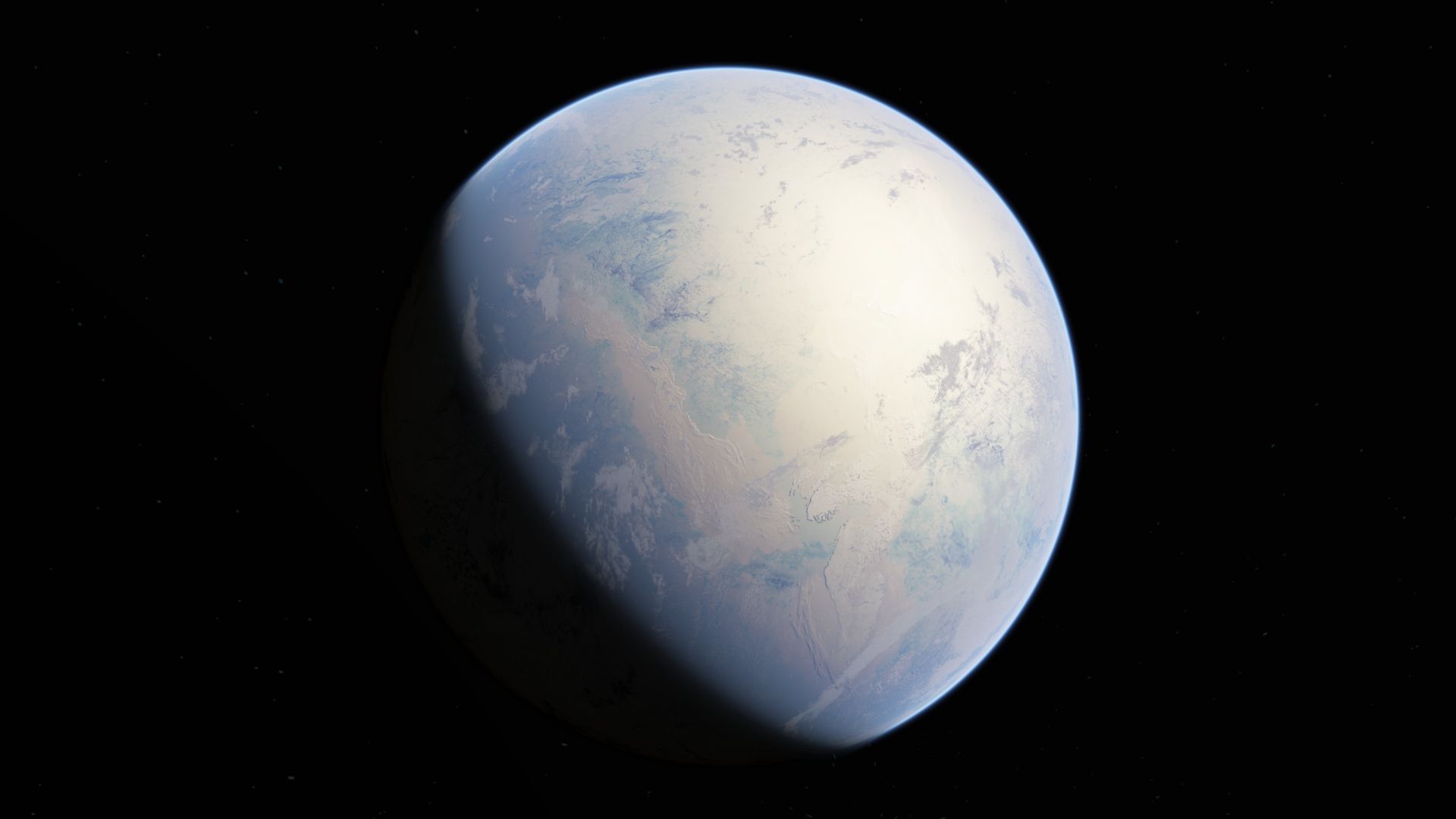
During the Proterozoic Eon, Earth experienced extreme ice ages known as Snowball Earth, when glaciers may have spread from the poles to the equator. Geological evidence suggests oceans and continents were covered in thick ice for millions of years. Yet life survived in small refuges where liquid water remained, such as meltwater ponds, cracks in glaciers, and deep-sea hydrothermal environments. Studies from Antarctica show microbes and simple eukaryotes can endure similar freezing conditions today. These harsh climates acted as an evolutionary filter—many species vanished, but survivors later expanded when warming and nutrient-rich runoff reshaped Earth’s oceans and ecosystems.
The Cambrian Explosion
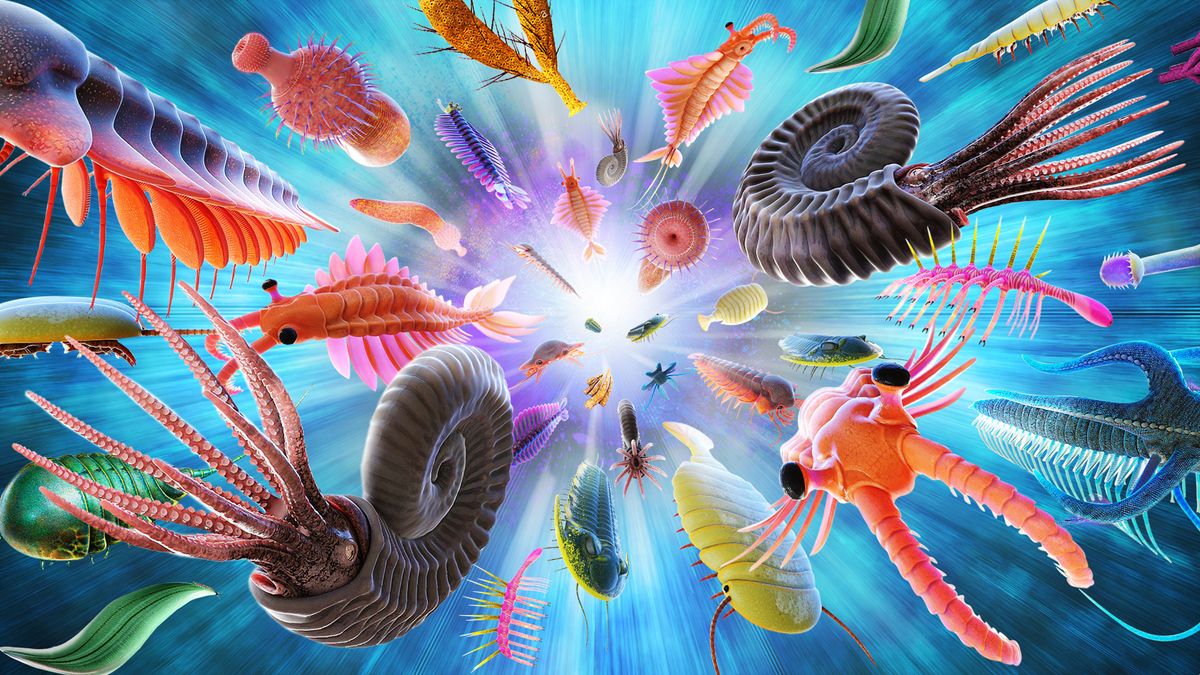
Around 540 million years ago, life underwent a dramatic diversification known as the Cambrian Explosion. In geological terms it was rapid, lasting roughly 20 million years, yet it transformed Earth’s oceans. Before this period, most organisms were soft-bodied and simple. Afterward, the fossil record suddenly shows animals with shells, legs, sensory organs, and complex body structures. Many major animal groups that exist today first appear during this time.
One iconic example is the Trilobite, which possessed a hard exoskeleton, segmented body, jointed limbs, and often compound eyes. These features provided protection, support, and improved movement. The emergence of predation also reshaped ecosystems. Earlier environments were dominated by simple grazers and scavengers, but predators created strong evolutionary pressures. Prey species developed thicker shells, better defenses, and improved senses, while predators evolved new ways to capture them—an evolutionary arms race visible in fossils showing drilled shells and increasing armor.
Animals also began burrowing into sediments and swimming actively in open water, creating new ecological niches. Rising oxygen levels in the oceans and atmosphere likely helped fuel this burst of innovation, enabling larger bodies and energy-demanding traits like muscles and nervous systems.
Although many Cambrian species later vanished, surviving lineages—including Arthropods, Mollusks, and Chordates—became the foundation of modern animal diversity, eventually leading to vertebrates and humans.
Life Conquers Land
During the Ordovician period (450–470 million years ago), life transitioned from the oceans to land. This shift began with plants evolving from green algae. These pioneers broke down rock into soil and released oxygen, creating habitable terrestrial ecosystems. Once soil and nutrients were established, arthropods like insects and spiders colonized the ground. They were followed by lobe-finned fish descendants that evolved into amphibians. Eventually, tetrapods developed hard-shelled eggs and sturdy limbs, allowing reptiles to live fully on land. By stabilizing landscapes and oxygenating the atmosphere, these early colonizers transformed Earth into a new frontier for life. Do you want to shorten this further into a bulleted list or focus on the timeline of these events?
The Big 5 Mass Extinctions
Mass extinctions have been some of the most powerful drivers of evolution. These events—when unusually large numbers of species disappear in a short time—can devastate ecosystems, but they also create opportunities for new groups to evolve and diversify. Scientists recognize five major events known as the “Big Five”: the End-Ordovician Mass Extinction, Late Devonian Extinction, Permian–Triassic Extinction Event, Triassic–Jurassic Extinction Event, and Cretaceous–Paleogene Extinction Event.
The End-Ordovician event, around 444 million years ago, was triggered by a major ice age that lowered sea levels and destroyed shallow marine habitats, eliminating up to 85% of species. The Late Devonian extinction followed hundreds of millions of years later, wiping out many reef ecosystems and armored fishes, possibly due to climate shifts or environmental changes linked to expanding forests.
The most severe event was the Permian–Triassic extinction, often called “The Great Dying.” Massive volcanic eruptions in Siberia triggered climate upheaval, ocean acidification, and widespread habitat loss, killing about 96% of marine species and 70% of land vertebrates.
Life gradually recovered during the Mesozoic Era, the “Age of Reptiles.” Dinosaurs rose to dominance after the Triassic–Jurassic extinction removed many competing reptiles. For over 180 million years, dinosaurs thrived in diverse ecosystems alongside early mammals, flying pterosaurs, and giant marine reptiles.
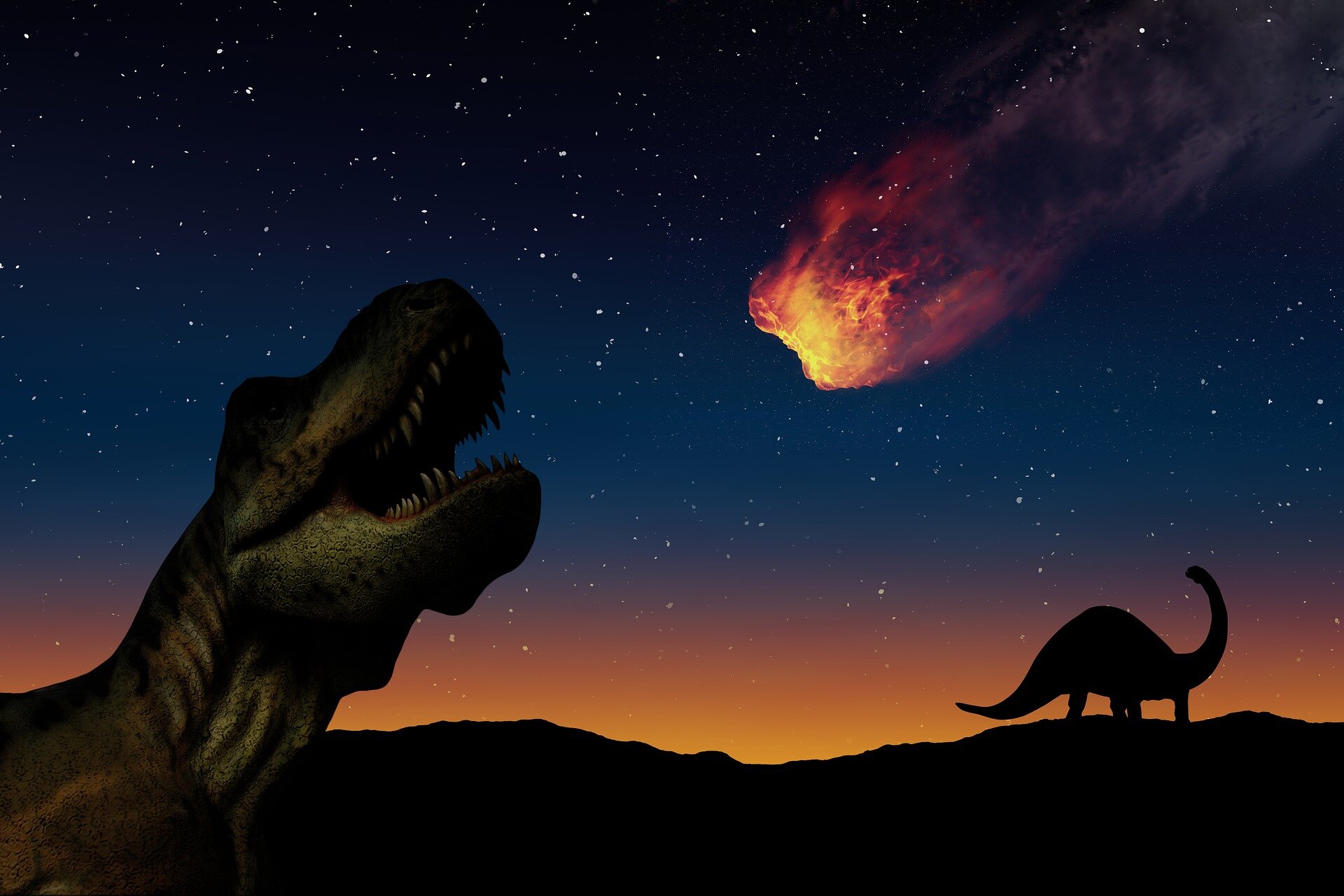
Their reign ended abruptly 66 million years ago with the Cretaceous–Paleogene extinction. A massive asteroid struck the Yucatán Peninsula, forming the Chicxulub Crater and triggering global fires, darkness, climate collapse, and food-chain failure. Around 75% of species vanished, including all non-avian dinosaurs.
The Age of Mammals
2022 Anatomical Society
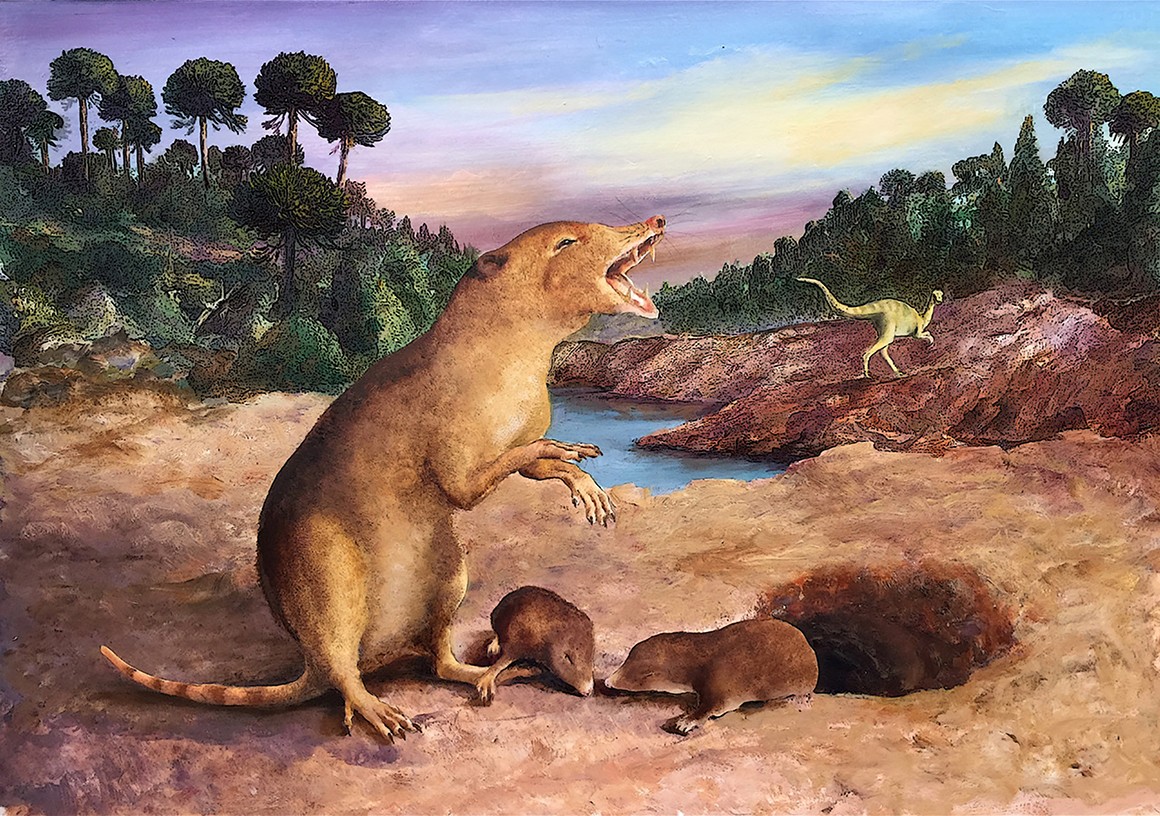
Following the K-Pg extinction, the Age of Mammals began. Previously small, nocturnal survivors used their warm-blooded physiology and night vision to endure the catastrophe. Post-impact, mammal diversity and size exploded during the Paleocene. As seen at Corral Bluffs, species jumped from rat-sized survivors to several hundred pounds in under a million years, filling ecological voids left by dinosaurs. Between 66 and 34 million years ago, the Paleocene and Eocene epochs saw the emergence of modern orders, including early primates, rodents, and hoofed mammals, marking the definitive expansion of mammalian life.
Primate Evolution
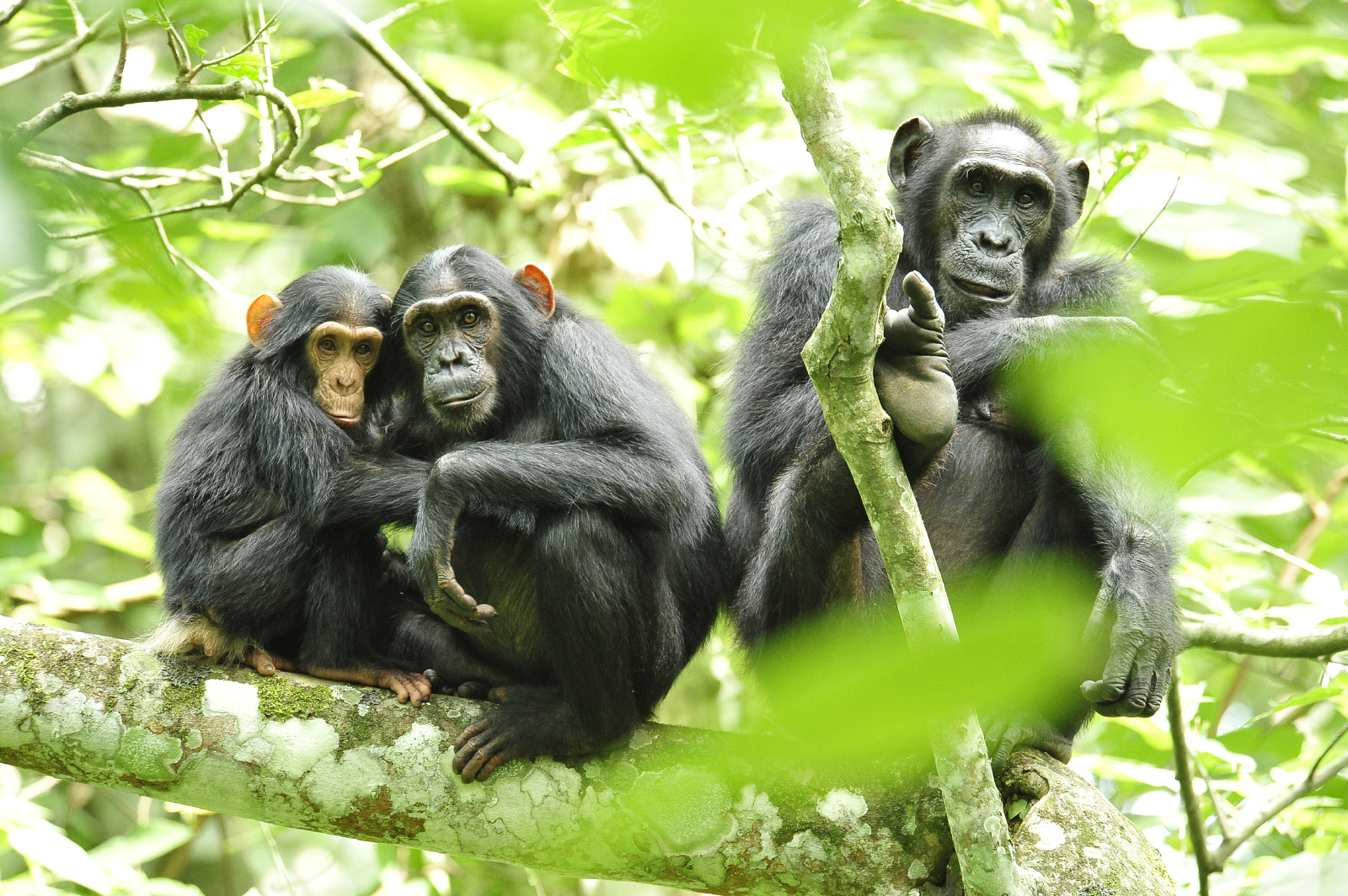
Primate evolution began with plesiadapiforms and Euprimates, which developed tree-dwelling traits like grasping hands and forward-facing eyes. During the Oligocene (34–23 mya), cooling climates led to the rise of anthropoids. A key fossil from this era, Aegyptopithecus, bridges the gap between early primates and later apes. Notably, primates also reached South America during this time, likely via "rafting" on vegetation mats from Africa.
The Miocene Epoch marked the "Age of Apes." Apes—larger, tailless, and more intelligent than monkeys—radiated across the Old World. In Africa, Proconsul (23 mya) emerged as a primitive early ape. In Europe, fossils like Danuvius reveal apes experimenting with "extended limb clambering," a precursor to bipedal movement. Meanwhile, Asia saw the rise of large-bodied apes like Sivapithecus and Khoratpithecus, the latter being the closest relative to modern orangutans.
By the late Miocene, cooling temperatures and shrinking forests caused the extinction of most Eurasian apes. However, in Africa, this environmental shift paved the way for the hominins—our direct ancestors—who appeared approximately 7 million years ago. These early pioneers transformed primate adaptations into the foundation for the human lineage.
Sources:
[1] Marshak, S. 2012. Essentials of Geology (Fourth Edition). W. W. Norton & Company
[2] Hogan, K., et al. 2011. Campbell Biology: Concepts & Connections (7th Edition). Pearson
[3] Jheeta, S. 2017. “The Landscape of the Emergence of Life.” Life (Basel) 7(2):27.
[4] 3.5 billion-year-old rock structures are one of the oldest signs of life on Earth
[5] The Great Oxidation Event: How Cyanobacteria Changed Life
[6] Miao, L., et al. 2024. “1.63-billion-year-old multicellular eukaryotes from the Chuanlinggou Formation in North China.” Sci. Adv. 10,eadk3208.
[7] Niklas, K. and Newman, S. 2020. “The many roads to and from multicellularity.” J Exp Bot. 71(11):3247-3253.
[8] How life endured the Snowball Earth: Evidence from Antarctic meltwater ponds
[9] How Life Survived Snowball Earth
[10] EBSCO, Cambrian diversification of life
[11] Bicknell, R., et al. 2025. “Adaptive responses in Cambrian predator and prey highlight the arms race during the rise of animals.” Current Biology 35(4):882-888.
[12] Revisiting the Cambrian explosion’s spark
[13] Kapoor, B., et al. 2023. “How plants conquered land: evolution of terrestrial adaptation.” J Evol Biol. 36(1):5-14.
[14] Wei, J., et al.2026. “Convergent genome evolution shaped the emergence of terrestrial animals.” Nature 649, 638–646.
[15] Mass Extinctions Through Geologic Time
[16] When the oceans died and life changed forever
[17] Labandeira, C. 2005. “The fossil record of insect extinction: New approaches and future directions.” American Entomologist 51:14–29,
[18] Hull, P. 2015. “Life in the Aftermath of Mass Extinctions.” Curr Biol. 25(19):R941-52.
[19] Mesozoic
[20] Huge and widespread volcanic eruptions triggered the end-Triassic extinction
[21] Extinction Events
[22] Schulte, P., et al. 2010. “The Chicxulub Asteroid Impact and Mass Extinction at the Cretaceous-Paleogene Boundary.” Science 327,1214-1218.
[23] Kring, D., et al. 2017. “Chicxulub and the Exploration of Large Peak-Ring Impact Craters through Scientific Drilling.” The Geological Society of America 27.
[24] Wu, Y., et al. 2017. “Invasion of Ancestral Mammals into Dim-light Environments Inferred from Adaptive Evolution of the Phototransduction Genes.” Sci Rep 7, 46542.
[25] Fossil Site Reveals How Mammals Thrived After the Death of the Dinosaurs
[26] Krause, D. 1984. “Mammalian Evolution in the Paleocene: Beginning of an Era.” Notes for a Short Course: Studies in Geology 8:87-109.
[27] Williams, B. 2016. “Effects of Climate Change on Primate Evolution in the Cenozoic.” Nature Education Knowledge 7(1):1.
[28] Lawrence, E. 1998. “Iguanas ride the waves.” Nature.
[29] Böhme, M., et al. 2019. “A new Miocene ape and locomotion in the ancestor of great apes and humans.” Nature 575, 489–493.
Founder